Monthly Archives: September 2015

Check Your Boots!

There is an old saying among campers and the military, “Check your boots before you put them on.” I learned that saying is true the hard way.

Back when I was into deer hunting—long time ago—and was in a deer club in Alabama, our “lodge” was an old motel converted into a deer camp. And it wasn’t terribly vermin-tight.

Awakened before dawn to go hunting on a particularly cold early January morning, I slipped into my long johns, heavy pants and wool shirt and heavy woolen socks. Still sleepy-eyed, I tried to put on my lace-up hunting boots.

I have a high instep, so boots are usually an issue for me, at least until I get my foot fully inside the boot. That was compounded by the fact the laces needed to be let out some and I had on heavy socks. I struggled to get my boot on but eventually managed to get it done.

But there was a problem.

It felt like my socks were balled up at my toe, so off the boot came to adjust my socks. And we started the process all over again.

The second time I had even more difficulty getting my high-instepped foot past the laces. So I stood up and pulled at the boot tops at the same time. Finally it gave way and my foot went all the way in with a thud when it hit bottom.

But this time there is a lump under my heel.

“Blasted socks again!” (Only I didn’t say “blasted.”)

Off comes the boot, and getting it off was even more difficult than getting it on, requiring me to get my foot up high enough to get good leverage with booth hands and wiggle the boot off. Finally, it gave way and the boot came off.

And a dead mouse dropped out into my lap. And he was rather flat. A mouse pancake.

I picked it up by the tail and tossed it out the door, then went on with my morning hunt.

As it happened, that night was the night of our annual “trial,” where violators of all manner of real and imagined offenses were brought up before a kangaroo court presided over by a “judge” and a “jury” of my “peers.”

To my surprise, I was brought up on charges of “animal cruelty” and “murder” of a mouse—and they produced the pancake mouse corpse as evidence, and it was getting a bit “ripe” by then.

I was found guilty, of course. That meant I was subject to having my shirttail cut off and hung up as a trophy at next year’s trial like the dozens of others already displayed from previous trials. Now, I was rather fond of my shirt. It was a nice heavy flannel and very warm.

The judge gave men an out. If I could tell a joke that would make everyone laugh, he would let me off.

So I told a joke and they all laughed, and that wasn’t all that difficult, considering most had been consuming adult beverages for the last few hours.

I kept my nice flannel shirt.
Leave a comment

Filed under Family History, Growing Up

Manard Lagasse Hated Getting Shots!

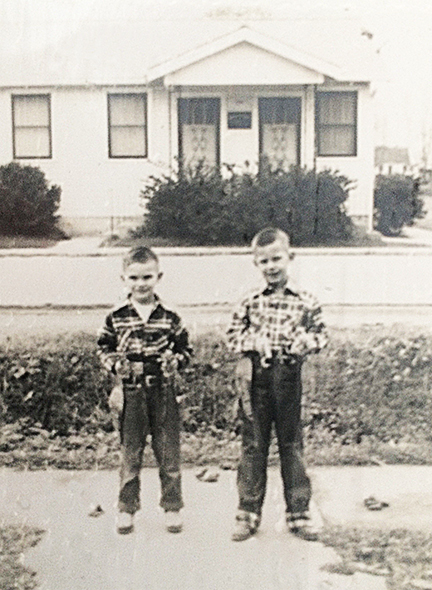
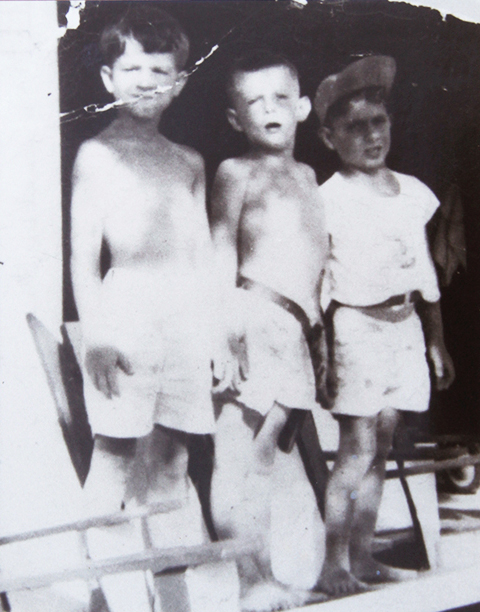
Me, Manard, Joey 1953I had a brief discussion with Elton Lagasse, Manard’s older brother, at a meeting the other night, and he reminded me of a story from our childhood. Manard had a needlephobia, a really bad needlephobia. I never really considered Manard to be a coward. He was always there with the rest of us, doing all the stupid and risky things boys did back then, but he really feared getting shots. (Manard is in the middle in the image on the right.)

As mentioned elsewhere in this blog, my dad, Dr. M.B. Casteix, used to periodically round up all the kids of our extended family for inoculations for just about every disease known to man. Those were followed in a few weeks, or a few years, maybe both, with booster shots. And then there were the tetanus shots for our frequent wounds and rusty nail punctures in our bare feet, and we were always barefoot during the summer. Seemed like we were always getting shots for something when we were kids.

The call would go out, and all us kids would be required to report for inoculations, usually on Saturday afternoon or at night after the my dad’s office closed. The roundup included Manard and Elton Lagasse, Bobby and Melanie Manard, Kibby Manard, and sometimes even my cousins, Stephanie and Robin, and sisters, Jeanne and Martia, who were all quite a bit younger than the first mentioned group.

All of us had “side-entrance privileges,” which means we could go in the side door of the office. Usually escorted by parents, we marched into the last examining room at the side entrance end of the hall and lined up for our shots. On one of the first such inoculation roundups, Manard managed to be at the head of the line, and he was looking a bit nervous—maybe a lot nervous?

CabinetMB went to his instrument cabinet (which now resides in my bathroom) for a syringe. Whatever it was he came out with, Manard evidently thought it resembled something on the order of a turkey baster with a big needle, because his eyes got got as big as saucers, and after only a brief moment of indecision, he concluded he wanted no part of that thing and promptly decamped.

Panic stricken, he headed out the examining room for the side door, but Henry Lagasse, his dad, waiting there for him to take him home, happened to be blocking his way. Upon seeing his dad standing there with a questioning expression on his face, Manard did an about face and headed up the hall that ran the length of my dad’s office, but that offered no means of escape; the front doors were locked. Henry knew something was up and was in hot pursuit of his youngest child. He caught up to Manard in the little room at the end of the hall where the bathroom and coke machine were (Heath has that over in Texas, the coke machine, that is).

Somehow, Manard got past his dad, bolted out of the coke room, failed to navigate the turn and bounced off the hall wall, then headed back down the hall at a full-tilt run for the side door—and needle freedom! About then MB innocently stepped out of the examining room with the syringe in his hand to see what was up with Manard. As soon as Manard got a  look at “Dr. Frankenstein” with his turkey baster hypodermic, he slid to a halt, his Keds making little screeching sounds on the highly-waxed, asphalt tile floor. He did another about face only to run smack into his dad, who was still in hot pursuit but obviously gaining on him.

Henry manhandled the loudly protesting and squirming Manard into the torture chamber—er, I mean examining room—for his dose of whatever it was we were getting that day. MB stuck Manard, and he squealed like a stuck pig.

Kip and ManardThe rest of us kids stood around kind of big-eyed and slack-jawed in complete awe of what had just transpired. Most of us were thinking maybe we should be considering some kind of escape plan ourselves? But the door was by then well covered by at least two parents, and seeing no way out, we reluctantly got our shots with only minimal whimpering. They stung a little, but we lived.

The whole affair became a source of humor for all of us but Manard, of course. All future inoculation summons were somewhat looked forward to, because we wanted to see what Manard would do, and he never failed to impress us with his fear of the needle.

The last photo is of Kibby (on left) and Manard with my dad’s office behind them. Thanks to cuz Bobby.

2 Comments

Filed under Family History, Growing Up, Kenner

Buck Barbre and Me

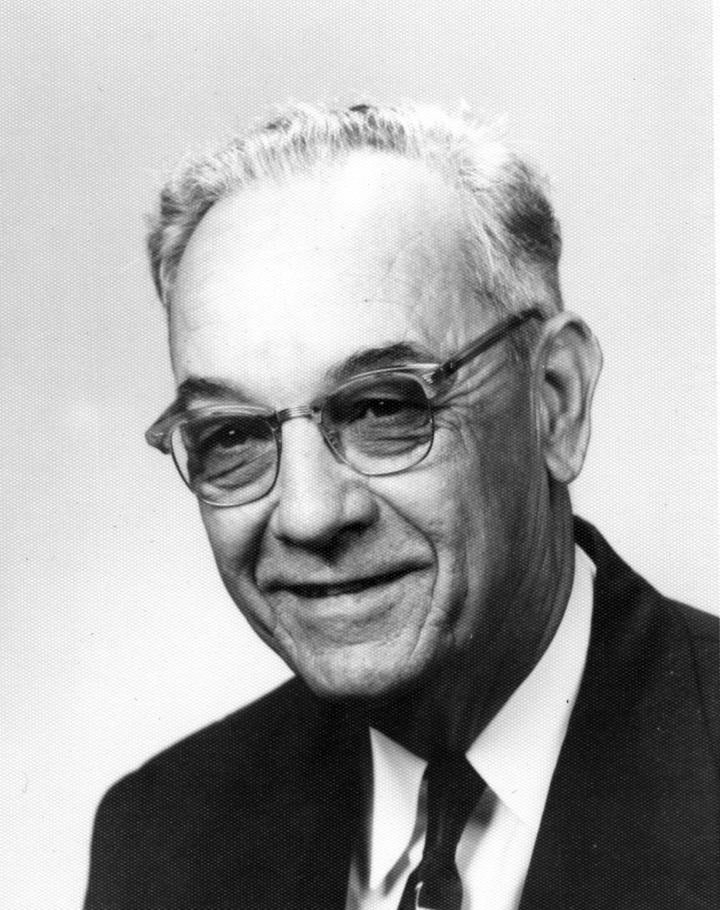
Buck Barbre RThere have been two Bucks in my life (not counting the deer). Both are deceased. One was my good friend Michael “Buck” Roy. The other was my grandfather, Stephen Jefferson “Buck” Barbre. He was known as “Prof” by most of his friends and acquaintances, because he was an educator. But I knew him as “Buck,” not “Gramps” or “Grandfather” but just “Buck.” My sisters and cousins also called him “Buck.” And no, I don’t know why.

Barbre is French, and the family tree shows it spelled several different ways. Buck Barbre hailed from McCrea, Louisiana in Pointe Coupee Parish. He went to college at the Southwestern Louisiana Institute in Lafayette, Louisiana. It was called the University of Southwestern Louisiana when I attended in the sixties, and is now known as the University of Louisiana at Lafayette. He later attended Mississippi A&M and Louisiana State University for advanced degrees.

Upon graduation, he took a position as a teacher at Carencro in Lafayette Parish and then another in Washington Parish, then finally at Jena High School in LaSalle Parish. There he met and fell in love with Rubye Ina Boddie. They married in 1922. From 1922 to 1924 he was principal at Loranger High School in Tangipahoa Parish.

51dvJGHSVPL

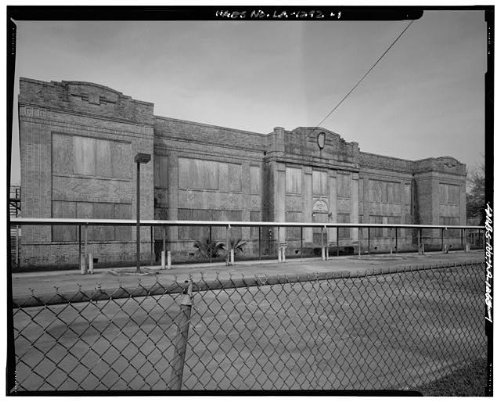
In 1924 a new high school was built in Kenner, Louisiana in Jefferson Parish, and he took the position as it’s first principal. That building was designed by architect William T. Nolan who designed a number of buildings in Louisiana that are on the National Register of Historical Places.

When Buck and his young family moved to Kenner, they stayed in what I will call a “boarding house” until they could find proper housing. I think this boarding house was somewhere along the tracks not far from the Cristina Ice House. The only thing I remember them saying about this place was how the water from the cistern tasted funny. That was because they found a dead rat in it.

They then moved from there to a rented house on Third Street about a block from Clay Street. At this time the levee was being pushed back closer to Third Street with First and Second Streets disappearing into the Mississippi River. Like many back then, the Barbre family had chickens, and the levee construction crew overdid the dynamite just a tad and blew a hunk of tree stump over their house and killed their rooster in the back yard.

From there they moved to Williams Street between Sixth Street and Airline. They had chickens there too, and family lore has Buck catching a chicken-stealing possum by the tail as he exited the coop. He dispatched him with a whack on the head with a hammer.

They then built a house on the corner of Sixth Street and Minor. Son Lockbaum built that house. That was around 1947 or 48. They remained there until both Buck and later “Mother,” as we called Rubye, passed away in the seventies.

When Jefferson Parish built East Jefferson High School in 1955, they picked Buck to be its first principal. I graduated from there in 1962.

He never drove a car. My grandmother or a friend always chauffeured him around. She took him back and forth to Kenner HS, and later, Joe Yenni drove him to EJ and back. And no, I don’t know why he never drove. We were never given an explanation when we asked.

Buck and I were very close. My mother and I lived with them between her divorce from her first husband and when she married Dr. M.B. Casteix in 1950. She worked at Keller Zanders on Canal Street, so Mother and Buck took care of me while she was at work.

I had a pedal car of sorts that was like an airplane with stubby little wings and tail. I was only about four and got into some paint and proceeded to paint it white. Mother caught me down in the garage with paint splattered all over my airplane/pedal car, the garage, and me. “What are you doing?” she asked. “Painting my airplane, and I have to hurry and get this done before Buck gets home and catches me,” was my lame answer.

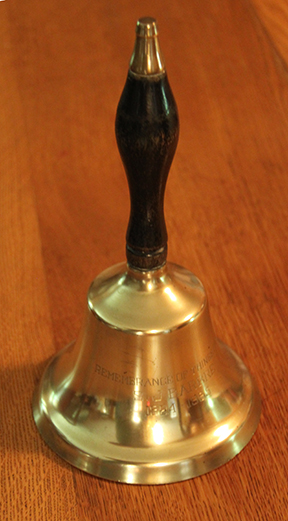
School Bell 2RBuck retired from EJ in 1964. At his retirement party, they presented him with a copy of the portrait that had hung in the office at Kenner High School. They also gave him the handheld school bell he used to ring to start classes at Kenner HS before they put in the electric bell system. That’s it on the right. During the many speeches at his party, someone asked him why he waited so long to retire, probably expecting some pontificating from him about personal dedication to the job and the kids of Jefferson Parish. His replied with a chuckle, “I wanted to make sure Lane graduated from high school.”

Buck died in December of 1972 right after I got out of the Air Force. He went in for heart surgery and died of complications from the surgery. They could not account for all the surgical sponges after they closed him up and had to open him up again to search for the missing sponge. They did not find it inside him but later found it in a trashcan. He never recovered from that. He lingered on for a few more days, and one of the last things he asked was, “Is Lane home yet?” I had been discharged and was home two weeks before his surgery, but he was so disoriented he did not remember. Christmas that year was the worst I have ever experienced.

5 Comments

Filed under Family History, Growing Up, Kenner

The Parrott Rifle

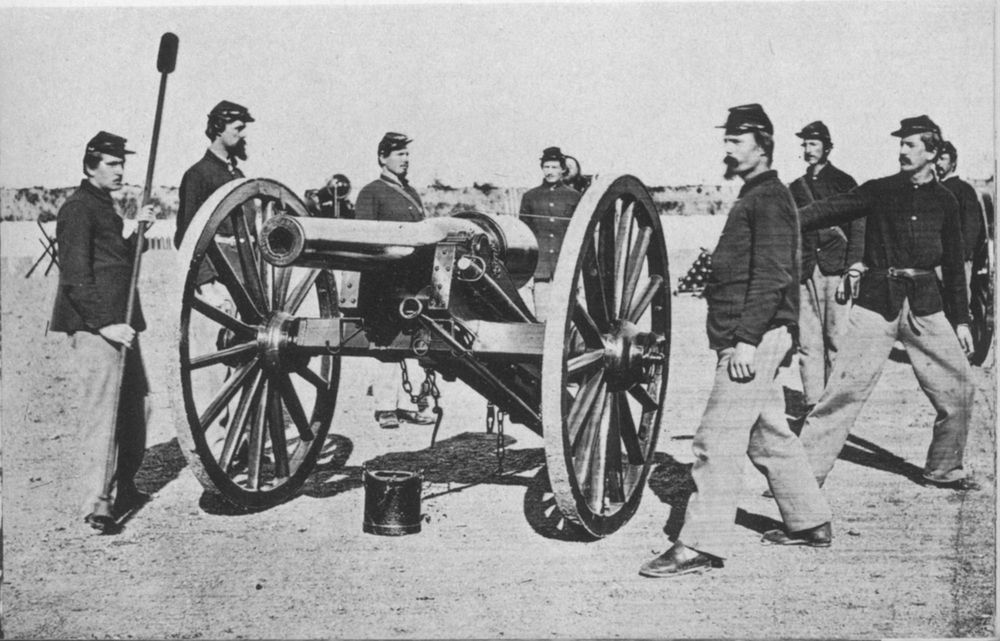
During the Civil War, most canons were smoothbore (no rifling), which tended to limit range and accuracy. One notable exception was the Parrott Rifle, which came in a number of different calibers from mobile field pieces to heavier immobile defense pieces used on fortifications.

The gun was invented by Captain Robert Parrott, a West Point graduate. He created the first example in 1860 and patented the design in 1861, just in time for the “festivities” we call the American Civil War.

Parrott Crew

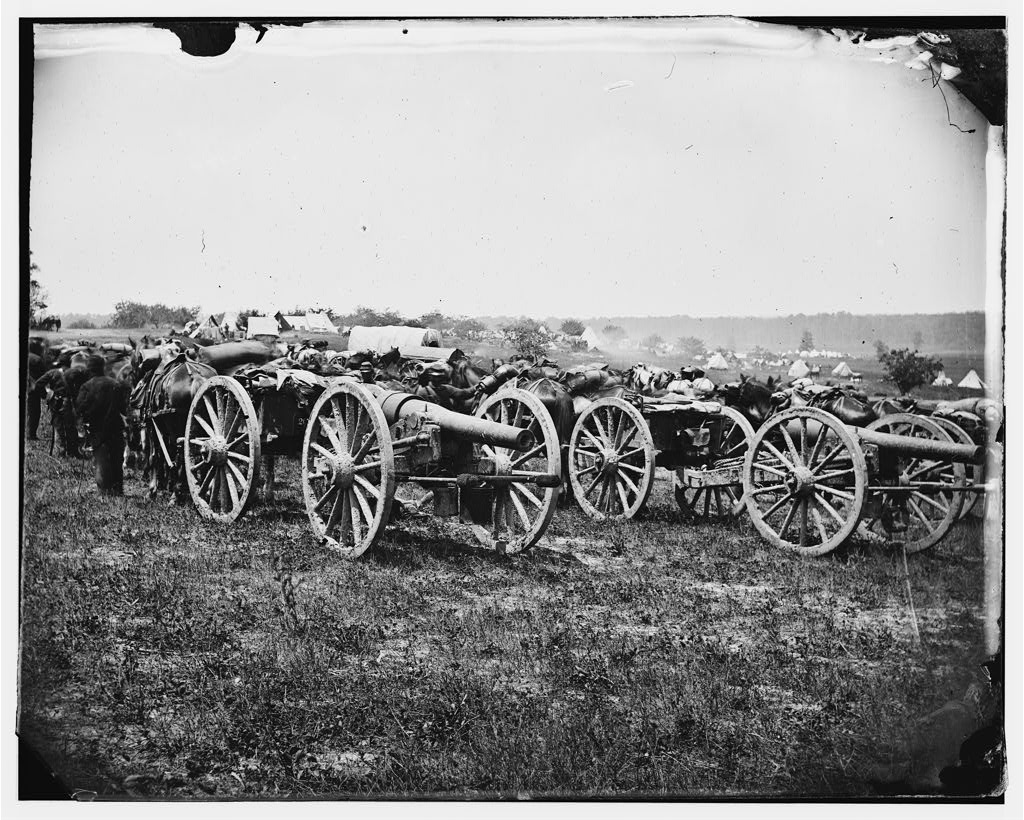
They were manufactured as a combination of cast and wrought iron. Because of the increased resistance of the rifling slowing of the projectile’s trip down the barrel, higher pressures were generated than in smoothbore canons. As a result bursting at the breech end was a problem. This was solved with the addition of a large wrought iron band added over the breech end of the gun. This can be seen at the back end (breech end) of the guns in the two attached images. This is a distinguishing feature of the Parrott Rifles. The band was heated red hot and slipped on while cold water was poured down the bore of the gun as it was being rotated. This ensured uniform attachment of the band to the gun.

The Parrott was used by both sides in the war and came in different sizes from 10 pounders (weight of a bore size round iron projectile) to rare 300 pounders. For the largest field piece, the 20 pounder, the gun alone weighed 1,800 pounds.

The Parrott had a poor reputation for safety and was not liked by some of the crews. But they were effective out to about 2,000 yards when handled by a well-trained crew. The more common smoothbore canon, the Model 1857 12 pound Napoleon, was effective out to only about 1,200 yards

Limbered Guns

The gun rested on a two-wheeled gun carriage. Its trail was attached to a two-wheeled limber for transport and drawn by a team of horses. Ammunition, fuses, sights, and its friction priming device were carried in the limber, which was positioned well behind the gun when deployed for action. Additional ammunition was carried in caissons, which replenished the limbers in a fight. The crew usually consisted of eight men, and each had a specific job when fighting the gun. They rode the gun’s horses and on the limber when transporting the gun. A battery usually consisted of four guns, but was fewer in many cases.

Ammunition consisted of solid shot, exploding shell, and canister or grape shot. The exploding shell had a timed fuse set by the crew to explode on arrival at the target. Grape shot and later canister consisted of a “package” of round cast iron balls about 1” in diameter. It can best be described as resembling shotgun buckshot ammunition but a lot bigger. It was used at relatively short ranges against charging infantry. You can see the awful effects of canister in some scenes of Pickett’s Charge in the movie Gettysburg, a classic Civil War movie. Look for the scenes where the canister takes out dozens of charging Confederates as they cross a fence. It takes out the fence, too.

Captured guns were a great prize during the war, especially for the equipment-short Confederates. And with the advent of rifled muskets, increasing their range and accuracy, the gun’s crews and horses became prime targets. If the crew was killed or wounded, the gun was out of action. If the horses were killed, the gun could not easily be repositioned or removed from the field, lending them to the possibility of capture.

There is a scene in An Eternity of Four Years that took place at the Battle of Port Republic during Jackson’s Shenandoah Valley Campaign of 1862, when the Louisiana Tigers were tasked with capturing some particularly troublesome guns that had a high-ground position sweeping the battlefield with their accurate fire. When the Tigers took the position, capturing the guns, and were in danger of being repulsed, they slaughtered the artillery horses to prevent the guns from being moved. That actually happened in that engagement, by the way.

The Civil War was generally fought with the linear battlefields of previous wars; that is regiments, divisions, and corps lined up facing each other and blazed away. The smoothbore muskets were not very accurate and hitting a man at 100 yards was pretty iffy, thus the need for massed fire. Throw enough lead at them, and you are bound to hit something. Unfortunately, that required massed troops, making them easy targets for the other guy’s massed fire.

With the advent of rifled muskets and the rapid reloading Minié ball, all that changed, and casualties went up dramatically. The same held true for canons, which were generally placed to the rear of the infantry. The added range and accuracy of the rifled muskets and field guns made those obsolete tactics suicidal.

Leave a comment

Filed under An Eternity of Four Years, Catahoula Books, Civil War, Firearms, History Lessons