Category Archives: Growing Up

“Nanna” and “Tanda”

Anna and Candy were our two dogs when I was a kid. If you were my mother, they were named “Nanna” and “Tanda”, which was my mother’s baby-talk pronunciation of Anna and Candy. They were medium size dogs, about 35 pounds, short-haired mix breeds. The vet thought they had a lot of Fox Terrier in them.

Anna came first. She showed up as a stray around 1951. My dad tried his best to run her off, but she always came back (probably because my mother was feeding her behind his back). Eventually, Anna became “our” dog, and she was pregnant—naturally.

Anna had five puppies in the closet that housed the hot water heater. It was warm in there and she needed it because it was late winter when she dropped her litter. MB managed to give away all five puppies, but my mother managed to get one back. Instead of black and white markings like her mother, this pup was rust and white and marked almost identical down to the thumb-sized spot in the middle of the white blaze on the forehead. My mother named the pup Candy (or Tanda, if you prefer).

Anna and Candy were not supposed to ever get in the bed, but they did and moved in with my mother and dad. Consider that back then, there were no Queen or King-sized beds; at least we didn’t have one. My parents slept in a double with the two dogs.

They were excellent guard dogs and protected their territory with ferocious-sounding barking. Our yard was fenced on all sides but one. My dad’s patients parked along Sixth Street or in front of the office on Williams Street. To this day, I am not sure how he even had any patients. If they parked on Sixth Street, and Anna and Candy were out, they had to “run the gauntlet” past the two dogs barking and sounding for all the world like they would take an arm off if not for the fence. It was so bad that Janis, my future bride, would cross the street when she had to pass my house to visit her friend on Williams Street.

Anna and Candy lived a long time, and where we went they went, and that included our vacations whether to our house in Waveland, Mississippi or a brief trip to Panama City, Florida, and these dogs loved the water.

We had a summer ritual of spending two weeks at our house in Waveland, which was my dad’s vacation. That, of course, included the dogs. We usually managed to go “floundering” at least once. That means we attempted to catch some unsuspecting flounders sleeping in the shallows at night, which was mostly not very likely. That was because we had the two dogs with us.

We would have our “trusty” Coleman lantern that MB would always have to install new wicks in and spent the greater part of the afternoon getting it to work properly. We had homemade flounder spears, which were old broom handles with a sharpened nail stuck in the end. Being a boy, I always went for the “harpoon,” leaving the nets to my two younger sisters. MB carried the lantern. My mother attempted to manage the dogs, unsuccessfully, of course.

So, there we are wading around in the dark in knee-deep water looking for flounders. In all the summers we did this, we never-ever went home with a flounder. I am thinking it might be because Anna and Candy were busy loping and splashing around ahead of us in complete abandon to our “serious” attempts to harpoon a flounder! No self-respecting flounder would hang around after such advance warning.

The dogs also went with us when we went swimming. MB always had a boat and never missed a chance to use it, even if it was just to run out of the mouth of Bayou Caddy, hook a right and drop anchor off the beach there that was not accessible unless you had a boat.

In the late fifties and sixties, it was a twenty-footer he had custom built by an old man up near Hanson City. He named it the Marjelou a combination name made from the names of my two sisters (Martia and Jeanne) and my mother, Neva Lou. (Boys don’t get their names on boats.) It was open with only a windscreen and a small deck forward, MB’s ideal fishing configuration. Aft he had two mismatched outboards, an Evinrude and a Johnson. (MB was frugal; he already owned one and picked up the other dirt cheap; why buy new just to have a matching set?)

On either side of the transom were two small decks about two feet square. Those were where Anna and Candy rode. Most of the time they managed to stay up there, but sometimes while underway, we would lose one or more dogs. No one ever actually saw them when they went overboard, so we were never sure if they fell off or they just abandoned ship to frolic in the water. It would be just like them to do the latter. Either way, we had to turn back and search for the missing dog(s). We always found them blissfully swimming along.

Like most dogs, Anna and Candy loved to hang out the car window and do the “wind-in-the-face” thing all dogs seem to get off on. Back then we had no AC in the car, so the windows were always down. One day while returning from Bay St. Louis along the beach road, Anna was hanging out the waterside of the car and must have had a notion to go swimming? She jumped out the window. We were doing about twenty, and she hit the concrete and rolled down the street. We stopped, called her and she ran and jumped in the car, none the worse for wear.

They were good dogs–unless you ask my wife.
Leave a comment

Filed under Family History, Growing Up, Kenner, Waveland

What I Did in the War – Observed Weather.

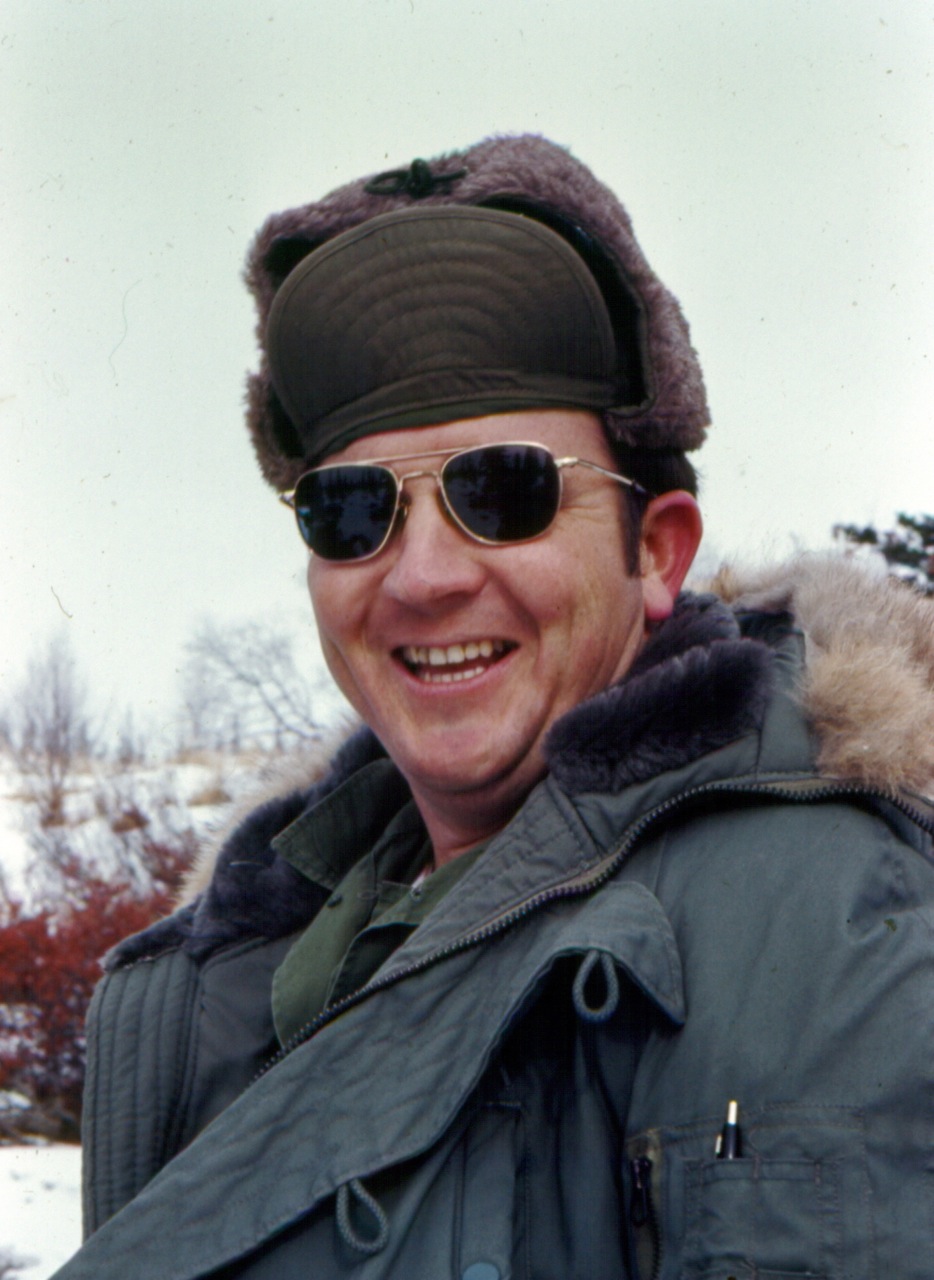
That is what I did in the Air Force for four years. Don’t laugh. Lots of your tax dollars went into training me and my fellow weather observers. And it isn’t as easy as it sounds. We didn’t just stand around all day gazing heavenward through our AF issue sunglasses. Yes, they actually did issue us sunglasses. How cool was that?

Just what did we do you ask? We observed weather and recorded it on a form WBAN10 (pronounced “way-ban ten”), encoded it, and sent it out over teletype every hour, sometimes more often if changing conditions met the criteria for a “Special Observation.” The data included cloud cover layers, height and amount, surface visibility, weather (if any), altimeter setting, temp, dew point, winds, barometric pressure, and lots of supporting comments when necessary. This information was sent out all over the world for anyone to use.

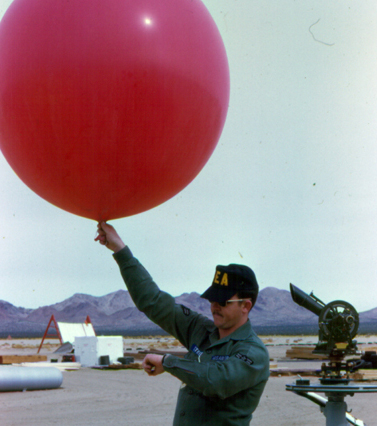
Lane PIBALWhat else did we do? Depends. Some of us, like moi, got to go temporary duty (TDY) to a place like Cuddeback AGGR (Air to Ground Gunnery Range) in the middle of the Mojave Desert. At Cudde we supplied surface observations (obs taken at the ground level) and winds-aloft obs (wind speed and direction at 1,000 foot intervals above the station). The latter involved launching a 1,000 gram helium-filled weather balloon called a PIBAL (pilot balloon) and tracking it with an instrument called a theodolite, recording azimuth and elevation angles at one-minute intervals, plotting those and deriving wind speed and direction at various altitudes above the station. The AF found this helpful for calculating bomb trajectories, and Cuddy was a bombing range. (I guess the AF just “winged it” when they had to drop real bombs on the enemy and no AF weather observer happened to be hanging around the target area taking PIBAL obs?) The U.S. Army also found it useful for calculating artillery trajectories. Winds aloft can seriously affect where a 155mm shell lands 20 miles away, which could be meaningful to friendly troops on the ground near the target.

Very generally speaking, most weather observers had two main operational environments. The first being in Base Weather, usually housed with Base Operations. This is where the pilots came for weather briefings and filing flight plans. The place was (in my day 1968-72) cluttered with all manner of weather maps and bits of teletype paper torn into strips according to their source and content and posted on clipboards for the duty forecaster to use. That was the olden days; they use computers now. The observer mainly supported the forecaster and his job of creating forecasts for the station and briefing pilots.

The second duty station was the representative observation site (ROS). They were usually located out along the main runway to collect data closest to where it would be used. The observer worked alone out there and took observations and transmitted them as described earlier.

Lane Alaska_1Weather observing was actually a great job, but it had its negatives. Aside from doing two-week TDYs at places like Cuddeback, the AF had a need to collect weather observations from some very remotely located places, like the wildernesses of Alaska. These weather stations were located at AF radar stations in the middle of nowhere again. The observer would find himself with usually less than 100 other lost souls at a station in the Alaskan wilderness hundreds of miles from anything remotely resembling civilization (meaning no McDonalds) and the only way in and out was by AF planes, which had to be ski-equipped in the winter. I was at one of those, King Salmon AFS, but it was larger (about 200 lost souls) and had a paved runway. That was because it was the home of armed interceptor aircraft standing by to scramble against any Russkies who might get frisky and violate US air space, which they did fairly often to test our defenses and response times.

Another drawback was the U.S. Army had a need for weather data to conduct field operations, especially those involving helicopters and artillery, but they maintained no weather services. Guess who supplied that? Yep, the Air Force. An observer could find himself assigned to an Army unit and in the field with said unit being shot at. Thankfully, I managed to avoid that aspect of the job. The book Seeing the Elephant by Dave Hornell does a good job of describing what that was like in Vietnam. It is also a humorous read.

Back in the day, during your four-year commitment, most observers would spend at least one of those years at a remote assignment like Alaska, Greenland, Iceland, Korea, or SEA (Southeast Asia – Vietnam or Thailand). Mine was Alaska, which was not bad if you like to hunt and fish like I did.

I just missed a trip to SEA, Thailand to be specific. During my last year at George AFB in California I was assigned to a Bare Base Mobility Team, which was an early version of a rapid deployment force. The team was designed for “bare base operations,” which assumed there were airfields all over the world, either active or not, that could support air combat operations on short notice. We were supposed to have our duffle bags packed and ready to deploy. Upon notice, we would report, draw field issue, including weapons if necessary, and be on a C-130 for somewhere to marry up with our MMQ-2 mobile weather van upon arrival. Security, air traffic control and weather observers were the first to arrive at the new base, which was expected to be conducting air combat operations within 24 hours of our arrival. While I was on a plane headed for eleven months of fishing and hunting in King Salmon, our team was activated and sent to Thailand for a year. Whew!

Another nice thing about duty at King Salmon was it was a joint-use airfield. The civilians were on one side, and the AF was on the other. FAA supplied administrative people, the Weather Bureau supplied the forecasters, and the Air Force supplied air traffic controllers and weather observers. Since I worked with Weather Bureau civilian forecasters for the whole eleven months I was there, I never put on a uniform except to get paid and travel on leave.

All in all, my Air Force service experience was not bad, especially considering the Vietnam War was going on. The work was interesting and frequently challenging, plus I got to meet a lot of great people and visit places I never would have otherwise.

6 Comments

Filed under Family History, Growing Up, War Stories

He be deid!

By all rights, my friend Buck should have been dead in 1969 when he was involved in a bad accident on his motorcycle. He was working in Morgan City and commuting to NOLA on his days off, spending those with friends Al Bartlett and Sam Hopkins, who were living the bohemian lifestyle in the French Quarter.

It was winter and cold, and Buck’s sole means of transportation was a Harley Sportster. He bundled up in his shepherd’s coat, the kind made out of sheep’s skin with the rough leather on the outside and the wool side facing inward. For added insulation he lined the inside his coat with newspaper, which makes excellent insulation, by the way. Thus bundled up, he headed for NOLA.

As he topped the overpass over I-10 where Airline Highway becomes Tulane Avenue on the New Orleans side, he saw the South Carrollton Avenue light was green for him and laid on the gas to be sure he made the light.

But, someone ran the light, and Buck t-boned them. The Harley came to a complete stop, but Buck didn’t. He flipped over the car, landed on his back, and slid down Tulane Avenue thusly, his fists still firmly grasping the Harley’s handgrips, which he had pulled off when he “disconnected” from the bike. He came to a stop abreast of an elderly black man who had been making his way towards Carrollton on the sidewalk along Tulane.

And Buck lay there motionless.

The old man hobbled over to Buck and bent over him for a closer look. Satisfied with his examination, he looked up towards the gathering crowd near the motorcycle and car crash scene and yelled, “He be deid!”

Buck opened his eyes and said, “No he’s not.”

And he wasn’t. Surprisingly unscathed, he had only a few scratches and a ruined coat, which, with the newspapers, had contributed to his lack of significant injuries. He got up, called his dad, who showed up with his pickup, into which they loaded the mangled bike, and went home.

1 Comment

Filed under Friends, Growing Up, Kenner

Today, I lost my best friend …

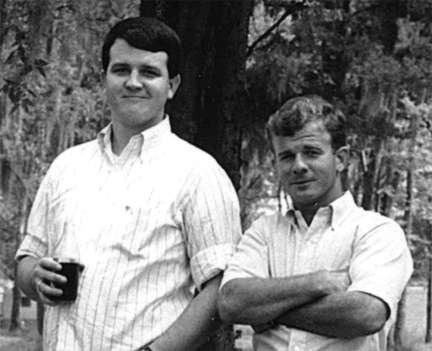
Lane & Buck ca 1963Michael (Buck) Roy and I have been friends for nearly 60 years now. During that time, we were like the closest of brothers. In fact, he lived with my family for a spell when we were teenagers. He went to be with the Lord this morning around 9am.

In a way, I am glad he’s gone, because he suffered with Lewy Body Dementia. He was aware he was quite literally losing his mind, and as expected, it scared him, and not many things scared Buck. It would scare me, too. I know he would not want to live in his own private hell of non-existence, dealing with the frightful hallucinations he was having as a result of the LBD.

He’s at peace now.

It is hard to put into words one’s feelings for another after being so close for so long. We shared so many adventures together, some of which I have written about here and here and here. (And I will write more as they come to mind.) We spent many a night around a campfire, discussing things that made no sense to us and things that did, solving the world’s problems and maybe helping aggravate a few. Our minds worked so much alike, it was scary. I suppose that is what drew us to each other.

Buck, which is what all of us who knew him from childhood called him, was one of the most outgoing people I ever knew. He could strike up a conversation with anyone about anything, even if he knew nothing of the subject. It was very hard to not like Buck. It was very hard not to smile when around him for any but the briefest periods. We did smile a lot, and we did laugh a lot, and we even wept on each other’s shoulders when we were hurting inside.

We knew the other would be there when we needed help, have each other’s back in a fight, even down to burying the body if it ever came to that.

Buck is gone now, but will never be forgotten. The best part of his passing is I know I will see him again in eternity. You see, when he was a teenager, Buck accepted Christ as his Savior. He went forward at a Billy Graham Crusade in New Orleans. Our separation will, therefore, be only temporary. And once again we can sit around a campfire, this time in Heaven, and swap tales.

In the meantime, I am going to really miss him.

11 Comments

Filed under Family History, Growing Up, Kenner

Barefootin’ – Manard, Joey and Me

I took out the garbage last night, and being too lazy to look for my shoes, I dragged that can out to the curb barefoot.

And my feet hurt!

The driveway is well worn, and the aggregate tends to be a bit more exposed than in recently laid concrete. I felt like I was walking on rocks!

And you are thinking, What is your point?

I don’t really have one, other than my feet never used to hurt like that. I guess that comes with age? I remember when I was a kid, we never wore shoes in the summer, except when we had to “dress up” to go somewhere. Otherwise, once school let out, our shoes went into the closet and didn’t come out again until school started, assuming they still fit.

Our feet may have been a bit tender after nine months being encased in leather, but they soon toughened. Within a couple of weeks or so, we could run across Sixth Street, which was “paved” with gravel or clamshells, without feeling any pain. Naturally, being shoeless, we did incur a few cuts and bruises along with a few rusty nail punctures, but my dad always had the tetanus shot handy.

Those days are gone. Now I am old and a tenderfoot for life. I doubt I could stand the pain long enough to build up the calluses again.

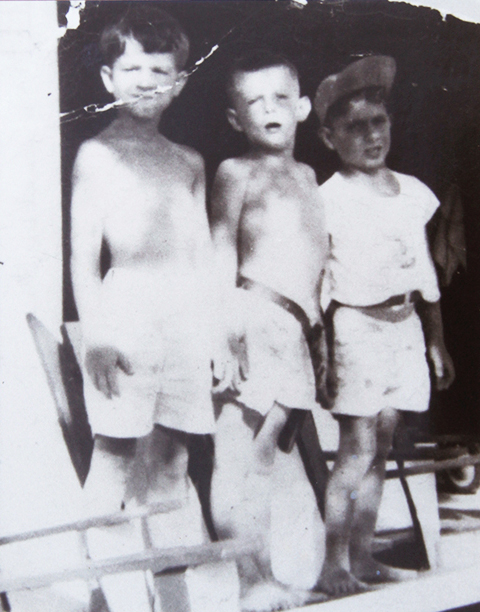
Me, Manard, Joey 1953Actually, that event reminded me of this picture hanging in my office. It is of me on the left, Manard Lagasse in the center and Joey Giammalva on the right. It was taken in 1953. We were best buddies then. I was 9 years old. Manard and Joey were 7 years old.

Note the “summer uniform,” which was limited to shorts and maybe a tee or hat but no shoes. (Side note: Joey had flat feet, and on wet concrete, he could make realistic-sounding flatulence noises with them.)

Joey’s mom took the pic, and Joey carried it in his wallet for years before he made enlargements for Manard and me.

Both Manard and Joey are deceased now. Good times together! Good memories! Good friends sorely missed! Whenever I see Bubba, Manard’s son who I think looks just like him, I want to grab him and hug him, pretending for just a few moments that “Man” is still with us.

5 Comments

Filed under Family History, Growing Up, Kenner

Outhouses and Smart*** College Boys

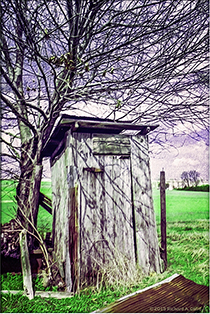
A Tree Grows In Bartlett_03122006My friend Richard Caire and I roomed together in college. The third member of our little confederacy was Sam Hopkins, and all three of us majored in art. Richard has focused his talents on photography and Photoshop manipulation to create some truly beautiful works of art. He sent me the attached image of an outhouse near where he lives, and it reminded me of a story.

It was our second year at Southeastern Louisiana Institute (Sounds like some kind of asylum doesn’t it? Such would have been appropriate for Richard, Sam, and me.)

Anyhow, we were taking art with no real notion how we might make a living at that. Actually, we were taking art so we could drink beer, thus my claim I minored in beer. We three happy-go-lucky, beer-swilling smartasses show up for the first day of a drawing class in the fall of 1963, and after all the introduction stuff, we get our first assignment, which was to venture forth and find a nice house and draw it. The instructor’s assumption was that we would wander off campus and sketch one of the many beautiful old homes around the college.

Oh no! The Three Amigos had to turn a simple assignment into a contest of wills. We drove all over the backwoods around Hammond, Louisiana to find an outhouse to draw. They are, after all, “houses,” are they not? It might not surprise the reader to learn that finding an outhouse around Hammond in 1963 was not a major challenge.

We found a nice one, kind of leaning like the one in the picture, and approached the owners, an elderly black man and his equally elderly wife, to ask permission to sketch their outhouse. She stood off to the side and looked suspiciously at the three white boys standing there, stupid grins on our faces, sketchbooks in hand, and asking to draw their outhouse. The old man looked at us and rubbed his chin, and I am sure he was thinking, These white boys be crazy!

He was right!

But he graciously gave his permission. (We might even have given him a few bucks.)

An hour or so later, outhouse properly sketched, we departed and turned in our assignment, expecting … I’m not sure just exactly what we were expecting, now that I think about it. The instructor could have taken it badly and given us all an “F” for being so arrogant, and we would have deserved it. Instead, he evaluated them right along with all the other students sketches of “real” houses. Maybe he thought we were really creative?

So we went out for a beer to celebrate.

Image credit: © 2015 Richard A Caire

Leave a comment

Filed under College, Family History, Growing Up

Three Strikes and You Are Out!

Time for another war story…

While stationed at George AFB in Victorville, CA as a 25251 Weather Observer, I was often sent on two-week TDYs (Temporary Duty) to Cuddeback Air to Ground Gunnery Range about 60 miles north of George. Cudde was quite literally in the middle of nowhere. It was a dry lake in a shallow valley hemmed in by low mountains.

As a weather observer, it was my job to supply winds-aloft observations for the pilots to use in judging their bomb trajectories and strafing runs. To calculate winds aloft we launched a 1,000 gram balloon and tracked it with a theodolite, taking elevation and azimuth readings every 60 seconds. All this was explained here if interested.

To get to Cudde you had three choices: drive your own POV (privately owned vehicle), which would leave Janis without a car for a week at a time, or arrange for Motor Pool to drive you up Sunday night, the most common method, or take the air taxi shuttle Monday morning. The shuttle flight usually left too late for the observers to use it. We had to take our first winds aloft and surface obs (observations) at least four hours before the first mission arrived over the range. The RO (range officer) used the air shuttle and arrived only an hour or so before the first mission.

DAYTON, Ohio -- De Havilland U-6A Beaver at the National Museum of the United States Air Force. (U.S. Air Force photo)

DAYTON, Ohio — De Havilland U-6A Beaver at the National Museum of the United States Air Force. (U.S. Air Force photo)

When I first arrived at George, they were using a single-engine, de Havilland U-6 Beaver, which is built in Canada and commonly used by bush pilots in both Canada and Alaska. The U-6 was a six-seater (five passengers plus the pilot). For some reason I can’t recall, I was taking the U-6 up on this particular trip to Cudde.

We take off and in only a few minutes (60 miles, remember) we are letting down onto Cudde’s paved runway. All seemed to be going smoothly, “seemed” being the operative word here.

I had watched many U-6 landings while up at Cudde, so I knew what to expect. The parking apron, which is right in front of Cudde’s tower, is about halfway down the runway. The U-6 is a STOL aircraft (Short Take Off and Landing), so it normally uses barely half the runway and pulls right into the parking apron.

But this landing…

We touch down and the parking apron is coming up fast. I am thinking, How is he going to slow this thing down soon enough to be able to pull into the apron?

Short answer: he wasn’t going to make it, but not for want of trying.

The pilot hit the breaks and starts his turn, and we zip right through the parking apron and spin off into the desert, like a 360 degree spin off into the desert!

The Beaver comes to a stop, and the pilot kind of looks sheepishly back at me and the other passenger in the back. “That’s what you call a ground loop.”

Swell! Just get me off this plane!

I should have learned my lesson. I didn’t.

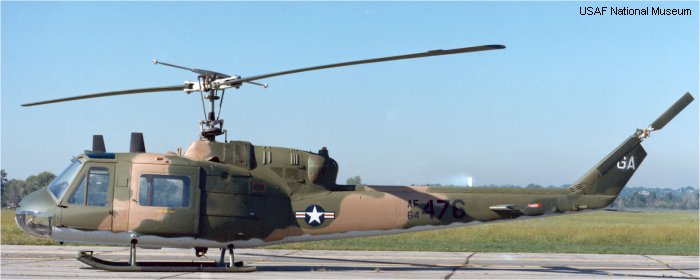
h1fAbout a year later, they replaced the U-6 with a UH-1 Huey helicopter, and even though the Huey would not be my first helicopter ride, I had to try that puppy. So, I sign up for another Monday morning milk run to Cudde in the Huey.

The RO and I are all loaded in the Huey waiting on the pilot to board and light up the turbine engine. I got suspicious this lark of a trip might not be such a good idea, because I am watching the pilot and the crew chief have an animated conversation involving lots of arm waving and finger pointing, mostly in the direction of the Huey I am sitting in.

Eventually, we took off and made the trip without incident, like crashing or something. Later that day while having lunch in the chow hall, I heard some of the Cudde regulars talking about how they had grounded the Huey because of engine issues when it got back to George.

Three strikes and you are out? I used motorpool for all my trips to Cudde after that.

Leave a comment

Filed under Growing Up, War Stories

Crusin’ down Ole Highway 90.

Returning from a week in Blue Mountain, Florida this Sunday, we were alerted to a severe traffic jam on I-10 at the Louisiana/Mississippi state line by my son, Ryan, and DIL who were over an hour ahead of us. We shifted over to US. Highway 90 at the Stennis exit to avoid some of this. Should have gotten off at the Bay St. Louis exit, because we hit the backed up traffic right after passing Bay St. Louis.

Oh well…

When I was a kid and before I-10 existed, we made many a trip to and from Waveland, MS using this route, so crusin’ down Ole Highway 90 was a trip down memory lane for me. I was reminded of those many Friday nights going east and Sunday nights returning to NOLA on that dark two-lane highway.

We always had a station wagon, which was the van or SUV of my day. It was always a nine passenger with a rear facing third seat. That was my favorite place to ride on those trips. The middle seat was folded down, and quilts were spread over the flat floor for my two little sisters to sleep on the way. They shared the space with our two dogs and sometimes a bird or that blasted rabbit mentioned elsewhere.

Seatbelts? We didn’t need no stinking seatbelts! Besides, the cars weren’t even equipped with them back then.

Did I mention luggage? No, because I can’t recall us ever carrying any. We must have had some little something somewhere, but it never took up much space. We had extras of almost everything stored in our Waveland house, so we don’t need no stinking luggage! Well, not much anyway.

No AC in the cars either, at least not in ours. Only the “very wealthy” bought cars with AC back then (1950s), and MB was too frugal for that. I can recall several times we noticed water dripping from other cars, and being ever concerned for the safety of others, we flagged them down to report the strange water dripping from under their cars. Inevitably, they would roll down their windows (because they had AC) and say, “What?”

To which we replied, “Water! You have water dripping from your car!” And we continued on, thinking we had saved the lives of some poor family that we were sure their car was close to exploding—or something.

If you haven’t figured it out yet, the dripping water was condensation from their AC!

We didn’t know any better!

One story MB told of a trip to Waveland has always stuck in my mind. He and his friend, Pete Constancy, built our house in Waveland, mostly from scraps of a house they tore down in NOLA that Pete owned. They carefully removed the window frames and sashes and stacked them on a homemade trailer. The trailer was, shall we say, a bit bouncy. They stacked the windows flat, not on edge like they should have. Stacked so, the glass could not stand the bouncing, and they arrived in Waveland with every pane broken, and Highway 90 strewn with broken glass from NOLA to Waveland.

My sisters, Jeanne and Martia, and my cousins, Melanie and Bobby, will remember the “Pama-Pama Bridge,” which I think was the one over the Chef Menteur Pass. (One of the four will comment and correct me if I am wrong.) Why was it called the “Pama Pama Bridge?” Because your car tires made “pama-pama” sounds as they passed over the expansion joints. I never knew of any other bridge that sounded quite like that.

I went over it today, and, sadly, it doesn’t go “pama-pama” anymore. Another childhood memory lost forever!

Motorcyclists have it right when they say, “It isn’t the destination, it’s the trip!” We are always in a rush to get somewhere. We need to spend more time on the Old Highway 90s of our lives and enjoy the ride.

3 Comments

Filed under Family History, Growing Up, Kenner, Waveland

The Gonzales Light

This is written from memory of events that took place up to 50 years ago. It concerns a phenomenon called the “Gonzales Light.” In Louisiana, these eerie swamp lights are known as feu follets. In other parts of the world, they are called will-o’-the-wisps. This mysterious light appears around Gonzales, LA and is generally assumed to be luminescent swamp gas given off by decaying organic matter. Sorry, not buying that one after my experience with it.

I was introduced to the Gonzales Light by my friend Dixon Wilson sometime before or about graduation time in 1962. Dixon told Mike (Buck) Roy and me the story one day, and we decided to make the trip to Gonzales that night to see it. We ended up out in the woods in Dixon’s Corvair parked in the dark in what appeared to be a recently logged or cleared area.

Lights out, Buck, and I smoked cigarettes in the dark with non-smoker Dixon until the light appeared. (Cigarettes were “in” then.) It appeared off in the distance as nothing more that a distant faint light fairly well defined (localized) and changed colors. It was faint enough that it was possible to convince yourself your eyes were playing tricks on you. It appeared off and on several times over the period we were there, perhaps an hour or more.

Dixon, recovering from a spinal tumor was partially handicapped and did not have full control of his right leg. Whenever the light appeared, Dixon’s right foot would begin vibrating, tapping rapidly on the floorboard. At first it scared Buck and me, until Dixon admitted it was his out-of-control foot.

That was about the extent of the light’s appearances that night. We went home somewhat disappointed.

Dixon and I began college at Southeastern LA College in Hammond, LA in the fall (Buck went into the Army soon after). Dixon and I revisited the light at least twice over the next year or two as I recall. The first of those trips were very much like the one described above, except it was to a different location in Gonzales, and others were with us.

It is the third trip, the second after starting at SLC, that is most vivid in my mind. I believe it happened in the fall of 1963 but I cannot be certain. Several of us were going to Baton Rouge to give blood. As college students we were always in need of beer money. We went to BR because they offered $20 instead of the $10 offered in Hammond. I cannot recall all that were on this escapade. I do remember Dixon Wilson, Alex Oliver, Tony DeMarco, John D’Antoni, and several others, enough people that we took two cars, my ’57 Chevy and John’s ’58 Chevy. We gave blood in the late afternoon and went and had a few beers that evening before returning to Hammond. (I know! Spare me the lectures.) Someone suggested we visit the Gonzales light. Time was probably late evening, tenish, when we got to Gonzales. We went to the same place we had gone to on the second trip mentioned above.

Allow me to set the scene…

First of all, we are one pint low and have been drinking beer, not that that should mean anything.

We drove down a dirt road in rural Gonzales, a good ways off Airline Hwy, and there was not a light from a building in sight. The road was intersected from the left at a 90-degree angle by another less traveled dirt road. We turned onto that road and stopped about 50 yards from the intersection. On the left and right were pastures with fencing around them. No cows as I remember. On the right back near the intersection of the two roads was an abandoned farmhouse. Ahead was a tree line about 75 to 100 yards away. The road was a perfectly straight, one-lane dirt road with grass in the middle of two tire tracks, and shallow ditches on either side. It appeared it was rarely ever used. About 50 yards into the woods a small fairly straight dirt trail wide enough for a vehicle intersected the road we were on from the left. I don’t know where this trail went, as we did not follow it to its end. Our road went through the woods for perhaps a quarter mile or more and crossed a blacktop road, continuing on the other side as a well used gravel road.

It was very dark, no moon. Once we parked and turned off the lights, it got very black. We knew the tree line was ahead from having seen it in the headlights, but we could see it only vaguely even after our eyes got accustomed to the dark. We got out of the cars (my car was in front), and we stood around in the dark, smoked cigarettes, and talked as we waited for the light to appear.

We didn’t have to wait very long before the light appeared down the dirt road some distance away. It looked to be at or just inside the tree line. It changed from red to blue to green and various colors and back again. It was fairly small in size; I would guess a bit larger than a basketball assuming the distance was estimated with any accuracy. It was not well defined but it wasn’t a vague shape either. In other words, it had no hard edges. It was a little brighter than on the two previous sightings, not real bright but bright enough and clear enough that everyone saw it.

It came and went over a period of time, perhaps a half hour or more, always in the same general location. Eventually we became curious of the source and began to speculate that it was car lights up ahead or something easily explainable. At this point, we had not yet been down our road so we had no idea what was ahead. We decided to send out a scouting party, and somehow I got elected; I guess because my car was ahead of the other car.

I took one other person with me, and we drove down the road in the direction we had seen the light. I do not recall who was with me, probably Tony or John. We noted the little trail to the left in the woods and passed it, going on to discover the blacktop road further on. (There was no traffic on that road all night that we could see.) I crossed over the blacktop and stopped, blinking my brake lights back at the rest of the crew. I turned around and faced back the way we had come and flashed my brights several times and turned out my lights completely several times, then drove back to the group.

I turned my car around to face back towards the woods again, and we got out to discuss the results of our experiment. The others had clearly seen my tail lights, brake lights, headlights, brights, etc, and they all said it was clear that it was my car and looked nothing like what we had been seeing.

So, we are standing around the front of my car again and talking, when someone notices the light is back. This time it is a little brighter and seemed a little closer. We all oohed and aaahed as we watched the light change colors and this time move about just a little, left and right, up and down slightly.

Then things got really interesting!

Suddenly the light quite literally charged us, coming closer and growing larger and brighter as it charged. It moved rapidly and was almost on us in a matter of a few seconds. As I recall it seemed to be to the left side of the road and almost in the pasture as it approached.

Panic ensued!

Eight “brave” souls decamped immediately and scrambled for the cars. We roared down the road in reverse headed for the road we came in on. Tony backed around in front of the farmhouse and I was right behind.

This is what I was thinking: The light was so bright and came so quickly at us, I am assuming we have angered some farmer by trespassing, and he was coming after us.

As I threw it in first and prepared to haul butt, someone said, “It’s gone!” We stopped and regrouped. What do we do? Where did the light go? What was it? Another car? Someone with a flashlight? We regained our courage and decided to investigate.

We went back down the road (cautiously) and stopped again where we were parked before. Cautiously, we got out of our cars (engines still running, however) and had a war council. Then began the rationalizing.

We decided it had to have been someone in another vehicle, and he must have turned down that dirt trail I had seen earlier. “Yes, that’s it! Let’s check. You go, Lane, we will wait here.” Or something like that…

Why do I always get the dangerous assignments?

I took my car and someone to ride shotgun, probably Tony again, (I wasn’t about to go alone!) and we drove back down the road to the trail in the woods. Don’t ask me how I got the courage to do this, but I shut the ’57 down, and Toni and I walked down that trail through the woods. It had rained that day only lightly enough to pockmark the dust. Those pockmarks were clear in the dust of that trail, and there were no tire tracks in the dust! Nothing had driven down that road!

We returned to the group and gave our report. Obviously it had not been another car, because it had nowhere to go once it charged us. It didn’t retreat and go down that trail. We concluded that we had REALLY seen the Gonzales Light that night, perhaps more closely that we would have preferred.

We stayed around a bit longer, but it did not appear again that night. After the adrenaline wore off we got bored and went back to school to tell our tale to all that would listen.

What did we see? I do not know, but I do know that some eight of us saw the same thing, and it scared us to death. There was no discussion about running or staying when that thing came at us. The decision was instantaneous, and it was unanimous. We were out of there!

I have never been back to Gonzales after that night. Never got the chance, and perhaps never had the urge. It probably isn’t there anymore. I suppose the area is built up now, besides I cannot begin to remember how to find that location.

The Gonzales light has been mentioned in publications dealing with weird stuff like that. Most believe it is glowing swamp gas, but what we saw was very bright and well defined, enough that we mistook it for possible car lights, at least one car light, but it seemed a lot larger than car lights. What we saw didn’t look like glowing swamp gas.

4 Comments

Filed under Growing Up, School

The Joy of Maleness

If you are a male, especially an older male, you may have recently become more acquainted with your prostate, probably a lot more acquainted with it than you would like.

One of the “joys” of this new relationship may be a prostate biopsy procedure. Count yourself very fortunate if you have not reached that point. The first is you get to partake of this manly entitlement because your urologist suspects you just might have prostate cancer based on a sudden or significant rise in your PSA count. The second reason to rejoice is the avoidance of the procedure itself.

About that procedure…

Several years ago my urologist ordered a prostate biopsy. The experience is a major event in your life. For a male, probably something akin to giving birth but not taking nearly as long and perhaps not as painful.

It begins with a purging. They will be violating you rectally and do not wish for you to soil them or their torture examination table. That requires a good flushing of the system. Whatever it is that they give you to take, it is very effective. You might want to hold onto the toilet or be prepared to utter the words, “Houston, we have liftoff!” I passed everything I had eaten in the last week and some things I had only thought about eating!

In a badly weakened state, I reported for my exam. My doctor introduced me to the ultrasound operator, who would be his “eyes” during this expedition up my rectum, and he fancied himself a comedian, keeping a running dialog of one liners all during the procedure.

So, I was instructed to drop my pants and lay down on the torture examination table on my side in a fetal position, which, by the way, is well chosen for this procedure however you look at it. Then the violating begins.

First the ultrasound tech/comedian shoves a device up your know where, prefaced by the encouraging request, “Now, Mr. Casteix, just relax your sphincter muscle.”

Yea, right! How in the world do you order THAT muscle to RELAX? Especially considering he is preparing to insert a device that felt like it was about the size of a baseball bat, the big end! I never actually saw it, but my sphincter muscle must have, because it clamped shut like an oyster avoiding the shucker’s knife.

“Now, Mr. Casteix, I need you to relax your sphincter muscle, please.”

Pleading didn’t help one bit! But reluctant oysters and sphincter muscles can be overcome—with brute force.

And he is in!

That is followed by the encouraging words directed to my urologist, “Hum, rather large prostate.”

“Indeed,” came his informed reply.

I’m thinking, Oh, joy!

Then the urologist gets in the game and inserts his torture device after more requests to relax my sphincter muscle. At this point, it is now stretched way beyond relaxed, and I wonder if it will ever return to its natural state, and am I doomed to be forever incontinent after this?

There must be a camera on that thing, because I then get a congratulatory remark from the urologist, “Nice, Mr. Casteix. It is really clean inside. You did a good job!” And I am thinking, It was none of my doing! After THAT laxative, he is lucky there is even an “inside” left there for him to comment on its cleanliness!

That was only the beginning. Then comes the violent assault on your prostate. I never actually saw it, but it felt like whatever it is the urologist shoves up there must have resembled the head of the alien from the movie of the same name.

He took nine tissue samples with it–NINE! What was that like? The alien head shoots out its telescoping jaw device and punches through your colon wall and into your prostate. There it opens up and bites huge chunks of flesh out of your prostate. In between periodic urgings to relax my sphincter muscle, I am thinking, He might actually be removing my prostate a piece at a time!

Having extracted most of my prostate, they remove the alien head and the baseball bat/ultrasound from me. The ultrasound tech/comedian gets cute then. “My girlfriend doesn’t know what I do for a living.”

And I am thinking, That might be a good thing for the both of them.

He continued, “I will be slipping down the back stairs. If you should see me downstairs, just pretend you don’t know me, OK?”

And I am thinking, Not a problem!

I was warned I might see a little blood in my urine and stool for a few days. Understated! During the next few days, I considered the possibility I might need a transfusion!

Thankfully, the results came back negative. Recently my PSAs went up a point and the urologist suggested another biopsy. Not a chance, and I refused, suggesting we wait and do another blood sample in a few months. We did and the PSAs went down! Whew!

So, gentlemen, welcome to old age. You do need to keep tabs on your prostate, but understand that all kind of things can temporarily drive up your PSA count. Get a biopsy when your urologist says you need one but hold his feet to the fire on it.

2 Comments

Filed under Growing Up