Dispatches From The Front #3

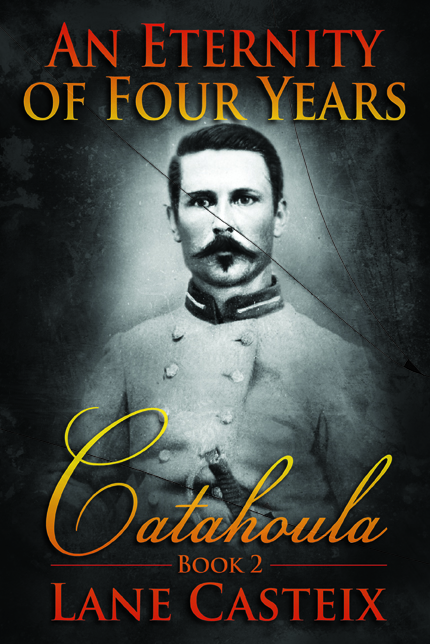
Book 2 1Dateline: 21 July 1861

From: Manassas Junction, Virginia

The fight both sides have been spoiling for just occurred around a creek called Bull Run near Manassas Junction, Virginia. Confederate commander, General Pierre Gustave Toutant Beauregard, the hero of Fort Sumter, had previously withdrawn his forces to take positions behind Bull Run. Such must have seemed to Union commander, General Irvin McDowell, as weakness, because he advanced in Beauregard’s wake.

Beauregard planned to draw McDowell into crossing Bull Run and attacking him near his center, allowing The Confederates to flank the Yankees around their left flank, thus cutting off McDowell’s escape route to Washington and his means of supply. McDowell did not take Beauregard’s bait, but instead, attempted a flanking maneuver of his own around Beauregard’s weakly defended left flank, where Beauregard had positioned Colonel Nathan G. Evans’ 4th South Carolina Regiment supported only by two cannons and Major Chatham Roberdeau Wheat’s Tigers, the 1st Special Infantry Battalion, Louisiana Volunteers, which consisted mainly of rogues and ruffians of ill repute, many culled directly from New Orleans’ jails. All total, only about 1,100 men held the Confederate left and would ultimately face at least three divisions.

The battle opened with Federal cannon fire from near the center of the line. This was but a distraction, as McDowell was actually busy moving the bulk of his army around the Confederate left flank. Dust raised by their movement and observations from Confederates in a high tower exposed the maneuver, and General Evans positioned his regiment to the left to meet the threat. A brief skirmish between some troops from South Carolina and Wheat’s Tigers ensued as a result of mistaken identity. Officers from both units quickly sorted out the mess but not before the Tigers suffered 3 killed and several wounded.

Soon Yankees were pouring over Bull Run to be met by the men from South Carolina and Louisiana. Standing firm, the Confederates beat back the Yankee advance and even charged into their midst. Some of Wheat’s Tigers threw down their slow-firing muskets and, with screaming Rebel yells and drawn knives, gallantly fell upon the hapless Federals, throwing them into confusion and driving them back. But they soon recovered and added more units to their number. Badly outnumbered and with their units mixed, Evans and Wheat were forced to withdraw back to Henry House Hill, where they were eventually joined by fresh Confederate brigades rushed into the battle. Included was the Virginia Brigade, commanded by General Thomas J. Jackson, who stood firm against the charging Yankees like a stonewall. As a result, his brigade is now being called the “Stonewall Brigade” and its commander “Stonewall” Jackson.

With more Confederate brigades thrown into the action, the Federals began to falter and withdrew in a panic, skedaddling all the way back to Washington, leaving the battlefield to the victorious southern warriors.

Sadly, during the fight at Henry House, Major Wheat was badly wounded and carried from the field by some of his men. This evening, he was told by the surgeon there was no record of any who had ever survived such a wound as his. To which he defiantly replied, “I don’t feel like dying yet. I shall put my case on record!” No doubt he will.

Though a great southern victory, special recognition must be given to Wheat’s Tigers, who held the line, withstanding many times their number, allowing time for a defense to be organized, ultimately guaranteeing victory. There are clearly no better fighters than the Tigers from Louisiana.

Excerpt from An Eternity of Four Years, Chapter 5 – First Blood

*****
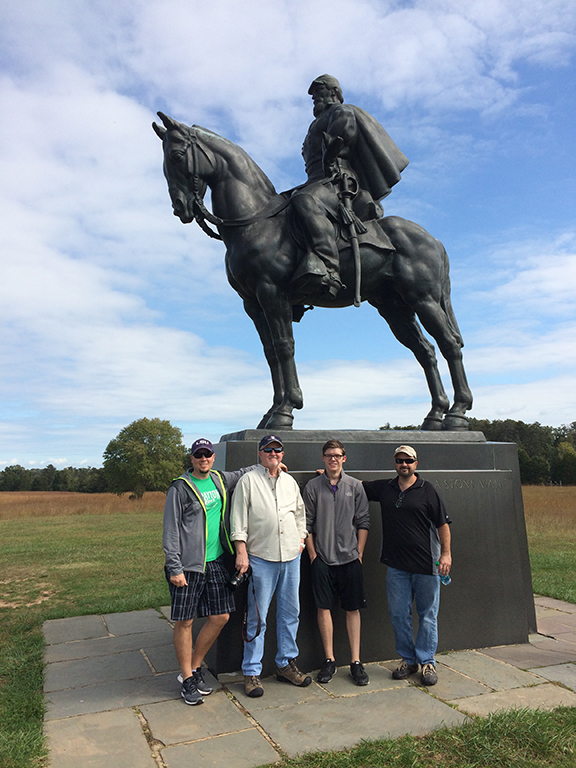
Jackson StatueThe brigades of Barnard Bee, Francis Bartow and Thomas Jackson arrived at the front and joined the fight. Jackson and his Virginians moved to the left near Henry House Hill and took up positions. The fire from the Federals was terrific as we fell back unable to hold. Colonel William Pendleton had four batteries of artillery on the hill and was pouring canister shot into the Federals. An Episcopal Minister, Pendleton shouted the order, “Fire, boys! And may God have mercy on their guilty souls!”

The 4th Alabama under Bee was being pushed back. Bee rode up to Jackson and announced, “General, they are beating us back!”

Jackson’s reply was to the point, “Sir, we will give them the bayonet.”

Reassured, Bee rejoined his shattered force and asked his Alabamans to make another effort.

There is some question to this day as to exactly what Bee said to his men and just what he meant by it. It was generally agreed that he pointed to the Virginians and said, “Look at Jackson and his Virginians standing there like a stone wall.” With that statement, General Bee gave Jackson his famous nickname. After that Old Tom became known as “Stonewall Jackson,” and the Virginians of Jackson’s Brigade became known as the “Stonewall Brigade.”

*****

Report:

The “adventure” continues. The day began with Heath and Blake sleeping late. They were tired. Then it got really interesting. Blake discovers he has the luggage of some girl. Evidently, she grabbed his bag and left hers with him. Naturally, it contained all kind of girlie stuff. A long hilarious thread or text messages with wives at home ensued. I suggested he make do and wear what was in the bag, but the bra didn’t fit. That means we made a trip to Wally World to re-outfit Blake. Janis actually predicted we would have to do that for some reason or another. (She knows us well.)

Moving on…

Henry House

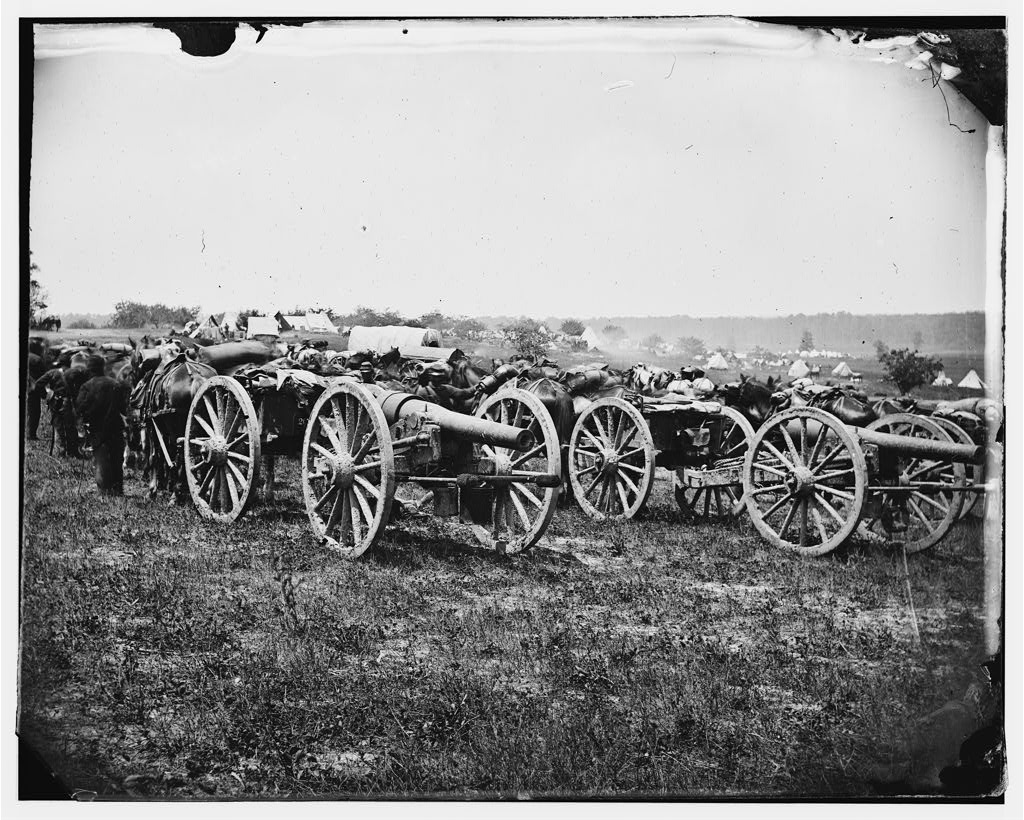
We visited the battlefield for First Manassas and took the walking tour. Very interesting to see the ground I wrote about in An Eternity of Four Years. Things were actually closer together than I had imagined. The first image is of Henry House and the Federal gun line mentioned in the book. Evans and Wheat were driven back here from in the distance in the left. The Confederates, by then, had realized the battle was on their left flank and began rushing brigades to that area. This hill became the focus of the fight. Confederate positions are about 800-900 yards in the direction the guns are facing.

We also visited some Second Manassas sites, a battle not really mentioned in the book, because Ethan was in Richmond tending to Aimee when it occurred. The Louisiana Tigers played a very remembered role in this fight. The Confederates were deployed in very strong positions along an unfinished railroad cut. In some places the railroad was a trench, while in others it was elevated. The image below is of an elevated section held by the 1st Louisiana Brigade. They ran out of ammunition and were reduced to throwing rocks at the Yankees 20 feet away just on the other side of the cut and eventually driving them off.
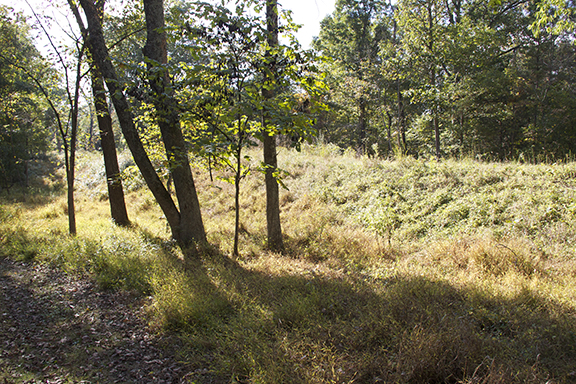
Unfinished Railroad

Went to dinner tonight at BJ’s Brew Pub and managed to get there and back without getting lost. Our navigation skills are getting better….

Leave a comment

Filed under An Eternity of Four Years, Catahoula Books, Civil War, Dispatches, Excerpts, History Lessons

Dispatches From The Front #2

Cover B1From: Arlington, Virginia

Arlington was the home of Robert E. Lee before the American Civil War. He was serving as an officer in the United States Army prior to the war. Because of the incapacity of the aged Winfield Scott, General of the Armies, field command of the Northern Army was offered to Robert E. Lee. Virginia seceded from the Union soon after, and Lee declined the position and “went south”* to “offer his sword” to his home state of Virginia. Like many southerners, he could not take up arms against his home.

Arlington Plantation had originally belonged to George Washington Parke Custis, grandson of Martha Washington and step-grandson of George Washington. Custis willed the 1,100-acre estate to his daughter Mary Anna Randolph Custis, who was married to Robert E. Lee.

After Lee went south and because of its proximity to Washington DC (just across the Potomac), the family vacated the house in 1861. It was then occupied by Union forces during the war and became a cemetery for Union dead.

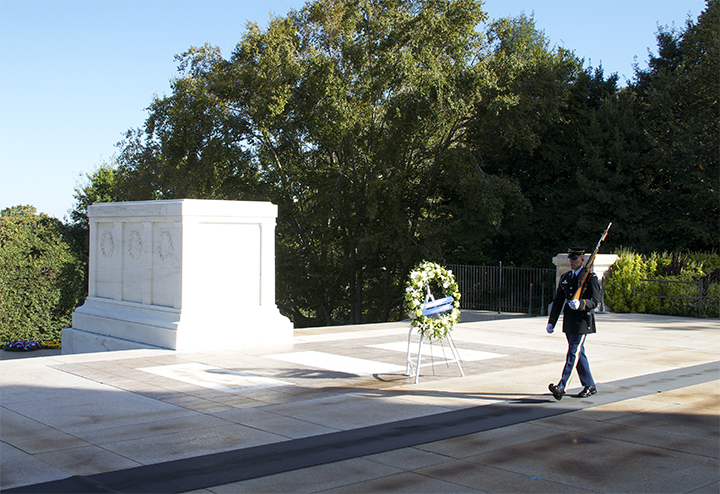
Today Arlington is a National Cemetery and a shrine to those who have served our nation honorably. Arlington is the home of The Tomb of the Unknown Soldier guarded 24 hours a day, 365 days a year, and in any weather by Tomb Guard sentinels. Sentinels, all volunteers, are considered to be the best of the elite 3rd U.S. Infantry Regiment (The Old Guard), headquartered at Fort Myer, VA.

* “Went South” (also, “gone South,” “go south,” etc.) – The term was used well back into the eighteenth century. In modern usage it generally refers to a situation turning bad or going “down,” because South is usually down on maps. It was used during the Civil war to refer to Americans who shifted their allegiance from the United States to the Confederacy. This is especially true for members of the US military, who resigned their positions and volunteered for service in the Confederate military.


Excerpt from The Last Day of Forever. This is where Ethan is faced with staying in the US Army or resigning.

*****

Colonel Loring became more serious. “I understand you’re from Louisiana?”

“Yes, sir.”

“I’m not sure how you feel about what is going in the East, but you being a southerner, I imagine it is very much like most of the southern boys in this army. I’m from South Carolina, myself. Personally, I think secession is a very bad idea, but I’ll tell you what I have told other officers. The South is my home, and if I must choose I am going to resign my commission.”

“I understand your feelings well, for I feel as you do.”

He stopped and turned to face me. There was sadness in his eyes. “War is coming. Lieutenant, I can feel it like I feel a change in the weather in the stump of this missing arm.” He became pensive. “Several more southern states have seceded from the union: Mississippi on 9 January, two days later Alabama, Georgia on 19 January.” He paused and took a deep breath. “And just a few days ago Louisiana voted for secession.”

So, they had done it, I thought as fear welled up inside me, fear for my country, fear for the future.

Loring continued, “I imagine you’ll be resigning your commission now.”

I looked at him questioningly. “I can’t take up arms against my state, my friends, or my family. What can I do, sir, but resign?”

*****

Arlington Graves

Trip Report:

We have arrived, and the adventure begins—first, by getting lost on the way to Arlington National Cemetery, and it is only a couple of miles from the airport! In the process we crossed the Potomac twice, and that was not part of the route from Reagan International to Arlington, which we drove past three times unable to make the turn into the cemetery because of wrong instructions or wrong lane, or wrong turn. We drove all over Northern Virginia, and we broke at least a dozen laws in the process if making lane changes and turns. Tourists!

Actually, the conversations (maybe arguments) among us on giving directions to Ryan, who was driving, were quite humorous. Heath says that was the best part of the trip so far.

We did finally find the front gate to Arlington and get parked. By far, the best part of the visit was the Tomb of The Unknown Soldiers. We lingered there for quite a while and saw the changing of the guard and a wreath laying ceremony. These sentinels take this very seriously. Some kids were talking loudly (silence is expected at the tomb), and the guard broke his stride and stepped out with his rifle and admonished them. They take 21 steps to make the trip one way, and all turns were on a 21 count. Twenty-one being the number for the highest honor, as in a “21 Gun Salute.”

As mentioned they do this in all kinds of weather, including hurricanes. There was a hurricane that hit Washington some years ago, and that was the one time they were told to stand-down for their own safety. The sentinels refused and walked the guard through the hurricane, anyway.

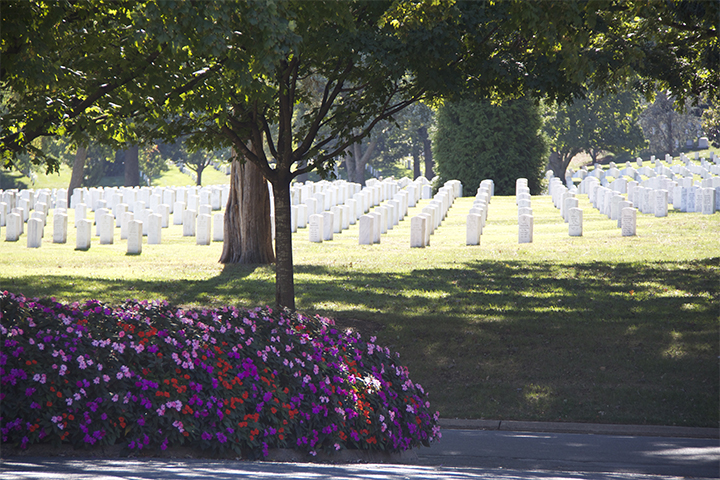
Arlington is a beautiful place and the final resting place of so many Americans, famous and not-so famous, and those “Known but to God” who gave their lives for their country—miles and miles of white headstones perfectly aligned and meticulously tended. If you ever get to DC, Arlington is worth a visit.

TOU Arlington

Tomorrow, it is the Manassas Battlefield.

2 Comments

Filed under An Eternity of Four Years, Catahoula Books, Civil War, Dispatches

Dispatches From The Front #1

Book 2 1From October 6 through October 12, I will be traveling with my two sons, Heath and Ryan, and my grandson, Blake. We will be touring famous Civil War battlefields in Virginia, Maryland, and Pennsylvania with additional visits to the Civil War prison, Fort Delaware, and Washington DC. To my surprise, it was Ryan that suggested this. I never knew he was that interested in the places I wrote about in An Eternity of Four Years. Normally, a writer visits the sites in his book before he writes about them, so this is a bit backwards. I did, however, “visit” them via Google Street View while writing the story.

I will post trip reports on http://www.catahoulachronicles.com daily, assuming I am not passed out from exhaustion. As the title of this post suggests, I will treat each post as if it were an on-scene report from the battlefield in the 1860s usually with a brief excerpt from the book. Each will be followed with some (modern) commentary with pics if I can make that work while on the road. These will be done from the various locations while we are traveling. (I may be biting off an awful lot doing this, but I will do my best, and I think it will be fun.)

I will be covering First Manassas (VA), Sharpsburg (MD), and Gettysburg (PA). In the six days we have to do this, we can’t cover every battle in the book, but these three were major engagements in the war and the book. We will drive through the Shenandoah Valley on the way to Sharpsburg but won’t have any time to spend there.

(By the way, did you know the North and the South often had different names for Civil War battles? First Manassas was called  “First Bull Run” in the North (Second Manassas was Second Bull Run), and the Battle of Sharpsburg was called “Antietam” in the North. This is because the South tended to name battles after nearby towns, and the North tended to draw names from major terrain features on the battleground. Bull Run and Antietam were both creeks running through the battlefields. Since my books are written from a southern viewpoint, I use the southern names.)

When we visit Fort Delaware, where Ethan was held prisoner for nine months, at Ryan’s request and since it is close to Fort Delaware, we will also visit Dogfish Head Craft Brewery and maybe have a brew or two. Report to follow, hopefully. From there we will return to Washington DC and visit as much as we can in the one day remaining. We intend to visit the Smithsonian Air and Space Museum and a few other “must see” sites in DC. Again reports if I can make them work.

I hope you will “come along” on this trip with us and let us show you what we see—and learn a little American history in the process.  I love history, which is one reason I write historical fiction. This is your chance to connect the history and the places with the story in An Eternity of Four Years.

I will not be inundating you with daily emails during this period. I will send out only one more reminder, and that will be a reminder announcement the day before. After that, you will be on your own to come back the next day for more Dispatches From The Front on the Catahoula Chronicles Blog. Clicking follow on the catahoulachronicles.com web site will get you automatic email updates. I also intend to post daily on FaceBook.

Leave a comment

Filed under An Eternity of Four Years, Catahoula Books, Civil War, Dispatches, History Lessons

Check Your Boots!

There is an old saying among campers and the military, “Check your boots before you put them on.” I learned that saying is true the hard way.

Back when I was into deer hunting—long time ago—and was in a deer club in Alabama, our “lodge” was an old motel converted into a deer camp. And it wasn’t terribly vermin-tight.

Awakened before dawn to go hunting on a particularly cold early January morning, I slipped into my long johns, heavy pants and wool shirt and heavy woolen socks. Still sleepy-eyed, I tried to put on my lace-up hunting boots.

I have a high instep, so boots are usually an issue for me, at least until I get my foot fully inside the boot. That was compounded by the fact the laces needed to be let out some and I had on heavy socks. I struggled to get my boot on but eventually managed to get it done.

But there was a problem.

It felt like my socks were balled up at my toe, so off the boot came to adjust my socks. And we started the process all over again.

The second time I had even more difficulty getting my high-instepped foot past the laces. So I stood up and pulled at the boot tops at the same time. Finally it gave way and my foot went all the way in with a thud when it hit bottom.

But this time there is a lump under my heel.

“Blasted socks again!” (Only I didn’t say “blasted.”)

Off comes the boot, and getting it off was even more difficult than getting it on, requiring me to get my foot up high enough to get good leverage with booth hands and wiggle the boot off. Finally, it gave way and the boot came off.

And a dead mouse dropped out into my lap. And he was rather flat. A mouse pancake.

I picked it up by the tail and tossed it out the door, then went on with my morning hunt.

As it happened, that night was the night of our annual “trial,” where violators of all manner of real and imagined offenses were brought up before a kangaroo court presided over by a “judge” and a “jury” of my “peers.”

To my surprise, I was brought up on charges of “animal cruelty” and “murder” of a mouse—and they produced the pancake mouse corpse as evidence, and it was getting a bit “ripe” by then.

I was found guilty, of course. That meant I was subject to having my shirttail cut off and hung up as a trophy at next year’s trial like the dozens of others already displayed from previous trials. Now, I was rather fond of my shirt. It was a nice heavy flannel and very warm.

The judge gave men an out. If I could tell a joke that would make everyone laugh, he would let me off.

So I told a joke and they all laughed, and that wasn’t all that difficult, considering most had been consuming adult beverages for the last few hours.

I kept my nice flannel shirt.

Leave a comment

Filed under Family History, Growing Up

Manard Lagasse Hated Getting Shots!

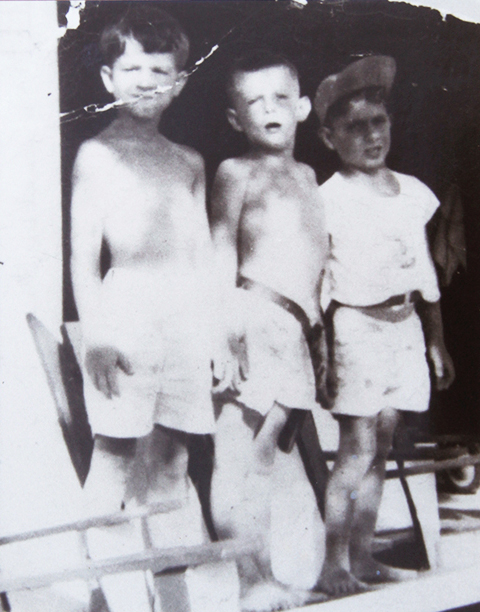
Me, Manard, Joey 1953I had a brief discussion with Elton Lagasse, Manard’s older brother, at a meeting the other night, and he reminded me of a story from our childhood. Manard had a needlephobia, a really bad needlephobia. I never really considered Manard to be a coward. He was always there with the rest of us, doing all the stupid and risky things boys did back then, but he really feared getting shots. (Manard is in the middle in the image on the right.)

As mentioned elsewhere in this blog, my dad, Dr. M.B. Casteix, used to periodically round up all the kids of our extended family for inoculations for just about every disease known to man. Those were followed in a few weeks, or a few years, maybe both, with booster shots. And then there were the tetanus shots for our frequent wounds and rusty nail punctures in our bare feet, and we were always barefoot during the summer. Seemed like we were always getting shots for something when we were kids.

The call would go out, and all us kids would be required to report for inoculations, usually on Saturday afternoon or at night after the my dad’s office closed. The roundup included Manard and Elton Lagasse, Bobby and Melanie Manard, Kibby Manard, and sometimes even my cousins, Stephanie and Robin, and sisters, Jeanne and Martia, who were all quite a bit younger than the first mentioned group.

All of us had “side-entrance privileges,” which means we could go in the side door of the office. Usually escorted by parents, we marched into the last examining room at the side entrance end of the hall and lined up for our shots. On one of the first such inoculation roundups, Manard managed to be at the head of the line, and he was looking a bit nervous—maybe a lot nervous?

CabinetMB went to his instrument cabinet (which now resides in my bathroom) for a syringe. Whatever it was he came out with, Manard evidently thought it resembled something on the order of a turkey baster with a big needle, because his eyes got got as big as saucers, and after only a brief moment of indecision, he concluded he wanted no part of that thing and promptly decamped.

Panic stricken, he headed out the examining room for the side door, but Henry Lagasse, his dad, waiting there for him to take him home, happened to be blocking his way. Upon seeing his dad standing there with a questioning expression on his face, Manard did an about face and headed up the hall that ran the length of my dad’s office, but that offered no means of escape; the front doors were locked. Henry knew something was up and was in hot pursuit of his youngest child. He caught up to Manard in the little room at the end of the hall where the bathroom and coke machine were (Heath has that over in Texas, the coke machine, that is).

Somehow, Manard got past his dad, bolted out of the coke room, failed to navigate the turn and bounced off the hall wall, then headed back down the hall at a full-tilt run for the side door—and needle freedom! About then MB innocently stepped out of the examining room with the syringe in his hand to see what was up with Manard. As soon as Manard got a  look at “Dr. Frankenstein” with his turkey baster hypodermic, he slid to a halt, his Keds making little screeching sounds on the highly-waxed, asphalt tile floor. He did another about face only to run smack into his dad, who was still in hot pursuit but obviously gaining on him.

Henry manhandled the loudly protesting and squirming Manard into the torture chamber—er, I mean examining room—for his dose of whatever it was we were getting that day. MB stuck Manard, and he squealed like a stuck pig.

Kip and ManardThe rest of us kids stood around kind of big-eyed and slack-jawed in complete awe of what had just transpired. Most of us were thinking maybe we should be considering some kind of escape plan ourselves? But the door was by then well covered by at least two parents, and seeing no way out, we reluctantly got our shots with only minimal whimpering. They stung a little, but we lived.

The whole affair became a source of humor for all of us but Manard, of course. All future inoculation summons were somewhat looked forward to, because we wanted to see what Manard would do, and he never failed to impress us with his fear of the needle.

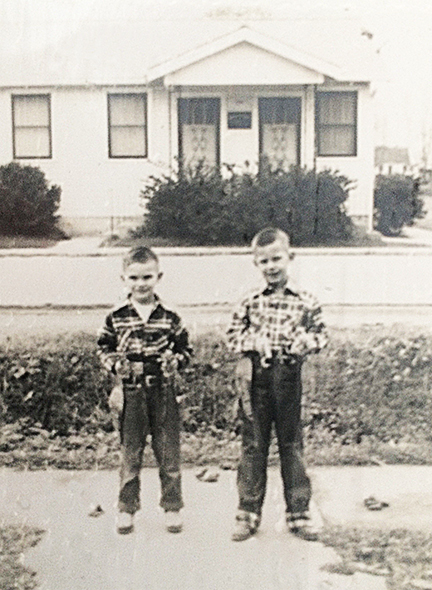
The last photo is of Kibby (on left) and Manard with my dad’s office behind them. Thanks to cuz Bobby.

2 Comments

Filed under Family History, Growing Up, Kenner

Buck Barbre and Me

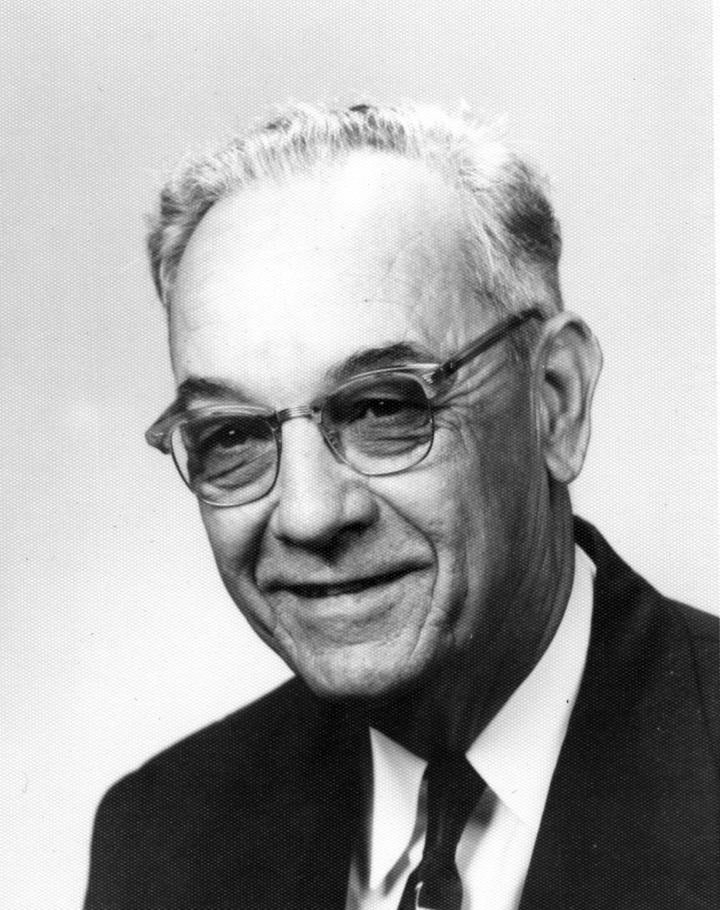
Buck Barbre RThere have been two Bucks in my life (not counting the deer). Both are deceased. One was my good friend Michael “Buck” Roy. The other was my grandfather, Stephen Jefferson “Buck” Barbre. He was known as “Prof” by most of his friends and acquaintances, because he was an educator. But I knew him as “Buck,” not “Gramps” or “Grandfather” but just “Buck.” My sisters and cousins also called him “Buck.” And no, I don’t know why.

Barbre is French, and the family tree shows it spelled several different ways. Buck Barbre hailed from McCrea, Louisiana in Pointe Coupee Parish. He went to college at the Southwestern Louisiana Institute in Lafayette, Louisiana. It was called the University of Southwestern Louisiana when I attended in the sixties, and is now known as the University of Louisiana at Lafayette. He later attended Mississippi A&M and Louisiana State University for advanced degrees.

Upon graduation, he took a position as a teacher at Carencro in Lafayette Parish and then another in Washington Parish, then finally at Jena High School in LaSalle Parish. There he met and fell in love with Rubye Ina Boddie. They married in 1922. From 1922 to 1924 he was principal at Loranger High School in Tangipahoa Parish.

51dvJGHSVPL

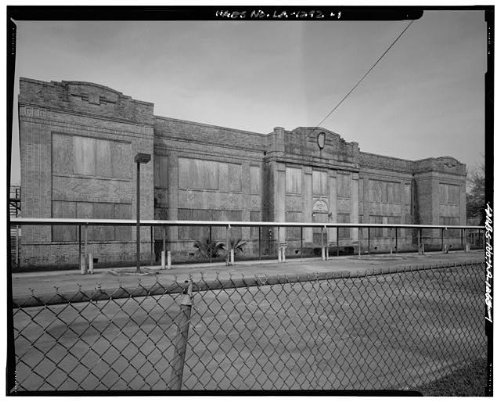
In 1924 a new high school was built in Kenner, Louisiana in Jefferson Parish, and he took the position as it’s first principal. That building was designed by architect William T. Nolan who designed a number of buildings in Louisiana that are on the National Register of Historical Places.

When Buck and his young family moved to Kenner, they stayed in what I will call a “boarding house” until they could find proper housing. I think this boarding house was somewhere along the tracks not far from the Cristina Ice House. The only thing I remember them saying about this place was how the water from the cistern tasted funny. That was because they found a dead rat in it.

They then moved from there to a rented house on Third Street about a block from Clay Street. At this time the levee was being pushed back closer to Third Street with First and Second Streets disappearing into the Mississippi River. Like many back then, the Barbre family had chickens, and the levee construction crew overdid the dynamite just a tad and blew a hunk of tree stump over their house and killed their rooster in the back yard.

From there they moved to Williams Street between Sixth Street and Airline. They had chickens there too, and family lore has Buck catching a chicken-stealing possum by the tail as he exited the coop. He dispatched him with a whack on the head with a hammer.

They then built a house on the corner of Sixth Street and Minor. Son Lockbaum built that house. That was around 1947 or 48. They remained there until both Buck and later “Mother,” as we called Rubye, passed away in the seventies.

When Jefferson Parish built East Jefferson High School in 1955, they picked Buck to be its first principal. I graduated from there in 1962.

He never drove a car. My grandmother or a friend always chauffeured him around. She took him back and forth to Kenner HS, and later, Joe Yenni drove him to EJ and back. And no, I don’t know why he never drove. We were never given an explanation when we asked.

Buck and I were very close. My mother and I lived with them between her divorce from her first husband and when she married Dr. M.B. Casteix in 1950. She worked at Keller Zanders on Canal Street, so Mother and Buck took care of me while she was at work.

I had a pedal car of sorts that was like an airplane with stubby little wings and tail. I was only about four and got into some paint and proceeded to paint it white. Mother caught me down in the garage with paint splattered all over my airplane/pedal car, the garage, and me. “What are you doing?” she asked. “Painting my airplane, and I have to hurry and get this done before Buck gets home and catches me,” was my lame answer.

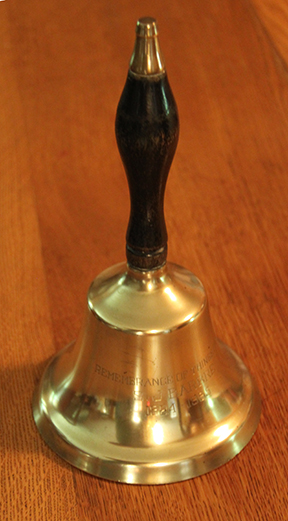
School Bell 2RBuck retired from EJ in 1964. At his retirement party, they presented him with a copy of the portrait that had hung in the office at Kenner High School. They also gave him the handheld school bell he used to ring to start classes at Kenner HS before they put in the electric bell system. That’s it on the right. During the many speeches at his party, someone asked him why he waited so long to retire, probably expecting some pontificating from him about personal dedication to the job and the kids of Jefferson Parish. His replied with a chuckle, “I wanted to make sure Lane graduated from high school.”

Buck died in December of 1972 right after I got out of the Air Force. He went in for heart surgery and died of complications from the surgery. They could not account for all the surgical sponges after they closed him up and had to open him up again to search for the missing sponge. They did not find it inside him but later found it in a trashcan. He never recovered from that. He lingered on for a few more days, and one of the last things he asked was, “Is Lane home yet?” I had been discharged and was home two weeks before his surgery, but he was so disoriented he did not remember. Christmas that year was the worst I have ever experienced.

5 Comments

Filed under Family History, Growing Up, Kenner

The Parrott Rifle

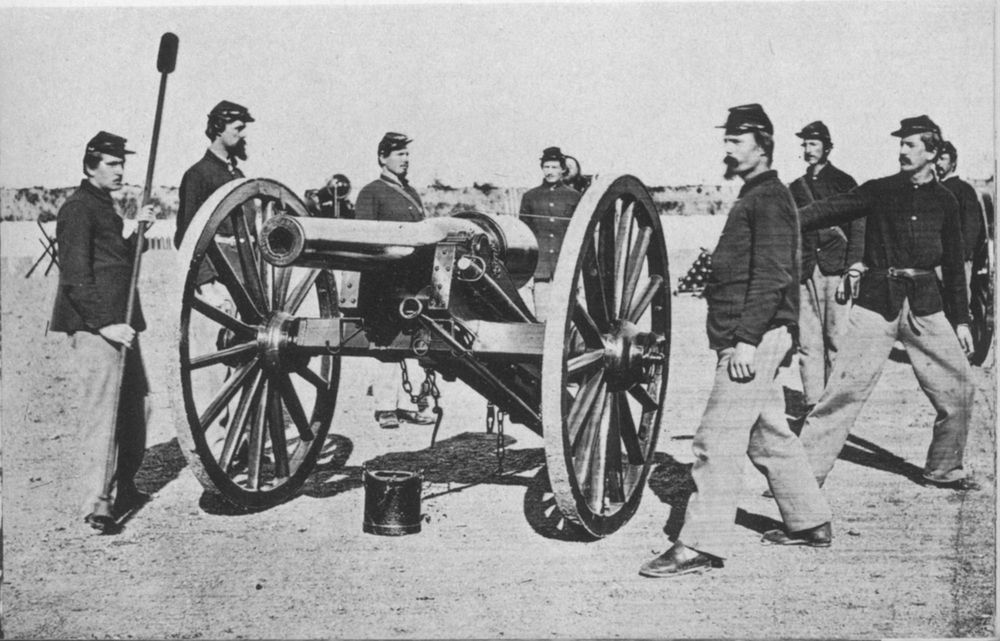
During the Civil War, most canons were smoothbore (no rifling), which tended to limit range and accuracy. One notable exception was the Parrott Rifle, which came in a number of different calibers from mobile field pieces to heavier immobile defense pieces used on fortifications.

The gun was invented by Captain Robert Parrott, a West Point graduate. He created the first example in 1860 and patented the design in 1861, just in time for the “festivities” we call the American Civil War.

Parrott Crew

They were manufactured as a combination of cast and wrought iron. Because of the increased resistance of the rifling slowing of the projectile’s trip down the barrel, higher pressures were generated than in smoothbore canons. As a result bursting at the breech end was a problem. This was solved with the addition of a large wrought iron band added over the breech end of the gun. This can be seen at the back end (breech end) of the guns in the two attached images. This is a distinguishing feature of the Parrott Rifles. The band was heated red hot and slipped on while cold water was poured down the bore of the gun as it was being rotated. This ensured uniform attachment of the band to the gun.

The Parrott was used by both sides in the war and came in different sizes from 10 pounders (weight of a bore size round iron projectile) to rare 300 pounders. For the largest field piece, the 20 pounder, the gun alone weighed 1,800 pounds.

The Parrott had a poor reputation for safety and was not liked by some of the crews. But they were effective out to about 2,000 yards when handled by a well-trained crew. The more common smoothbore canon, the Model 1857 12 pound Napoleon, was effective out to only about 1,200 yards

Limbered Guns

The gun rested on a two-wheeled gun carriage. Its trail was attached to a two-wheeled limber for transport and drawn by a team of horses. Ammunition, fuses, sights, and its friction priming device were carried in the limber, which was positioned well behind the gun when deployed for action. Additional ammunition was carried in caissons, which replenished the limbers in a fight. The crew usually consisted of eight men, and each had a specific job when fighting the gun. They rode the gun’s horses and on the limber when transporting the gun. A battery usually consisted of four guns, but was fewer in many cases.

Ammunition consisted of solid shot, exploding shell, and canister or grape shot. The exploding shell had a timed fuse set by the crew to explode on arrival at the target. Grape shot and later canister consisted of a “package” of round cast iron balls about 1” in diameter. It can best be described as resembling shotgun buckshot ammunition but a lot bigger. It was used at relatively short ranges against charging infantry. You can see the awful effects of canister in some scenes of Pickett’s Charge in the movie Gettysburg, a classic Civil War movie. Look for the scenes where the canister takes out dozens of charging Confederates as they cross a fence. It takes out the fence, too.

Captured guns were a great prize during the war, especially for the equipment-short Confederates. And with the advent of rifled muskets, increasing their range and accuracy, the gun’s crews and horses became prime targets. If the crew was killed or wounded, the gun was out of action. If the horses were killed, the gun could not easily be repositioned or removed from the field, lending them to the possibility of capture.

There is a scene in An Eternity of Four Years that took place at the Battle of Port Republic during Jackson’s Shenandoah Valley Campaign of 1862, when the Louisiana Tigers were tasked with capturing some particularly troublesome guns that had a high-ground position sweeping the battlefield with their accurate fire. When the Tigers took the position, capturing the guns, and were in danger of being repulsed, they slaughtered the artillery horses to prevent the guns from being moved. That actually happened in that engagement, by the way.

The Civil War was generally fought with the linear battlefields of previous wars; that is regiments, divisions, and corps lined up facing each other and blazed away. The smoothbore muskets were not very accurate and hitting a man at 100 yards was pretty iffy, thus the need for massed fire. Throw enough lead at them, and you are bound to hit something. Unfortunately, that required massed troops, making them easy targets for the other guy’s massed fire.

With the advent of rifled muskets and the rapid reloading Minié ball, all that changed, and casualties went up dramatically. The same held true for canons, which were generally placed to the rear of the infantry. The added range and accuracy of the rifled muskets and field guns made those obsolete tactics suicidal.

Leave a comment

Filed under An Eternity of Four Years, Catahoula Books, Civil War, Firearms, History Lessons

“Nanna” and “Tanda”

Anna and Candy were our two dogs when I was a kid. If you were my mother, they were named “Nanna” and “Tanda”, which was my mother’s baby-talk pronunciation of Anna and Candy. They were medium size dogs, about 35 pounds, short-haired mix breeds. The vet thought they had a lot of Fox Terrier in them.

Anna came first. She showed up as a stray around 1951. My dad tried his best to run her off, but she always came back (probably because my mother was feeding her behind his back). Eventually, Anna became “our” dog, and she was pregnant—naturally.

Anna had five puppies in the closet that housed the hot water heater. It was warm in there and she needed it because it was late winter when she dropped her litter. MB managed to give away all five puppies, but my mother managed to get one back. Instead of black and white markings like her mother, this pup was rust and white and marked almost identical down to the thumb-sized spot in the middle of the white blaze on the forehead. My mother named the pup Candy (or Tanda, if you prefer).

Anna and Candy were not supposed to ever get in the bed, but they did and moved in with my mother and dad. Consider that back then, there were no Queen or King-sized beds; at least we didn’t have one. My parents slept in a double with the two dogs.

They were excellent guard dogs and protected their territory with ferocious-sounding barking. Our yard was fenced on all sides but one. My dad’s patients parked along Sixth Street or in front of the office on Williams Street. To this day, I am not sure how he even had any patients. If they parked on Sixth Street, and Anna and Candy were out, they had to “run the gauntlet” past the two dogs barking and sounding for all the world like they would take an arm off if not for the fence. It was so bad that Janis, my future bride, would cross the street when she had to pass my house to visit her friend on Williams Street.

Anna and Candy lived a long time, and where we went they went, and that included our vacations whether to our house in Waveland, Mississippi or a brief trip to Panama City, Florida, and these dogs loved the water.

We had a summer ritual of spending two weeks at our house in Waveland, which was my dad’s vacation. That, of course, included the dogs. We usually managed to go “floundering” at least once. That means we attempted to catch some unsuspecting flounders sleeping in the shallows at night, which was mostly not very likely. That was because we had the two dogs with us.

We would have our “trusty” Coleman lantern that MB would always have to install new wicks in and spent the greater part of the afternoon getting it to work properly. We had homemade flounder spears, which were old broom handles with a sharpened nail stuck in the end. Being a boy, I always went for the “harpoon,” leaving the nets to my two younger sisters. MB carried the lantern. My mother attempted to manage the dogs, unsuccessfully, of course.

So, there we are wading around in the dark in knee-deep water looking for flounders. In all the summers we did this, we never-ever went home with a flounder. I am thinking it might be because Anna and Candy were busy loping and splashing around ahead of us in complete abandon to our “serious” attempts to harpoon a flounder! No self-respecting flounder would hang around after such advance warning.

The dogs also went with us when we went swimming. MB always had a boat and never missed a chance to use it, even if it was just to run out of the mouth of Bayou Caddy, hook a right and drop anchor off the beach there that was not accessible unless you had a boat.

In the late fifties and sixties, it was a twenty-footer he had custom built by an old man up near Hanson City. He named it the Marjelou a combination name made from the names of my two sisters (Martia and Jeanne) and my mother, Neva Lou. (Boys don’t get their names on boats.) It was open with only a windscreen and a small deck forward, MB’s ideal fishing configuration. Aft he had two mismatched outboards, an Evinrude and a Johnson. (MB was frugal; he already owned one and picked up the other dirt cheap; why buy new just to have a matching set?)

On either side of the transom were two small decks about two feet square. Those were where Anna and Candy rode. Most of the time they managed to stay up there, but sometimes while underway, we would lose one or more dogs. No one ever actually saw them when they went overboard, so we were never sure if they fell off or they just abandoned ship to frolic in the water. It would be just like them to do the latter. Either way, we had to turn back and search for the missing dog(s). We always found them blissfully swimming along.

Like most dogs, Anna and Candy loved to hang out the car window and do the “wind-in-the-face” thing all dogs seem to get off on. Back then we had no AC in the car, so the windows were always down. One day while returning from Bay St. Louis along the beach road, Anna was hanging out the waterside of the car and must have had a notion to go swimming? She jumped out the window. We were doing about twenty, and she hit the concrete and rolled down the street. We stopped, called her and she ran and jumped in the car, none the worse for wear.

They were good dogs–unless you ask my wife.

Leave a comment

Filed under Family History, Growing Up, Kenner, Waveland

Rachel Meets Her Rival – Excerpt

At the risk of giving away too much of the story plot of An Eternity of Four Years, here is a short scene at a grand ball in Washington when Rachel meets her rival, Aimee de Beauchamp, for the first time. If you have read The Last Day of Forever, you will know Aimee was chasing Ethan while Rachel was “exiled.” Enjoy.

•••••

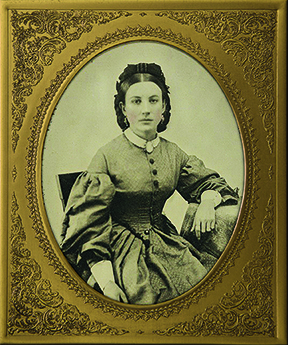
PrintThe ball was in one of the hotels near the capitol. Its ballroom was elaborately decorated with gas crystal chandeliers, gilded moldings, and fine draperies. The room was a sea of soldiers in dress blue uniforms, politicians in formal wear and white ties, and lovely women in fancy ball gowns. Miles took me around the room and introduced me to so many generals and politicians that I lost track of their names. Several asked me to dance and questioned me about my portraits.

“Captain Herndon tells me you are the finest portraitist in Washington. I must see your work. My wife wants a portrait of me now that I have been promoted to brigadier. Do you think you can fit me into your schedule?”

“I do have a waiting list, sir, but we can work something out.” After the dance I gave him my calling card.

“I shall be calling upon you, Miss Rachel.”

“And I shall look forward to it, sir.”

Miles intervened and took my arm. “Don’t I get to dance with the girl I brought?”

“Of course, Miles.” And he swept me out onto the floor and spun me around until I was dizzy. I was having a marvelous time. Washington is nothing like Gettysburg!

We retired to the punchbowl for refreshments. As Miles was reminding me of the names of those I had met and needed to remember, a woman called out in French-accented English, “Miles, is that you? It is you!”

Miles turned to the voice, and a shocked expression swept over his face. “Aimee?”

“Aimee?” I said softly to myself as my Analee eyebrow went up. I turned to see a beautiful young woman making her way to us, a broad smile on her face.

Aimee swept into the conversation with a flourish worthy of the finest stage actor. Miles was speechless. “Aren’t you going to introduce me to your lovely, new lady-friend?” she asked, nodding to me.

Miles looked to me anxiously before beginning the introductions. “Mademoiselle Aimee de Beauchamp, may I present Mademoiselle Rachel Whitcomb. Rachel, Miss Aimee de Beauchamp.”

That broad smile of hers fell from her face such that I would almost swear I heard a thud when it hit the floor. She glared at me for a moment and seemed unable to speak, but she soon recovered. “You are Rachel? And may I call you Rachel? I feel as if I already know you…”

“Of course…” but she did not allow me to finish, and frankly, I am glad she did not, for what I was thinking of saying was not flattering.

“And you must call me Aimee. We are almost old friends, aren’t we?” Getting no immediate response from me, she turned to Miles. “Miles, aren’t we like old friends?”

Miles could barely get in a nod before she continued, “I must say, Rachel, you are as lovely as Ethan said you were. That’s a beautiful gown; it shows off your trim figure so nicely.”

I did not have a chance to respond before Miles attempted to regain control of the conversation. “Aimee, I thought you were in France?”

•••••

2 Comments

Filed under Catahoula Books, Civil War, Excerpts, Last Day of Forever

What I Did in the War – Observed Weather.

That is what I did in the Air Force for four years. Don’t laugh. Lots of your tax dollars went into training me and my fellow weather observers. And it isn’t as easy as it sounds. We didn’t just stand around all day gazing heavenward through our AF issue sunglasses. Yes, they actually did issue us sunglasses. How cool was that?

Just what did we do you ask? We observed weather and recorded it on a form WBAN10 (pronounced “way-ban ten”), encoded it, and sent it out over teletype every hour, sometimes more often if changing conditions met the criteria for a “Special Observation.” The data included cloud cover layers, height and amount, surface visibility, weather (if any), altimeter setting, temp, dew point, winds, barometric pressure, and lots of supporting comments when necessary. This information was sent out all over the world for anyone to use.

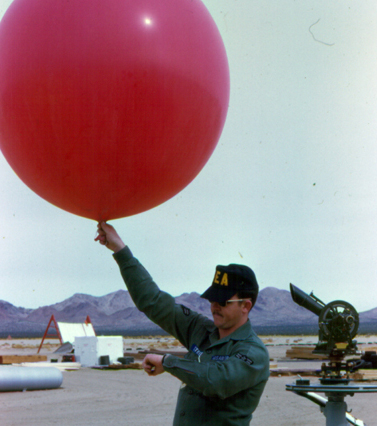
Lane PIBALWhat else did we do? Depends. Some of us, like moi, got to go temporary duty (TDY) to a place like Cuddeback AGGR (Air to Ground Gunnery Range) in the middle of the Mojave Desert. At Cudde we supplied surface observations (obs taken at the ground level) and winds-aloft obs (wind speed and direction at 1,000 foot intervals above the station). The latter involved launching a 1,000 gram helium-filled weather balloon called a PIBAL (pilot balloon) and tracking it with an instrument called a theodolite, recording azimuth and elevation angles at one-minute intervals, plotting those and deriving wind speed and direction at various altitudes above the station. The AF found this helpful for calculating bomb trajectories, and Cuddy was a bombing range. (I guess the AF just “winged it” when they had to drop real bombs on the enemy and no AF weather observer happened to be hanging around the target area taking PIBAL obs?) The U.S. Army also found it useful for calculating artillery trajectories. Winds aloft can seriously affect where a 155mm shell lands 20 miles away, which could be meaningful to friendly troops on the ground near the target.

Very generally speaking, most weather observers had two main operational environments. The first being in Base Weather, usually housed with Base Operations. This is where the pilots came for weather briefings and filing flight plans. The place was (in my day 1968-72) cluttered with all manner of weather maps and bits of teletype paper torn into strips according to their source and content and posted on clipboards for the duty forecaster to use. That was the olden days; they use computers now. The observer mainly supported the forecaster and his job of creating forecasts for the station and briefing pilots.

The second duty station was the representative observation site (ROS). They were usually located out along the main runway to collect data closest to where it would be used. The observer worked alone out there and took observations and transmitted them as described earlier.

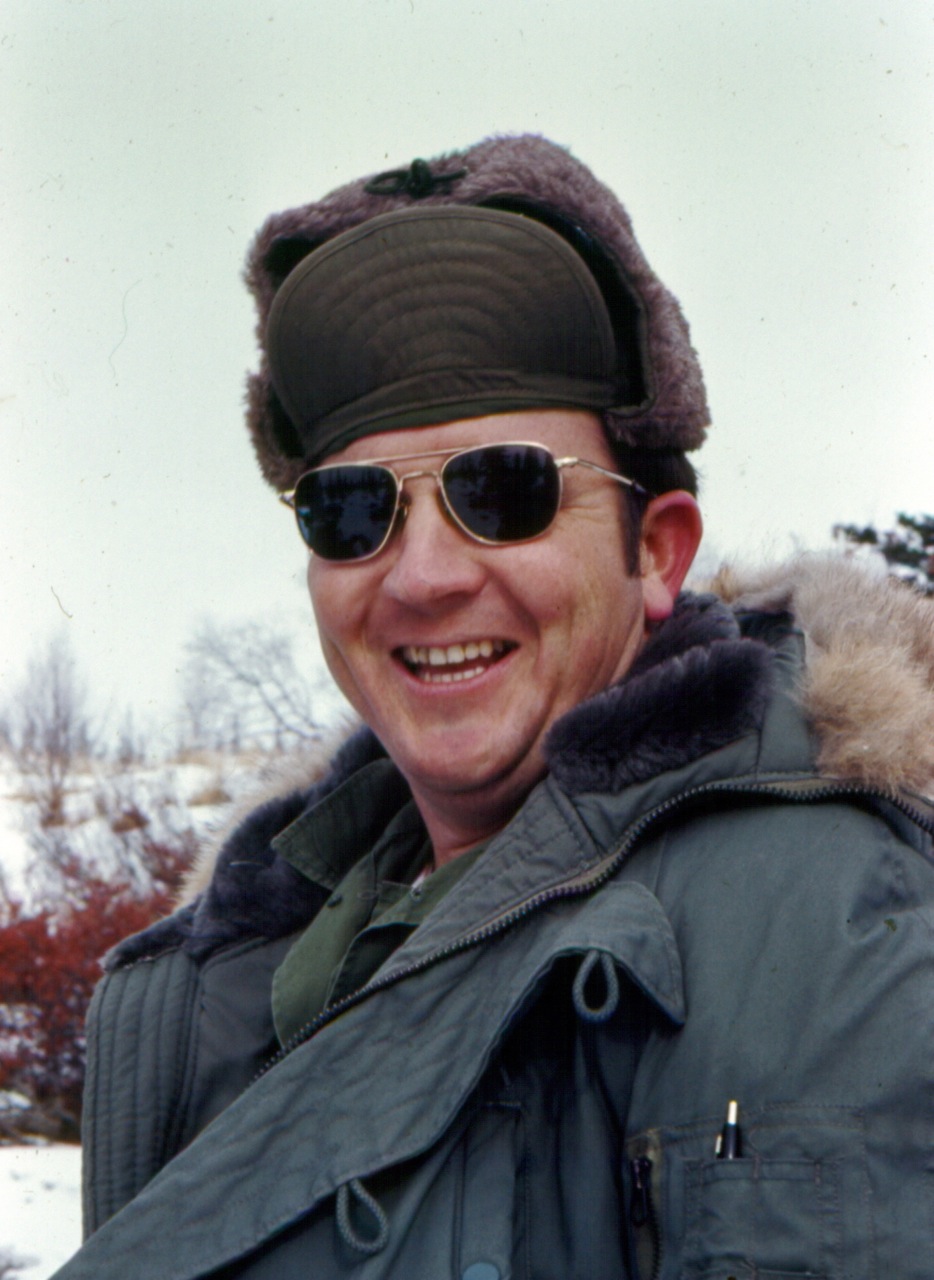
Lane Alaska_1Weather observing was actually a great job, but it had its negatives. Aside from doing two-week TDYs at places like Cuddeback, the AF had a need to collect weather observations from some very remotely located places, like the wildernesses of Alaska. These weather stations were located at AF radar stations in the middle of nowhere again. The observer would find himself with usually less than 100 other lost souls at a station in the Alaskan wilderness hundreds of miles from anything remotely resembling civilization (meaning no McDonalds) and the only way in and out was by AF planes, which had to be ski-equipped in the winter. I was at one of those, King Salmon AFS, but it was larger (about 200 lost souls) and had a paved runway. That was because it was the home of armed interceptor aircraft standing by to scramble against any Russkies who might get frisky and violate US air space, which they did fairly often to test our defenses and response times.

Another drawback was the U.S. Army had a need for weather data to conduct field operations, especially those involving helicopters and artillery, but they maintained no weather services. Guess who supplied that? Yep, the Air Force. An observer could find himself assigned to an Army unit and in the field with said unit being shot at. Thankfully, I managed to avoid that aspect of the job. The book Seeing the Elephant by Dave Hornell does a good job of describing what that was like in Vietnam. It is also a humorous read.

Back in the day, during your four-year commitment, most observers would spend at least one of those years at a remote assignment like Alaska, Greenland, Iceland, Korea, or SEA (Southeast Asia – Vietnam or Thailand). Mine was Alaska, which was not bad if you like to hunt and fish like I did.

I just missed a trip to SEA, Thailand to be specific. During my last year at George AFB in California I was assigned to a Bare Base Mobility Team, which was an early version of a rapid deployment force. The team was designed for “bare base operations,” which assumed there were airfields all over the world, either active or not, that could support air combat operations on short notice. We were supposed to have our duffle bags packed and ready to deploy. Upon notice, we would report, draw field issue, including weapons if necessary, and be on a C-130 for somewhere to marry up with our MMQ-2 mobile weather van upon arrival. Security, air traffic control and weather observers were the first to arrive at the new base, which was expected to be conducting air combat operations within 24 hours of our arrival. While I was on a plane headed for eleven months of fishing and hunting in King Salmon, our team was activated and sent to Thailand for a year. Whew!

Another nice thing about duty at King Salmon was it was a joint-use airfield. The civilians were on one side, and the AF was on the other. FAA supplied administrative people, the Weather Bureau supplied the forecasters, and the Air Force supplied air traffic controllers and weather observers. Since I worked with Weather Bureau civilian forecasters for the whole eleven months I was there, I never put on a uniform except to get paid and travel on leave.

All in all, my Air Force service experience was not bad, especially considering the Vietnam War was going on. The work was interesting and frequently challenging, plus I got to meet a lot of great people and visit places I never would have otherwise.

6 Comments

Filed under Family History, Growing Up, War Stories