
The Gonzales Light

This is written from memory of events that took place up to 50 years ago. It concerns a phenomenon called the “Gonzales Light.” In Louisiana, these eerie swamp lights are known as feu follets. In other parts of the world, they are called will-o’-the-wisps. This mysterious light appears around Gonzales, LA and is generally assumed to be luminescent swamp gas given off by decaying organic matter. Sorry, not buying that one after my experience with it.

I was introduced to the Gonzales Light by my friend Dixon Wilson sometime before or about graduation time in 1962. Dixon told Mike (Buck) Roy and me the story one day, and we decided to make the trip to Gonzales that night to see it. We ended up out in the woods in Dixon’s Corvair parked in the dark in what appeared to be a recently logged or cleared area.

Lights out, Buck, and I smoked cigarettes in the dark with non-smoker Dixon until the light appeared. (Cigarettes were “in” then.) It appeared off in the distance as nothing more that a distant faint light fairly well defined (localized) and changed colors. It was faint enough that it was possible to convince yourself your eyes were playing tricks on you. It appeared off and on several times over the period we were there, perhaps an hour or more.

Dixon, recovering from a spinal tumor was partially handicapped and did not have full control of his right leg. Whenever the light appeared, Dixon’s right foot would begin vibrating, tapping rapidly on the floorboard. At first it scared Buck and me, until Dixon admitted it was his out-of-control foot.

That was about the extent of the light’s appearances that night. We went home somewhat disappointed.

Dixon and I began college at Southeastern LA College in Hammond, LA in the fall (Buck went into the Army soon after). Dixon and I revisited the light at least twice over the next year or two as I recall. The first of those trips were very much like the one described above, except it was to a different location in Gonzales, and others were with us.

It is the third trip, the second after starting at SLC, that is most vivid in my mind. I believe it happened in the fall of 1963 but I cannot be certain. Several of us were going to Baton Rouge to give blood. As college students we were always in need of beer money. We went to BR because they offered $20 instead of the $10 offered in Hammond. I cannot recall all that were on this escapade. I do remember Dixon Wilson, Alex Oliver, Tony DeMarco, John D’Antoni, and several others, enough people that we took two cars, my ’57 Chevy and John’s ’58 Chevy. We gave blood in the late afternoon and went and had a few beers that evening before returning to Hammond. (I know! Spare me the lectures.) Someone suggested we visit the Gonzales light. Time was probably late evening, tenish, when we got to Gonzales. We went to the same place we had gone to on the second trip mentioned above.

Allow me to set the scene…

First of all, we are one pint low and have been drinking beer, not that that should mean anything.

We drove down a dirt road in rural Gonzales, a good ways off Airline Hwy, and there was not a light from a building in sight. The road was intersected from the left at a 90-degree angle by another less traveled dirt road. We turned onto that road and stopped about 50 yards from the intersection. On the left and right were pastures with fencing around them. No cows as I remember. On the right back near the intersection of the two roads was an abandoned farmhouse. Ahead was a tree line about 75 to 100 yards away. The road was a perfectly straight, one-lane dirt road with grass in the middle of two tire tracks, and shallow ditches on either side. It appeared it was rarely ever used. About 50 yards into the woods a small fairly straight dirt trail wide enough for a vehicle intersected the road we were on from the left. I don’t know where this trail went, as we did not follow it to its end. Our road went through the woods for perhaps a quarter mile or more and crossed a blacktop road, continuing on the other side as a well used gravel road.

It was very dark, no moon. Once we parked and turned off the lights, it got very black. We knew the tree line was ahead from having seen it in the headlights, but we could see it only vaguely even after our eyes got accustomed to the dark. We got out of the cars (my car was in front), and we stood around in the dark, smoked cigarettes, and talked as we waited for the light to appear.

We didn’t have to wait very long before the light appeared down the dirt road some distance away. It looked to be at or just inside the tree line. It changed from red to blue to green and various colors and back again. It was fairly small in size; I would guess a bit larger than a basketball assuming the distance was estimated with any accuracy. It was not well defined but it wasn’t a vague shape either. In other words, it had no hard edges. It was a little brighter than on the two previous sightings, not real bright but bright enough and clear enough that everyone saw it.

It came and went over a period of time, perhaps a half hour or more, always in the same general location. Eventually we became curious of the source and began to speculate that it was car lights up ahead or something easily explainable. At this point, we had not yet been down our road so we had no idea what was ahead. We decided to send out a scouting party, and somehow I got elected; I guess because my car was ahead of the other car.

I took one other person with me, and we drove down the road in the direction we had seen the light. I do not recall who was with me, probably Tony or John. We noted the little trail to the left in the woods and passed it, going on to discover the blacktop road further on. (There was no traffic on that road all night that we could see.) I crossed over the blacktop and stopped, blinking my brake lights back at the rest of the crew. I turned around and faced back the way we had come and flashed my brights several times and turned out my lights completely several times, then drove back to the group.

I turned my car around to face back towards the woods again, and we got out to discuss the results of our experiment. The others had clearly seen my tail lights, brake lights, headlights, brights, etc, and they all said it was clear that it was my car and looked nothing like what we had been seeing.

So, we are standing around the front of my car again and talking, when someone notices the light is back. This time it is a little brighter and seemed a little closer. We all oohed and aaahed as we watched the light change colors and this time move about just a little, left and right, up and down slightly.

Then things got really interesting!

Suddenly the light quite literally charged us, coming closer and growing larger and brighter as it charged. It moved rapidly and was almost on us in a matter of a few seconds. As I recall it seemed to be to the left side of the road and almost in the pasture as it approached.

Panic ensued!

Eight “brave” souls decamped immediately and scrambled for the cars. We roared down the road in reverse headed for the road we came in on. Tony backed around in front of the farmhouse and I was right behind.

This is what I was thinking: The light was so bright and came so quickly at us, I am assuming we have angered some farmer by trespassing, and he was coming after us.

As I threw it in first and prepared to haul butt, someone said, “It’s gone!” We stopped and regrouped. What do we do? Where did the light go? What was it? Another car? Someone with a flashlight? We regained our courage and decided to investigate.

We went back down the road (cautiously) and stopped again where we were parked before. Cautiously, we got out of our cars (engines still running, however) and had a war council. Then began the rationalizing.

We decided it had to have been someone in another vehicle, and he must have turned down that dirt trail I had seen earlier. “Yes, that’s it! Let’s check. You go, Lane, we will wait here.” Or something like that…

Why do I always get the dangerous assignments?

I took my car and someone to ride shotgun, probably Tony again, (I wasn’t about to go alone!) and we drove back down the road to the trail in the woods. Don’t ask me how I got the courage to do this, but I shut the ’57 down, and Toni and I walked down that trail through the woods. It had rained that day only lightly enough to pockmark the dust. Those pockmarks were clear in the dust of that trail, and there were no tire tracks in the dust! Nothing had driven down that road!

We returned to the group and gave our report. Obviously it had not been another car, because it had nowhere to go once it charged us. It didn’t retreat and go down that trail. We concluded that we had REALLY seen the Gonzales Light that night, perhaps more closely that we would have preferred.

We stayed around a bit longer, but it did not appear again that night. After the adrenaline wore off we got bored and went back to school to tell our tale to all that would listen.

What did we see? I do not know, but I do know that some eight of us saw the same thing, and it scared us to death. There was no discussion about running or staying when that thing came at us. The decision was instantaneous, and it was unanimous. We were out of there!

I have never been back to Gonzales after that night. Never got the chance, and perhaps never had the urge. It probably isn’t there anymore. I suppose the area is built up now, besides I cannot begin to remember how to find that location.

The Gonzales light has been mentioned in publications dealing with weird stuff like that. Most believe it is glowing swamp gas, but what we saw was very bright and well defined, enough that we mistook it for possible car lights, at least one car light, but it seemed a lot larger than car lights. What we saw didn’t look like glowing swamp gas.
4 Comments

Filed under Growing Up, School

Rachel Sees the Elephant

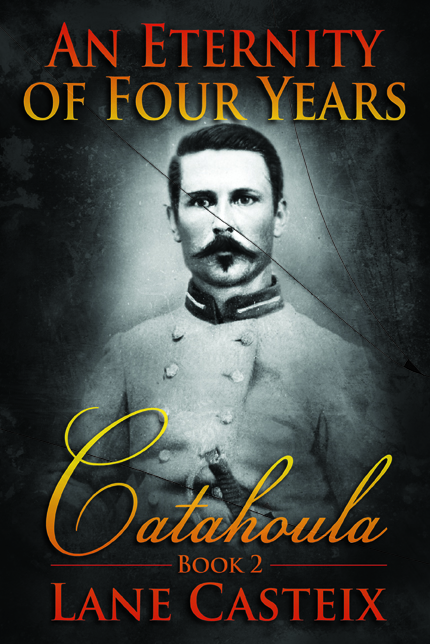
All of my excerpts from An Eternity of Four Years have featured scenes with Ethan. Rachel is still very much in the story and has an even stronger role than she had in The Last Day of Forever. In An Eternity of Four Years, the two are separated and have very different life experiences.

Why is that? Well, you will have to read the book to find out.

In this series of excerpts, you see her experiencing the aftermath of the Battle of Gettysburg. Until this point in the story, she has been largely isolated from any direct effects of the war, but it has now caught up with her. The battle was fought all around her, and in its aftermath, she gets to experience the horrors of a battlefield.

*****

Book 2 115 July 1863 (From diary entries recording earlier events.)

Both armies are gone, and we are left with the remnants of the great battle. Words cannot begin to describe what awaited us as we ventured out of our homes and hiding places after the armies left. Broken wagons, gun carriages, caissons, abandoned muskets, canteens, sabers, ration boxes, ammunition—all manner of military equipage is everywhere, not to mention all the damaged or destroyed buildings.

Men must relieve themselves even during war. The smell of urine and human excrement can be encountered almost anywhere, unless it is overpowered by the smell of death, which is often the case. The entire town is permeated with the stench of corruption. Dead animals and dead men have lain out putrefying in the hot July sun, some for as long as five days! One cannot escape the smell. It seeps into everything, your home, your clothing, your very being, it seems.

The flies have descended upon the town like some Biblical plague. They are everywhere, and you cannot escape them! They are in your face, in your nose, and even your mouth if you open it too wide to speak. Eating a meal, if one can stomach food with the smell of death so strong, is a battle with the flies.

Rats! Rats are everywhere! Where have they come from and so soon after the battle? They feed on the dead and seem not the least concerned when humans approach them, sometimes even behaving aggressively if you venture too close.

It has been five days since the battle was joined; four days since Cemetery Hill, and three since the great Southern charge against the Union’s center that some are calling “Pickett’s Charge,” so named for the general who led it—and they are still finding wounded men on the many fields and in the woods and buildings all around Gettysburg. Poor hurt men incapable of escaping the heat of day, dying for want of a sip of cool water to quench their thirst, exhausted from crying out for help, or unconscious from the pain of it all.

*****

The sun fully set and our charges removed to the church, we joined Doctor Anderson in an ambulance for the short ride to Cemetery Hill. As we approached, we saw men with lanterns moving over the north face and the top of the hill. With the weak ethereal light of the lanterns casting ghostly dancing shadows as the men moved about the hill and examined the many bodies there for some flicker of life, it looked like a picture out of some hideous nightmare.

We dismounted near the gate of the cemetery. They had tents set up, and in the light of lanterns, we saw litters of wounded men lying out in the open air for as far as could be seen in the weak light.

And the stench of death! It was even stronger there!

Doctor Anderson brought us inside a large tent set up as an operating room with several tables for conducting procedures, each held a wounded man with orderlies or surgeons tending to them. I felt sick to my stomach and wanted to fall down and weep for what these poor men had been going through, but I steeled myself and called upon the Lord to give me the strength to endure what I knew I would be facing. And I needed every ounce of help He would give me.

Doctor Anderson assigned Doctor J to one of the tables. An orderly and I assisted. This went on through the night. As soon as one man was attended to, his wound treated, his arm or leg amputated, they carried him off and brought in another, one long stream of broken men, one after another.

With the coming of dawn, Doctor Anderson brought us coffee and suggested we rest for a while. I took my coffee to go outside and get away from the blood and gore to hopefully enjoy the sunrise. Doctor Anderson followed me. “Miss Rachel, I would suggest you remain inside,” he cautioned.

I ignored his warning. “I must see the sun!” But when I stepped outside, and my eyes adjusted to the light of the early dawn, I dropped my coffee! What was hidden by darkness during our arrival was now fully visible.

Death! It was everywhere! I looked to the north and saw the bodies of men clad in blue and gray, some stacked upon each other, some sprawled across broken gun carriages, some with their bodies twisted into positions God never intended them to ever assume, and still others only a part of a man with missing arms, legs, heads, and sometimes missing a whole half of his body, his entrails spilled out on the ground.

I fainted! Doctor Anderson caught me as I went down.

*****

He literally took me by the arm and escorted me from the tent and instructed an orderly to take me home. I was too exhausted to resist.

Once back at the house, the mess in which we had left it days before was still there to greet me: dried blood on the floor, the table, and even the walls. Bloody bandages and sodden bedding had been left by the wounded. The house stank nearly as bad as Cemetery Hill. Tired as I was, I set about cleaning it up by first throwing open the windows to air the place out. I then set about scrubbing floors, disposing of the refuse left by the wounded, and changing our bedding.

I don’t know how long it took, but I got the house clean enough I could tolerate it (my standards of cleanliness were, by then, greatly reduced from what they had been before the battle). After getting a good fire going in the stove, I fried our last two eggs and very nearly inhaled them. I then boiled water, made myself a cup of tea and poured myself a steaming hot bath. With my cup of tea in hand, I slipped into the tub and sank into pure heaven on earth. That bath felt better than any I had ever experienced in my entire life. I soaked until the water was tepid then washed with soap from head to toe—three times to be sure I was completely clean! I put on a clean nightgown, fell into a freshly made bed, and was fast asleep the moment my head hit the pillow.

*****

Leave a comment

Filed under An Eternity of Four Years, Catahoula Books, Civil War, Excerpts

Nostalgia – The PTSD of the Civil War

Recently I wrote a post about a malady back during the Civil War called “nostalgia.” I commented that both Ethan and Rachel ended up dealing with it. You may want to read that post before reading this excerpt from An Eternity of Four Years.

*****

Book 2 1I lost consciousness after the fight and did not regain full awareness of my surroundings until I awoke in a hospital in Richmond nearly a week later. I had only some vague memories of being jostled around in an ambulance on the way to Richmond but nothing more of how I got there. Blue told me I had a fever much of the time and spoke nonsense about all manner of things, mostly Rachel and someone named Tom Sullivan.

The fight in that bottom slowly began to come back to me, and I recalled what I had done. In my mind’s eye, I could see him lying there on the ground, bleeding out from my knife thrust to his heart, and I again became sick at my stomach and nearly threw up, which would have been exceedingly painful with my broken ribs. Of all the men in the world I could come face-to-face with on a battlefield, why him? I sank into a melancholy that was deep and long.

*****

“I’m worried about you, Captain Ethan. The doc say you ain’t getting any better. In fact, he told me you was getting worse. I can tell something is paining you in the head. Maybe you should talk to Old Blue about it?”

He was right. I was getting worse, but I did not care any longer. “Not something I want to talk about, Blue. Just leave me alone.”

“You already alone—inside your head, and you need to come out where the rest of us are.”

I became angry and replied sharply, “I said, leave me alone!”

He snorted a half laugh. “That ain’t goin’ to happen, Captain Ethan. I told you way back in New Orleans I’m responsible for you now. I’m not going to let you just go crazy. Now, tell Blue what happened out there?”

“It’s none of your business.”

“I’m making it my bidness.”

“Well, don’t bother!’

“Then let’s try this: where is your God, Captain Ethan? You should be prayin’ and callin’ on Him right now”

I snorted a half laugh. “Why? He doesn’t care about me.”

“Look at you, a sorry mess of a man all soaked with sweat and talkin’ crazy. God does care ‘bout you! Where’d you get that silly notion? God loves you!”

I turned over and glared at him as hard as I could in my addled state …

“You need to get him out of here.” I heard a surgeon tell Blue. “This place is doing him no good.”

“I can see that, but where’ll I take him?”

“Some of the local citizens are taking in the wounded to convalesce, perhaps one of them? If he stays here, he’ll die—or go insane, if he hasn’t already. You need to get him out of this melancholy state he is in. To do that, he needs to be away from the war for a while.”

Then I heard a woman’s voice join the conversation. “And what have we here?”

“Ma’am, the captain here is badly hurt,” the surgeon replied. “His body is slowly healing, but his mind is not. He is suffering from nostalgia. There’s nothing more I can do for him. You know anyone who can take him in until he heals?”

“Oh, dear.” She bent over and touched me on the shoulder, expecting I would turn to face her. “Captain?”

“Go away!”

She paused, making no reply as she cocked her head.

“Somethin’ wrong, Missy?” asked Blue.

“I thought…” she started to say something then shook her head. “Captain, I’m here to help with the wounded. Won’t you let me help you?”

That voice sounded familiar. I turned over to face her, and she gasped, “Ethan?”

*****

1 Comment

Filed under An Eternity of Four Years, Catahoula Books, Civil War, Excerpts

“Nostalgia” AKA PTSD

Cover B1“Nostalgia” plays a significant role in the lives of both Ethan and Rachel in my books The Last Day of Forever and An Eternity of Four Years. It was officially defined and named Post Traumatic Stress Disorder in 1980 to describe the mental issues suffered by Vietnam veterans. But it existed long before that, at least as long as war and trauma have been visited upon mankind. It was known by other names during different periods of history. It was called “shell shock” in WWI and during WWII, it was called “battle fatigue.” In the mid 19th century, during the American Civil War, it was called “nostalgia.”
That term was coined by a 17th-century medical student to describe the anxieties displayed by Swiss mercenaries fighting away from home. It was described as a form of melancholy.

The Greek origin of the English word is nóstos álgos. Nóstos is usually translated “homecoming” but carries the idea of returning home after a long journey to find that everything is the same, yet just a shadow of what it had been before. Álgos refers to pain. Literally, we have “homecoming pain.”

I think that 17th century medical student had in mind the pain of a soldier returning home after a war to find that while everything may look as it did before he left, he sees things differently because stressful wartime experiences have changed his life perspective, usually not for the better. Depression, nightmares, and anger are often symptoms.

Book 2 1I believe nostalgia is related to the saying, “seeing the elephant,” often used by soldiers during the American Civil War and since. The idea behind “seeing the elephant” is that of the profound disappointment and disillusionment associated with having one’s “grand” notions about war dashed by the brutal reality of the killing fields. It suggests the soldier has seen enough, and he is sick of all the misery, pain, and death. He has “seen the elephant,” and it was an exceedingly ugly beast.

Nostalgia, or known by its current title PTSD, is not limited to veterans of war. It can be caused by any manner of stressful conditions such as rape, witnessing something terrible like an accident or death, a near death experience, or really anything that can leave a profound and lasting impression of fear or anxiety. Ethan suffered his first bout of nostalgia as a result of his witnessing the death of Cornelius as a child of three, and later as the result of losing Rachel, followed by what he saw and did during the war in places like the Shenandoah Valley, Sharpsburg, Chancellorsville, and especially Gettysburg and its aftermath. Rachel also “saw the elephant” and it affected her as well.

Both Rachel and Ethan had come from a comfortable lifestyle of plenty in a time of peace to one of horror and death in a time of war, a war described by author Paul Fussell as “long, brutal, total, and stupid.” Should we not expect such might affect a sane person?

1 Comment

Filed under An Eternity of Four Years, Catahoula Books, Civil War, Last Day of Forever

The Last Day of Forever Update and Excerpt

Book 2 1Moving right along with the printed proof of An Eternity of Four Years, the exciting conclusion to the Catahoula Series. Not making promises, but looks like it will be available as soon as three weeks from now. You have seen two previous excerpts from An Eternity of Four Years here and here. This scene takes place during the battle of Port Republic in the Shenandoah Valley in 1862.

 *****

Taylor summoned me early the next morning, Sunday, 8 June, and I was given some dispatches to deliver to Jackson in Port Republic. I saddled Pepper and rode out of camp and headed for Port. The dawn was breaking clear and promised a day without rain for a change. I soon arrived at Port, crossed the North River bridge, and made my way down Main Street to Jackson’s headquarters at the Kemper Estate at the far end of town.

I was not more than two squares down Main Street, when I heard the unmistakable scream of an artillery round overhead. I looked up and, to my utter shock, saw the shot falling directly towards me! There was no time to do anything but close my eyes in preparation for meeting my Maker. It crashed into the street right between Pepper’s legs and exploded with a deafening roar, knocking both Pepper and me to the ground.

I rolled clear and could do little more than lay there stunned by the blast with my ears ringing. Pepper struggled to his feet screaming to wake the dead. From the sounds he was making, I was sure I would find his gut torn open, and I would be forced to end my noble steed’s agony with a shot from my Colt. My terror-stricken warhorse found his footing and bolted like a cannon shot in the direction from which we had just come. I rolled over and looked up the street to see my faithful mount deserting under fire. He slowed just long enough to decide he wanted nothing to do with that bridge and turned left and headed up the road following the North River. I whistled for him to come to me, but he did not stop and only whinnied back in answer, which if it could have been translated into English, I am sure he was saying something to the effect that I could go straight to the Devil. I figured, if he could move that fast, he couldn’t be hurt all that bad, and I turned my attention to my own wounds.

To my immense relief, I found only a minor scratch on my left forearm. Except for that and ringing ears, I was unhurt. Meanwhile, I heard another round coming in and turned over onto my belly, covering my head with my arms. It exploded down the street, and I scrambled to my feet to get away from my exposed position. The second round was followed by two more, one of which slammed into the steeple of a church we were using as a hospital.

As I stood, I saw Federal cavalry crossing the Upper Ford and cursed Pepper for leaving me there like he had. Our own cavalry were in retreat and scampered through town in their haste to get away from the advancing Federals and very nearly ran me over in the process. I ran up Main Street as more artillery shells careened into the town. I took cover near the church, and Jackson came riding by. Doctor McGuire was busy loading wounded into wagons and swearing at the slow moving orderlies, as was his usual manner. Stonewall reined in his mount and admonished the doctor, “Sir, don’t you think you can manage these men without swearing?” McGuire nodded and promised to try. Satisfied, Jackson spurred his mount into action and headed for the bridge at a gallop. Most of his party barely escaped capture and crossed the bridge just as Federal cavalry entered Main Street at that end of town. Colonel Crutchfield, Jackson’s artillery chief, was not so quick and was taken prisoner only to escape later.

I drew my revolver and prepared for a fight as Union cavalry thronged the bridge end of town. Soon two cannons were brought up and unlimbered at the entrance to the covered bridge, their muzzles pointing across the river. I figured we were in a real fix then. Jackson and his army were across the river, cut off from their escape route by Union artillery and cavalry sitting on the only bridge. I knew I couldn’t storm their position alone and wasn’t doing any good staying where I was. I figured the Federals would surely go for the supply train sitting conspicuously out on the road at the other end of town and made my way toward the Kemper Estate as fast as my legs would carry me in the hope that I could find others with whom I could make a stand.

In Kemper’s yard, I found Captain Sam Moore of the 2nd Virginia and his small company of only twenty muskets, which had been assigned to guard the fords. He was preparing to make a stand at the Kemper house and had already placed his company along a plank fence that surrounded it. I attached myself to this small band, and we set ourselves for the charge that was sure to come. We had not long to wait. Blue Coat cavalry came up Main Street at a walk and turned the corner headed straight for Kemper’s house and our ambush. We crouched behind the fence and allowed them to get closer. When he felt they were close enough, Moore stood and yelled, “Fire!” And twenty muskets barked. I stood and fired with them. The startled Yankees never knew what hit them, and we emptied numerous saddles. They retreated in haste back up Main Street but began regrouping for another go at us.

Captain Joseph Carrington and his Charlottesville Light Artillery with a battery of two guns joined our little group. Carrington ordered both guns unlimbered moved them closer to the fence. He loaded with double canister as the Federals came up Main Street towards us. Carrington hadn’t the time to take down the boards on the fence in front of his guns. He aimed them as best he could, point blank, and moved to rip down the boards. “Leave them,” I yelled. “Just shoot through them!” He nodded and stood by his pieces, as the Yankees came at us again, at a gallop this time. With a jerk of the lanyards the two guns roared, blowing big holes in the fence boards, and we fired with pistol and musket, emptying more Yankee saddles. Once more they retired in disarray, leaving more dead and wounded on the street.

Major Dabney of Jackson’s staff arrived from the Kemper house and did little but encourage us. Carrington limbered up his guns and moved them closer to the river for a shot directly down Main Street. Moore and the rest of the infantry moved to support the guns. The Yankees charged again, and once more we let them have a taste of canister and Minié. The canister swept the street and sent the survivors running for cover at the far end of town.

Across the river, the 37th Virginia Regiment, under Jackson’s instructions, was preparing to assault the covered bridge, while the Rockbridge Artillery pounded the Federal positions from the far shore. Meanwhile, Taylor had been ordered to bring his brigade on the double quick. At least a regiment of Federal infantry was moving for the fords, but artillery fire personally directed by Jackson from the far side of the river forced the Federals to quit their positions at the covered bridge, abandoning their guns just as the Virginians charged. To my astonishment, the retreating Federals failed to burn the bridge. Had they done so, the events of that afternoon and the next day might have turned out very differently.

We pushed them back across the fords, and our artillery pounded their retreating ranks. We had won the day. That surprise attack could have been a disaster for us had they burned that bridge and separated Jackson and his army from his supplies.

The brief little fight over, I was standing near the Kemper’s house fence reloading my Colt, when I heard a familiar whinny and looked up to see my wayward steed standing there, looking for all the world to be as contrite as the most repentant sinner on a Sunday morning. “So, you came back! Skedaddled and left me to face a Yankee horde alone!” I fairly yelled at Pepper. He whinnied and shook his head as if he understood what I was saying and was making his defense.

I didn’t know it at the time, but Jackson had returned and was witnessing my outlandish verbal attack on my horse. “Cowardice under fire! Ran from the enemy you did! I cannot believe that you would do such a thing to me after all I have done for you!”

Pepper snorted forcefully, and I heard laughter coming from behind me. I turned and saw Jackson and his staff watching the show and realized what a spectacle I was making of myself by talking to a dumb horse in such a manner.

Jackson’s expression was as stern as ever. “Shall I have him court marshaled, Captain?” asked Old Jack without cracking a smile.

I grinned sheepishly, and I know I was red in the face. “No, sir,” I replied. “It’s the first time he ever did that. With your permission, I’ll give him a chance to redeem himself.”

“Very well. As you wish, Captain.” Jackson nodded and rode on up to Kemper’s house, his staff following, some still laughing. To this day, I believe Jackson was serious about the court martial.

I turned my attention to Pepper and examined him for wounds but found only some minor scratches on his belly and two of his legs, nothing of any consequence. “Scared you, didn’t it?” I grunted at him.

“Sure did!” he replied in a high-pitched whinny. It at first startled me, but I heard snickers coming from the other side of Pepper and looked under his belly to see one of Carrington’s gunners about to split a gut laughing. Others who had been in on the joke burst out laughing then, and we all had a good belly-grabber at my expense. Lord knows we needed it.

*****

Leave a comment

Filed under An Eternity of Four Years, Catahoula Books, Civil War, Excerpts

The Joy of Maleness

If you are a male, especially an older male, you may have recently become more acquainted with your prostate, probably a lot more acquainted with it than you would like.

One of the “joys” of this new relationship may be a prostate biopsy procedure. Count yourself very fortunate if you have not reached that point. The first is you get to partake of this manly entitlement because your urologist suspects you just might have prostate cancer based on a sudden or significant rise in your PSA count. The second reason to rejoice is the avoidance of the procedure itself.

About that procedure…

Several years ago my urologist ordered a prostate biopsy. The experience is a major event in your life. For a male, probably something akin to giving birth but not taking nearly as long and perhaps not as painful.

It begins with a purging. They will be violating you rectally and do not wish for you to soil them or their torture examination table. That requires a good flushing of the system. Whatever it is that they give you to take, it is very effective. You might want to hold onto the toilet or be prepared to utter the words, “Houston, we have liftoff!” I passed everything I had eaten in the last week and some things I had only thought about eating!

In a badly weakened state, I reported for my exam. My doctor introduced me to the ultrasound operator, who would be his “eyes” during this expedition up my rectum, and he fancied himself a comedian, keeping a running dialog of one liners all during the procedure.

So, I was instructed to drop my pants and lay down on the torture examination table on my side in a fetal position, which, by the way, is well chosen for this procedure however you look at it. Then the violating begins.

First the ultrasound tech/comedian shoves a device up your know where, prefaced by the encouraging request, “Now, Mr. Casteix, just relax your sphincter muscle.”

Yea, right! How in the world do you order THAT muscle to RELAX? Especially considering he is preparing to insert a device that felt like it was about the size of a baseball bat, the big end! I never actually saw it, but my sphincter muscle must have, because it clamped shut like an oyster avoiding the shucker’s knife.

“Now, Mr. Casteix, I need you to relax your sphincter muscle, please.”

Pleading didn’t help one bit! But reluctant oysters and sphincter muscles can be overcome—with brute force.

And he is in!

That is followed by the encouraging words directed to my urologist, “Hum, rather large prostate.”

“Indeed,” came his informed reply.

I’m thinking, Oh, joy!

Then the urologist gets in the game and inserts his torture device after more requests to relax my sphincter muscle. At this point, it is now stretched way beyond relaxed, and I wonder if it will ever return to its natural state, and am I doomed to be forever incontinent after this?

There must be a camera on that thing, because I then get a congratulatory remark from the urologist, “Nice, Mr. Casteix. It is really clean inside. You did a good job!” And I am thinking, It was none of my doing! After THAT laxative, he is lucky there is even an “inside” left there for him to comment on its cleanliness!

That was only the beginning. Then comes the violent assault on your prostate. I never actually saw it, but it felt like whatever it is the urologist shoves up there must have resembled the head of the alien from the movie of the same name.

He took nine tissue samples with it–NINE! What was that like? The alien head shoots out its telescoping jaw device and punches through your colon wall and into your prostate. There it opens up and bites huge chunks of flesh out of your prostate. In between periodic urgings to relax my sphincter muscle, I am thinking, He might actually be removing my prostate a piece at a time!

Having extracted most of my prostate, they remove the alien head and the baseball bat/ultrasound from me. The ultrasound tech/comedian gets cute then. “My girlfriend doesn’t know what I do for a living.”

And I am thinking, That might be a good thing for the both of them.

He continued, “I will be slipping down the back stairs. If you should see me downstairs, just pretend you don’t know me, OK?”

And I am thinking, Not a problem!

I was warned I might see a little blood in my urine and stool for a few days. Understated! During the next few days, I considered the possibility I might need a transfusion!

Thankfully, the results came back negative. Recently my PSAs went up a point and the urologist suggested another biopsy. Not a chance, and I refused, suggesting we wait and do another blood sample in a few months. We did and the PSAs went down! Whew!

So, gentlemen, welcome to old age. You do need to keep tabs on your prostate, but understand that all kind of things can temporarily drive up your PSA count. Get a biopsy when your urologist says you need one but hold his feet to the fire on it.

2 Comments

Filed under Growing Up

Box Turtles

I am referring to highland terrapins, more commonly called “box turtles.” The turtle saga began about 1957 or so with an article in the Dixie Roto Sunday Magazine supplement in the Times-Picayune. The article was about box turtles in the garden and how the author used them to control the bug population. Anything that gave my mother an excuse for another pet was welcomed in our house, except by the pet-longsuffering MB, of course.

I looked at the pictures in the article and was immediately struck by the fact that I had frequently seen these box turtles while I was roaming the woods around Waveland. I made the mistake of telling my mother this and was immediately dispatched to hunt box turtles on the next weekend we were in Waveland, a task I gleefully accepted as hunting was in my blood. In short order, I collected at least a dozen box turtles, which we took back to Kenner to do bug control duty in my mother’s gardens.

What seemed like a good idea really wasn’t. The problem was our yard was not completely fenced. There was a stretch between the house and my dad’s office of about 20 feet with no fence, an obvious avenue of escape for our new bug patrol. Our solution was to identify the turtles as our own, so I painted “Casteix” on the back of each turtle’s shell with a different “serial number” for each on top. That actually worked for a while. We would get phone calls from neighbors over a block away to come and retrieve our turtle.

That got old, but MB had a solution. By then he had bought into the turtle/pet thing and knew we had to deal with the turtle escape issue to maintain peace in the household.

A couple of years previously, MB had built a “swimming pool” for the kids. It was a “swimming pool” in name only, thus the quotation marks. It was simply a concrete tub about the size of a king-sized bed and maybe 18 inches deep. Since it lacked a filtering system and any means to drain it once the water became fouled, it failed in its design function.

Now, my dad was a brilliant man in many respects. He skipped two grades in school and entered LSU two years younger than his classmates. He was a great family doctor. In the days before all these tests, he could make an accurate diagnosis of illness with only a brief examination and a few carefully worded questions. Other doctors often described him as one of the best diagnosticians they ever knew. But as a “tinkerer,” he lacked finesse, the alleged “swimming pool” is a good example.

The useless “swimming pool” would become the new home for the turtles and was christened the “turtle pond.” These were land turtles and needed “land” to live on, so MB built an island in the middle of the pool leaving a moat all around. My mother populated it with various kinds of plants and had MB erect a statue of St. Francis in the middle of the island.

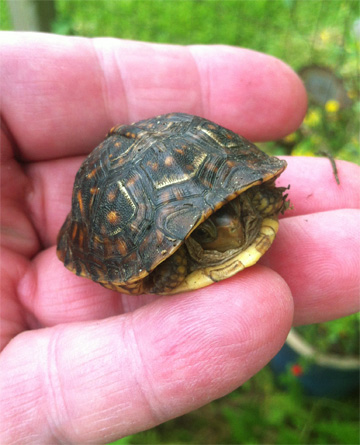
Baby Box TurtleThe turtles moved in and thrived. My mother feeding them cat food daily must have helped. They mated and laid box turtle eggs and we had new generations of turtles! (The one in the picture is a baby.)

Eventually, my folks moved out of Kenner to River Ridge. In fact, they moved no less than four more times, and my dad had to build a new turtle pond at each house. (This was their “gypsy phase.”)

Meanwhile, I grew up, went to college, married, went in the Air Force and moved back home after discharge, settling in Old Jefferson. Finally, my dad got tired of building turtle ponds and moving turtles, so I inherited them. I wasn’t asked, I was told, “Here are your turtles.”

Well, I wasn’t about to build any turtle ponds, but I did have a fenced vegetable garden area inside my fenced yard, and the turtles went in there to “free range.” And they prospered, mated and laid box turtle eggs! Our boys learned about sex watching box turtles mate.

The turtles also came in handy for Heath’s and Ryan’s birthday parties. I would collect up as many turtles I could find, paint numbers on their shells and the kids would have turtle races. Each kid picked a turtle, which we placed in a circle in the grass. The first turtle to make it out of the circle won a prize for its “owner.” The kids loved it and those we run into years later often mention our turtle races when they were young.

Disaster struck. We had a couple of really cold winters. Box turtles bury themselves for the winter and most did not survive. But a few must have, as we would sometimes encounter a young box turtle in the yard for years after.

In 1986 we moved from that house to one about four blocks away as the crow flies. Every few years I find a box turtle roaming around the yard. When I do I release it into the fenced area of our yard. Either they get out again or are really good at hiding because I very rarely find one inside the fence again. However, last summer Janis found a baby box turtle in our garden. We must have a mated pair somewhere in our yard!

I am sure the ones I am finding today are descended from that original bunch I brought back to Kenner from Waveland.

2 Comments

Filed under Family History, Growing Up, Waveland

Ethan the Christian

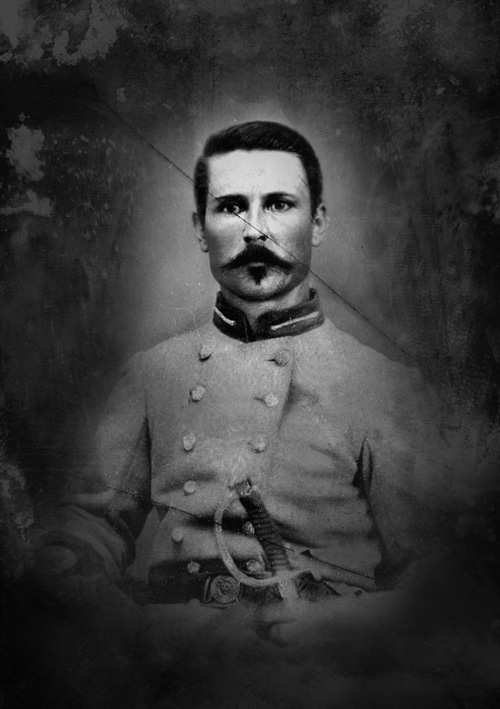
Ethan6B REDUCEDIt should be obvious from reading The Last Day of Forever and An Eternity of Four Years that Ethan’s faith plays an important role in his character. Sometimes he succeeds as a Christian and sometimes not. Christians are not perfect, although some critics of the faith suggest we ought to be so 100% of the time. For them, seeing a Christian fail can be a moment of triumph when they can point a finger and loudly exclaim, “Hypocrite!”

If you have ever read the Bible, one fact should strike you: It is full of “hypocrites.” Of the many characters in the Bible, only one is without flaws. All the rest in some way fail, often spectacularly. They are, after all, fallen individuals, not plaster saints, and God lays out their failures for the rest of mankind to see and learn from.

One of the most interesting examples of this is King David and the Bathsheba affair. I believe, having assumed the throne after so many years of being hunted by Saul, he became arrogant. Success can do that. I think 2 Samuel 11:1 suggests this when it says, “It happened in the spring of the year, at the time when kings go out to battle, that David sent Joab and his servants with him, and all Israel; and they destroyed the people of Ammon and besieged Rabbah.” David’s place was with the army in the field and not back in Jerusalem strolling on the roof of the palace to become involved with Bathsheba.

You would think someone like David, “a man after God’s own heart,” would have admitted his lapse in judgment immediately following his night with Bathsheba. But no, when she became pregnant, he doubled down and arranged the death of her husband in a misguided attempt to hide what he had done. Arrogance begat lust, and lust begat adultery, and adultery begat murder. Sin is like that.

It was roughly a year after the event before David finally had a “wow” moment concerning what he had done. A year later! Along came Nathan the Prophet to tell a story that backed David into a corner, and he ended up convicting himself. Only then did David finally recover from his denial and accept his own failure—and face his discipline. I have no doubt that during that year, David frequently had moments where he considered what he had done was wrong, and I have no doubt but that each time he rationalized it away somehow. To get well, you must first admit you are sick.

Christians are not perfect, and Ethan is not Jesus Christ. He loves God much like King David did, and like David, Ethan sometimes fails to measure up to God’s expectations. And like David, sometimes Ethan gets a little smug and full of himself, and it catches up with him. He refused to accept responsibility for his failures and more importantly, he refused to seek the remedy, preferring instead to seek relief in a bottle. When a Christian is out of sorts with God, he can sink so far down that there is nowhere to look but up.

I intentionally wrote Ethan’s character as “flawed” and “human.” After reading an early manuscript for The Last Day of Forever, my wife commented, “Ethan is too perfect.” My reply was, “Wait until you see him in An Eternity of Four Years.” After experiencing success out west and returning home to find Rachel waiting for him, he seemed in command of his world and his life. His smug “victory dance” before the mirror in the closing chapter of Last Day is a hint of “pride goes before the fall”—and of things to come.

One point I wanted to make in these two books is God orchestrates our circumstances. How we react to them is our choice. As Blue tells Ethan in Eternity, “Adversity makes you bitter or better, but you choose which.” And also in Eternity, Rachel summed up the underlying theme of the books when she challenged Doctor Johnson with Romans 8:28. (I’ll let you look the passage up.)

So, surprise! I am a Christian, and like Ethan and David, I admit I am not perfect. I admit I sometimes don’t seek the solution I should seek. I admit my faith is sometimes weak, and even on occasion, I choose “bitter” over “better.” In other words, I’m a work in progress that will see perfection only in eternity. If you wish to call Ethan or me a hypocrite, that is your choice, but at least do so with the understanding that none of us are claiming the status of deity.

To get well, you must first admit you are sick.

Leave a comment

Filed under An Eternity of Four Years, Catahoula Books, Civil War, Last Day of Forever

An Eternity of Four Years – UPDATE

Heads up! Better get with finishing up your read of The Last Day of Forever, because I just uploaded the files to CreateSpace for the exciting conclusion to this epic story.

Here I go making predictions again… I expect to have it published in June.

Meanwhile, here is a teaser for you from An Eternity of Four Years. This scene takes place in the spring of 1862 and the boys from Louisiana are joining Stonewall Jackson in the Shenandoah Valley for the start of Jackson’s famous Valley Campaign.

*****

Book 2 1As the sun rose on the morning of 19 May 1862, we marched out of camp. Ewell went north, and the Louisiana Brigade went west. Taylor had me ride along with him so he could question me about Jackson. Blue rode along with Taylor’s servant.

As we drew near New Market and Jackson’s camp, Taylor had his regimental commanders tighten up the formation. The men of Taylor’s Louisiana Brigade, 3,000 strong, marched down the Valley Turnpike and into Jackson’s camp that evening with regimental bands playing smart martial airs, the drums beating the cadence, and bayonets and polished gun barrels glistening in the warm glow of the setting sun. It was a sight to stir the hearts of even the most hardened.

Taylor and his staff were in the vanguard, followed by Wheat’s band playing The Girl I Left Behind, then the Tiger Rifles in their fancy zouave uniforms following close behind the band. The Virginians and Marylanders of Jackson’s command poured out of camp and lined the road on either side, hooting and cheering us on. That only served to make us prouder. The bands played louder, and we put even more snap into our step. I am here to tell you that there was no grander sight than this magnificent brigade marching proudly up the turnpike under our blue pelican battle flags. My heart fairly wanted to burst from my chest!

Jackson watched from a distance as his fresh new brigade trooped smartly by. He soon sent a member of his staff to greet us and instruct us to march through his whole army to camp on the north side. We didn’t realize it at the time, but the Tigers were being positioned in camp so we would march in the vanguard of Jackson’s army when we broke camp the next day and moved north.

We marched into the fields designated for us, and our officers shouted commands in French to the amazement of Jackson’s troops gathered around to watch the show. Our bands continued to play, and some of our boys joined in pairs and danced in gay abandon as if their partners were the most beautiful Creole belles of New Orleans. Once more the battle hardened veterans of Jackson’s Valley Army cheered.

Taylor laughed at the amazed Virginians then turned to me. “Where is he, Captain?”

I looked about for Jackson. I had seen him earlier when we marched down the pike but had lost him in the crowd. I soon spotted his lanky figure sitting on a rail fence overlooking the camp and road. “That’s him, sir, there on that fence,” I replied, pointing.

“Come along, Captain. I expect you will want to tell him hello.”

“Yes, sir.” I followed Taylor as he made his way through camp to Jackson.

Stonewall was sitting on the top rail, sucking on a lemon to ease his stomach problem as was his habit. He wore high cavalry boots that seemed oversized even for him, and his uniform was faded and weathered looking. I soon realized it was the same one he had worn back at VMI. He had a dark heavy beard, and brooding eyes peeked out from under the bill of his kepi, which he wore rakishly low over his brows so as to almost hide his eyes. He looked weary and much older than when I had last seen him.

I held back, and Taylor stepped up and introduced himself. Jackson nodded and glanced over at me for a moment. Then turning back to Taylor, he asked in a low even tone, “By what route did you march today and how many miles?”

“Keazletown Road. Six and twenty miles.”

Jackson gestured with his lemon to our brigade. “You seem to have no stragglers.”

“Never allow straggling, sir.”

Jackson nodded knowingly. “Then you must teach my people. They straggle badly.”

One of our bands struck up a tune, and the men began dancing again. Stonewall watched for a few moments then said softly, “Thoughtless fellows for serious work.”

Taylor turned and looked over his shoulder at his brigade then turned back to face Jackson. “I expect the work will not be less well done because of the gayety, sir.”

Stonewall nodded but made no reply. Turning once more to me he said, “I believe I know you?”

“Yes, sir. I was a student at VMI, class of ‘60.”

Jackson smiled. “Of course,” he replied evenly. “You’re Ethan Davis, aren’t you? The moustache deceived me. How are you, Captain Davis?”

*****

1 Comment

Filed under Catahoula Books, Civil War, Excerpts, Last Day of Forever

Gunfight at the Not-So-OK Corral

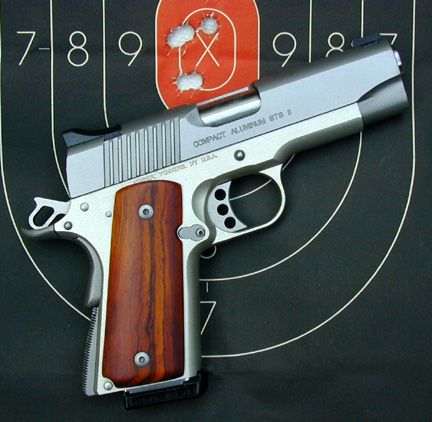
KIM RS TARGET RI sleep with a loaded, cocked-and-locked, 1911A1 .45 Auto pistol beside my bed. Some of you might question the wisdom of that, especially after reading this story. The one on the left is actually an abbreviated Officer’s Model with a 4″ barrel, my favorite carry piece. These nights, it rests on my Bible on my bedside table, but I used to keep its big brother with the 5″ barrel in a holster jammed between the mattress and side rail of my bed. All I had to do was reach over the side of the mattress and my hand naturally fell right on it.

It was after midnight one night some thirty plus years ago, when I was disturbed from a very sound sleep by my wife exclaiming, “No! No! Nooo!”

Needless to say, that got my attention. In the darkened room, bleary-eyed moi looked over at Janis beside me—AND a man in a plaid shirt is leaning over her!!!!

Ninja-like, I sprang into action. In one not-so-smooth movement, I reached for my trusty 1911 while rolling out of the bed and, very un-ninja-like, my feet became entangled in the covers. I landed with my butt on the floor, my feet still up on the bed, and I was folded in half and firmly wedged with my back against the chest of drawers beside my bed. Thus positioned, I was virtually helpless!

But I am armed!

I had my pistol in my hand, observing proper gun handling by keeping the muzzle pointed in a safe direction (Rule 2) and my finger off the trigger until I had a target (Rule 3).

Still hopelessly jammed between bed and chest, with my left hand, I frantically pawed for the big Maglite I kept on the lower shelf of my bedside table. Flashlight in hand and arm fully extended, three “D” cells of Maglite power lit up the night on Janis’ side of the bed, and I was fully expecting to ventilate the intruder.

But no one was there.

I was thinking, my ninja-like movements must have scared him off. To be certain, I passed the beam around the room and then over Janis. When the beam hit her face, she stirred, sat up and looked at her husband still solidly jammed between bed and chest. And she sees two feet sticking up, a gun held aloft in one hand, flashlight held aloft in the other waving around like a drunken lighthouse beacon, and the top of my head about down to my frantic-looking eyes, and she calmly asked, “What are you doing?”

Well now, under the circumstances, I had to give that question some serious thought. I finally replied as evenly as my excited self could, “I am not really sure…”

After I disentangle myself from my “hole” between the bed and chest, I did a house clearing drill just to be certain there were no intruders. As expected that exercise was fruitless. Evidently, Janis had been dreaming and said what I heard, and I am sure I heard it, because it woke me up. I must have “joined in her dream” and “saw” the plaid-shirted man leaning over her and reacted accordingly.

Good thing he wasn’t there, because I would have ventilated him!

1 Comment

Filed under Family History, Firearms, Growing Up