The Hog Hunt

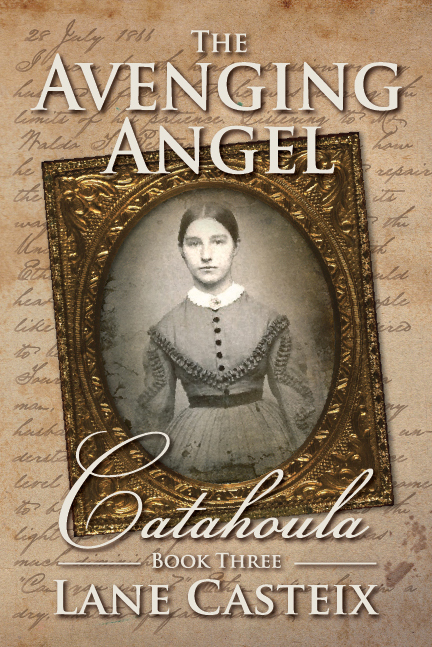
Here is another scene from The Avenging Angel, Book Three of the series. In Book One, The Last Day of Forever, there is another hog hunting scene. This one takes place ten years after that one. They have just arrived on the scene where the Catahoula dogs have a hog cornered. Little Zeke has not been seen since The Last Day of Forever. Theo is a new character in The Avenging Angel.

*****

Catahoula Map

We dismounted, and I retrieved two short ropes from my saddlebags. “You flip and I sit? Or I flip and you sit?” I asked Little Zeke.

He looked down at that hog, which was one about medium size, less than two hundred pounds.

Before he could answer, Theo did. “I’ll flip, you two old men take it easy and sit.”

We both looked at the grinning Theo like he might have had two heads.

“Excuse me?” I said.

“That puny little piglet ain’t no match for me. I’ll flip.”

Zeke frowned. “You ever done this before?”

“Plenty. We gonna jawbone about it or shall we get to it before he hurts one of the dogs?”

I looked at Little Zeke with my face wrinkled in a frown. He shrugged and said, “The boy says he can do it. Let him have at it, I say.”

“Very well, Theo. The pleasure is yours.”

Theo bowed deeply. “Thank you. You have the ropes ready?”

I held them up. “At your service, sir.”

“Then let’s get after it.”

“You coming?” I asked my father.

Pernell threw a leg over the pommel of his saddle and leaned forward. “This looks like it could get interesting, and I’m too old to outrun a hog, besides it could get a bit crowded down there with all of us. I’ll watch from up here.”

I tipped my hat. “Have it your way, but you’ll miss all the fun.”

“I doubt that,” he muttered under his breath.

We made our way down the side of the low ridge to the bottom. The hog was more interested in the dogs, and we tried to approach him from his rear to keep him from taking any interest in us. That didn’t last long. With Theo leading, Zeke and I following close behind, we were within about fifteen feet of the hog, when he suddenly turned on the two dogs on his left side and spotted us. He kind of lost all interest in the dogs then and came after us with the dogs in hot pursuit.

It was time to find a tree.

Zeke went one way. I went another, and the hog stayed on Theo. I don’t think I have ever seen anyone run so fast as that boy did that morning. Theo rounded a tree and reversed course on the hog. It took the pig but a second to figure out what had happened and reverse course, himself. Theo lit out, but the hog was gaining.

The boy headed for a tree with a branch hanging about six feet off the ground, and the hog was but three or four feet behind him—and catching up. I figured Theo would grab that branch and swing up into the safety of the tree, but he did something I have never seen before. He did grab the branch, but, hanging by his hands, he swung up and over the branch as the hog passed under and slid to a stop, confused and looking for Theo.

Completing his orbit of the branch, the boy landed right behind the hog, and pretty as you please, he reached down and grabbed him by his hocks, lifted his rear end off the ground, and flipped him on his side.

I looked at Zeke, and he looked at me. Neither of us could believe what we had just seen.

Theo still holding the squealing hog by his hocks and keeping him down on its side. “You two old men just going to stand there, or are you goin’ to come an’ help me?”

“Comin’, boss,” I replied as we rushed over and sat down on the pig’s side, pinning it. I handed Theo the ropes, and he hogtied it.

Zeke and I stood, and Theo stepped back, and with his hands on his hips he looked at the subdued hog with a smile of triumph on his face. “And that, gentlemen, is how you flip a pig.”

Zeke looked at me and shook his head. “In all the times we chased hogs together, I ain’t never seen you do a trick like that.”

I put my arm around Theo’s shoulders and grinned at Zeke. “I taught him everything he knows.”

His brow wrinkled, Theo looked up at me. “Even in your prime, you couldn’t have done that.”

I playfully slapped him behind his head. “Hush, boy, or you’ll be sleeping with the pig tonight.”
Leave a comment

Filed under Catahoula Books, The Avenging Angel

Memorial Day 2016

To all the veterans out there, I offer my sincere thanks for your service.

I was born in 1944, during World War II. In the postwar years, every kid I knew had a family member who served in the military during WWII, most only their fathers, but a few mothers also served in the military. So fresh on everyone’s memory, WWII was a subject of great interest to us kids, especially the boys and no doubt many of the girls, as well. Some of the veterans we knew would (could) not talk about their experiences, but others did, and perhaps had a need to speak of what they went through. Some of the stories were of harrowing experiences, and some were funny.

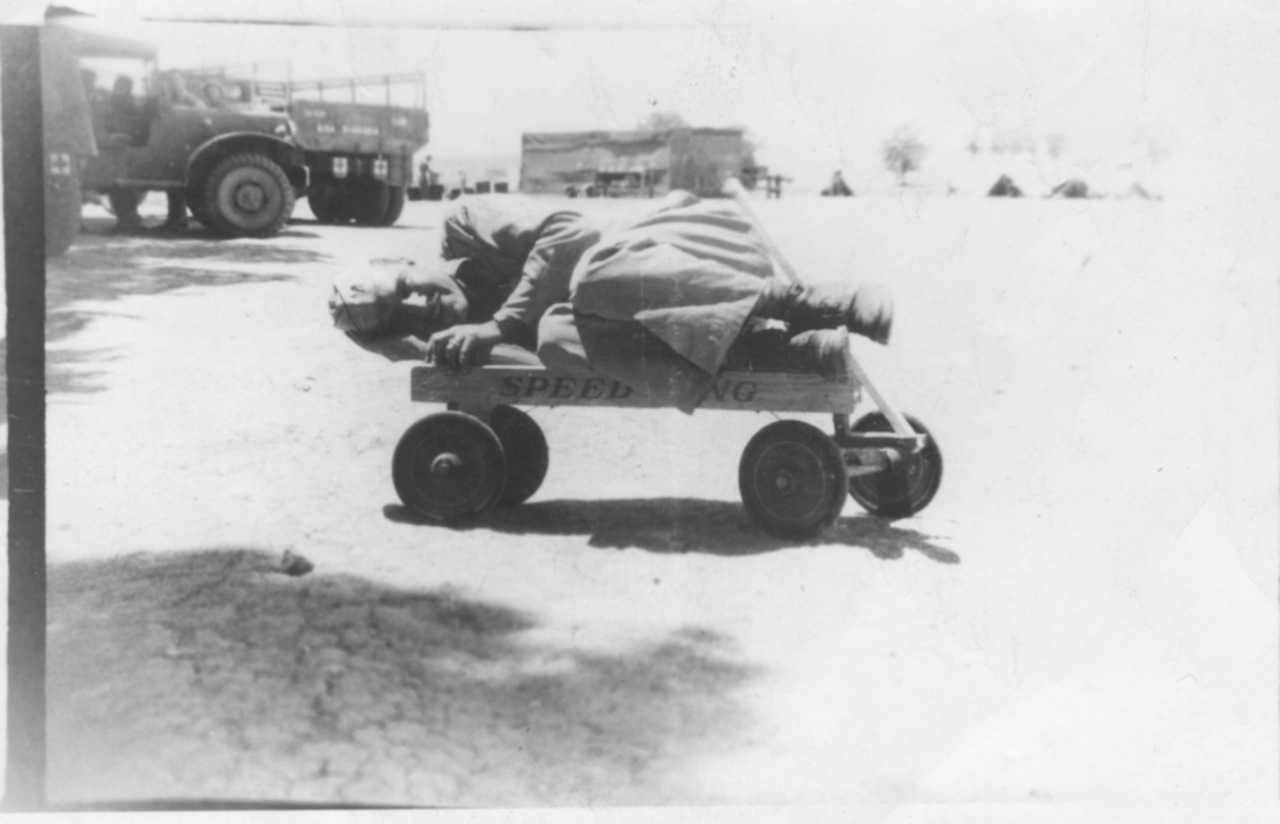
My father was a doctor who served with the 5th Army in North Africa, Sicily, and Italy, and he loved to tell of his experiences, including his period he was the battalion surgeon with Darby’s Rangers, filling in for Darby’s wounded surgeon, or the time he was sent over to help the Germans get their hospitals better organized. Some of his stories were poignantly funny, like the time his father ordered a sleeping bag from Sears to be shipped to him overseas, and they accidentally shipped  a little red wagon instead. Sears made good on the sleeping bag and did a PR release on the story in the newspapers back home. The pic below is of him in his “sleeping bag.” The caption on the back reads, “A little cramped, a little hard, but an excellent sleeping bag. July 1943.”

Red Wagon

One of the most interesting stories was one told by my wife’s father, Bobby Cristina, of when he was shot down over Sicily. Bobby was a pilot and flew C-47s, which were the most advanced airliners of the prewar period, the Douglas DC3. Many airlines turned their DC3s over to Uncle Sam, and they became C-47 Skytrains, the workhorses of the war. They were such a great design and so easy to service, many are still in use in countries with limited repair resources.

C-37

It was on the night of the third day of the invasion of Sicily. Field Marshal Bernard Montgomery’s British 8th Army was making headway up the east coast of Sicily but faced a daunting obstacle, the Simeto River. One bridge crossed it, the Primosole Bridge. Monty needed to capture that bridge intact to use to cross the Simeto, or his advance would be stalled until another could be built by engineers. British paratroopers of the 1st Parachute Brigade of the 1st Airborne Division were to be dropped around the bridge to capture it and hold it until Monty and the rest of the 8th Army arrived. One hundred and five American C-47 aircraft of the 60th, 62nd, and 64th Troop Carrier Groups, plus twelve British aircraft towing gliders were to carry the British paras to the objective in what was called Operation Fustian.

It did not go well.

The aircraft were routed right over the invasion fleet just offshore and were mistaken for Germans and fired upon by the Allies. This very situation had been encountered only a few days earlier on the first day of the invasion with similar disastrous results, something Bobby stood up in the briefing and pointed out. But he was told that would not happen again. But it did. Four aircraft were shot down, and nine were so badly damaged they had to return to North Africa.

Surviving aircraft formations had become disorganized, and the remaining force straggled over the coast for the drop zone (DZ). Lieutenant Cristina’s C-47 was one of them. He told me, “Lane, as we crossed the coast (in the dark), the tracers were coming up all around us. It looked like someone had stoked a fire sending embers up the chimney.” Tracer bullets have burning phosphorus in the base for the gunners to  see where the rounds are going. They are usually every fifth round, so for every one you see, there are at least four more you do not see. What the Allies were unaware of is that very day the Germans had brought in their 1st Parachute Division for the purpose of defending that bridge. Thirty-seven planes were shot down, and ten were so badly shot up with dead and wounded crews and paratroopers onboard they had to abort and return to Africa.

Nearly half of the assaulting force was lost—shot down or forced to abort because of damage!

Bobby’s plane was hit many times. Their radio operator was dead, and several paras were wounded as they approached the DZ, which was only a little ways inland. Bobby managed to find it and get his paratroopers out. All the while they were facing concentrated antiaircraft fire from the Germans. The op plan called for them to make a one-eighty degree turn after dropping the paratroopers and egress the same way they went in. Neither Bobby nor his copilot thought that was a very good idea under the circumstances and decided to keep going west and then head south for their base in North Africa.

While the aircraft was badly damaged, it was still airworthy—until it was hit in the nose by antiaircraft fire, which started a fire onboard. With that, they had to abandon the aircraft and bail out. They had dropped the paras at a low altitude and had slipped even lower when they were hit in the nose. Bobby ordered his copilot out while he managed the wounded C-47 with the cockpit filled with smoke and flames. He gave the copilot what he thought was enough time to get out, and since he figured he was very close to the ground, he pulled the nose of the aircraft up to gain some altitude before he jumped. He climbed out of his seat and put on his parachute, only to discover it didn’t fit. His copilot, a much shorter man, had grabbed the wrong parachute. Bobby squeezed his long and lanky frame into the very tight harness and headed for the rear door to bail out.

By then the plane had rolled over on its side and was headed for the deck as Bobby ran along the windows on the left side of the plane to the side door. There he found his crew chief with a head wound and out cold. Bobby pushed him out the side door, which then faced the ground, and pulled his rip cord as he did. Bobby dropped through the door right after him, and knowing he was very close to the ground, he pulled his own rip cord, risking getting his chute fouled on the tail of the plane.

He fell into the night, and his chute streamed overhead. After what seemed like an agonizingly long time, it finally blossomed and filled with air—violently stopping his free fall—just as his feet touched the ground. One second longer, and he would have splattered.

With his plane crashed and burning a few hundred yards away and Germans all around, he crawled on his belly in the dark and found a hay stack to hide in. After it got quiet, he crawled out and found his crew chief also crawling around on his belly. He had survived the jump and was conscious again. They hid in a bomb crater all day without water or food. By night their tongues were swollen, and they crawled on their bellies to a farm house where they sought aid for the crew chief’s head wound and Bobby’s burns. The Italian family offered to hide them from the Germans, but they refused, knowing if the Germans found them hiding the Americans, they would kill the whole family.

So they crawled west to get away from all the activity on the coast with plans to head south and the British lines when it was safer. They finally decided they were far enough inland to walk, and they did—right into an Italian patrol of fourteen men led by one officer. The two groups saw each other at the same time and froze. The Italian officer called out, “Germani?” Bobby replied, “(Expletive deleted) no! Americans!”

The much relieved Italians promptly surrendered to the much relieved Americans.

With prisoners in tow, they headed south and eventually reached British lines, turned in their prisoners and caught a ship back to North Africa. Bobby’s family back home had already been notified he was MIA (missing in action), but the Red Cross sent them a telegram telling them he was “safe somewhere in North Africa.”

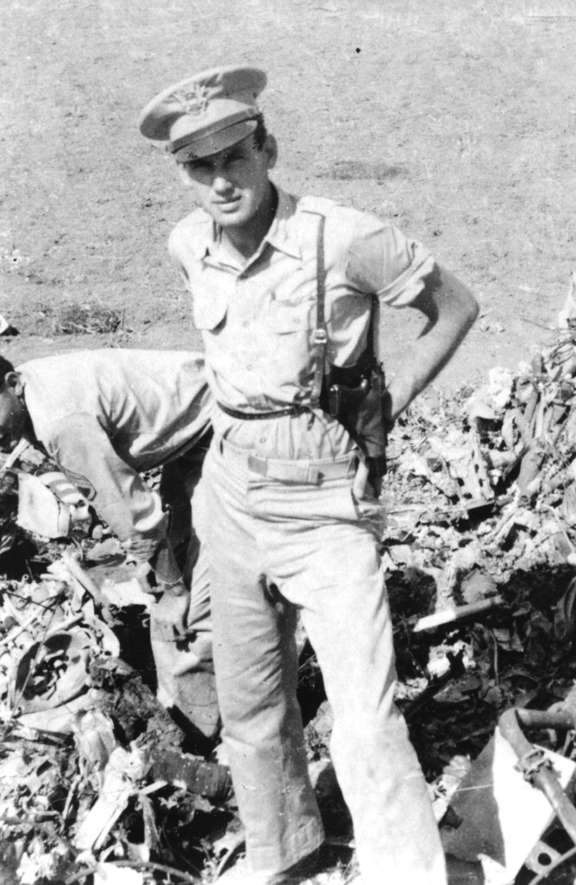
Later after Sicily was secured, Bobby returned to the crash site. The pic below is of him standing on the wreckage of his C-47. The copilot who jumped with the wrong chute died. His chute didn’t open. Whether it malfunctioned, or he was too close to the ground and he failed to pull the rip cord in time, is unknown.

C47 Wreckage

Some of the British paratroopers landed as much as twelve miles from the DZ, but two companies managed to land close to the bridge and did take it—and held it for Montgomery.

Bobby was awarded the Purple Heart for his wounds and the Silver Star for his heroic actions that night when he attempted to save the life of his copilot and did save the life of his crew chief—plus taking fourteen Italian prisoners. And by the way, he was unarmed. He had left his pistol back in the barracks in North Africa.

1 Comment

Filed under Family History, War Stories

Conversations With My Truck

Modern technology now allows us to have conversations with our vehicles. I drive a 2012 Ford F150 Crew Cab pickup. It came equipped with what they call “Sync,” which is a product by Microsoft (and that should tell you a lot about the product). In places like the Ford F150 forums and the privacy of many Fords, Sync gets called many other names, and the names are neither polite or flattering nor repeatable on a nice family blog like this one.

IMG_0788

What does Sync do? Besides infuriate you, that is. The idea, it seems, is Sync puts you “in sync” with your Ford.  Sync has a female voice, a rather irritating one. Microsoft must have recruited Nurse Ratched for the part.  She asks you questions, takes commands and executes them, so you don’t have to push buttons and get distracted by that. “Executes them” is a term that I say is open for discussion when applied to the Sync B****. Sometimes she does what you ask, and sometimes she argues with you and even pushes you around. And you want to know what “distracted” really looks like, just get into an argument with the Sync B****. (The linked video above is a bunch of Sync users at a therapy session.)

I’m not making this up!

Haven’t you ever seen someone driving down the highway yelling his head off and shaking his fist, and there was no one else in the truck or car? He wasn’t singing along to Queen’s Bohemian Rhapsody on his iPhone Bluetoothed to the truck’s stereo. If he was in a Ford, he was probably having an argument with the Sync B****.

I have considered shooting her, but the engine would be in the line of fire—and I would only have to pay to get it repaired, not to mention explaining THAT to the police after some suspicious Ford dealer reported the bullet hole. I can see the police report now: “Claims he was mad at his truck, so he shot it.” That would not bode well when I renew my concealed carry permit.

You think I am joking? Let me give you a sample of a Sync B**** “conversation.”


Lane –  I want to listen to some tunes stored on my iPhone by connecting it to the truck’s stereo through Bluetooth, so I push the “media” button on the steering wheel

SB – Answers: “Line in. Say a command.”

Lane – “Bluetooth Audio” That should be all I need to say to establish a connection.

SB – “I did not understand you. You can say USB, next turn, line in, Bluetooth, leave massage…” And she rattles off a list of around thirty commands I can say that include everything from changing map directions to connecting my iPhone to the stereo via Bluetooth, which is what I want.

Lane – I punch the “media” button to shut her up, cutting her off at around “Update route…” (In retrospect, that may have made her mad.)

SB – “Line in. Say a command.”

Lane – The microphone is in the overhead console only about 15 inches from my mouth, but I say it  little louder, thinking that will help, “Bluetooth Audio.”

SB – “I did not understand you …”

Lane – I scream at her, “I didn’t stutter!” That didn’t help either.

SB – Unfazed by my outburst, she continues, “…You can say USB, next turn, line in…” and we go through the list again.

Lane – Back to the “media” button.

SB – Stops her list at “Say ‘Play’ if you …” Pause. “Line in. Say a command.” (Rinse and repeat.)

Lane – I considered spelling it, but went for emphasized enunciation instead, figuring anyone this stupid couldn’t possibly be able to spell. It came out something like this, “BLUE-TOOTH-AU-DIO.” You know, like when you are trying to explain something to someone who does not speak English and you don’t speak their language, so you say it in English very loud and slowly—as if that will help?

SB – “I did not understand you. You can say USB, next turn, line in…”

Lane – While I am shaking my fist at my truck’s dashboard, my mouth vomits out a string of profanities directed at HER.

Janis thinks I need professional help.

Leave a comment

Filed under Growing Up

It’s The Ride!

I like to paint, not walls, but pictures on canvas. I haven’t seriously painted anything since the early 1980s, well maybe a few but very few.

I also like to write stuff, like fiction, which should be obvious to anyone who frequents this site. I gave up painting years ago and began writing, but there was about a ten-year gap between those two events. Meanwhile, I was designing stuff, mostly advertising and packages. That filled in the creativity gap nicely and actually captured a time before it and after it. I make my living designing stuff.

All three would be considered to be among the creative arts. I want to stop designing stuff (retire) and begin painting stuff again, but also keep writing stuff.

And where is all this rambling about creative stuff going? I figured out why I quit painting stuff and why I want to start again. As part of that, I figured out why I like writing stuff.

(This will all make sense at some point, so hang in there.)

I met an artist through FaceBook, Eril Lee Gafill, a Big Sur, California artist, and I was really attracted to her style of painting, which is very different from my own. What I liked about her style was her ability to capture the subject, mostly landscapes and some still life studies, without a lot of laborious detail, and her paintings are full of raw energy. They are a delight to look at and study. What I deduced from that is she paints very fast, completing the piece is a matter of hours, maybe less in some cases, thus she is able to be very prolific. On the other hand, it takes me weeks and even months to complete mine. The difference is I labor over detail, plus I was doing it part time while designing stuff to feed my family and pay the rent.

I quit painting years ago because it became boring, and as I now describe it, rather than waiting weeks of months to enjoy what I created, I wanted more immediate gratification for my efforts.

Houmas House

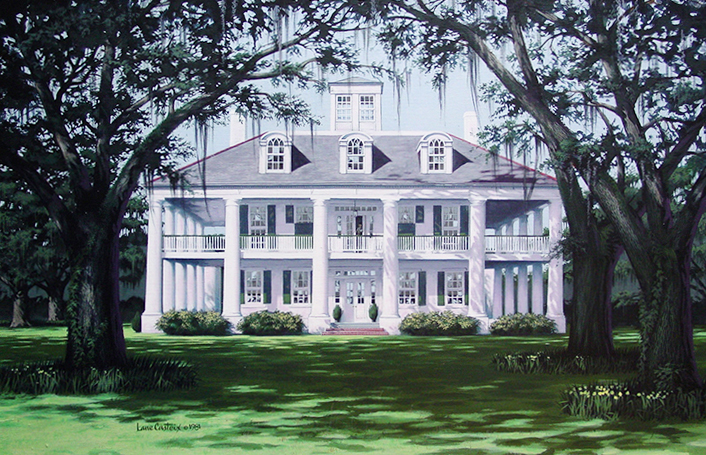
Writing offered that immediate gratification. Even though the story might take many months or over a year to complete, the process of getting there is very gratifying. I enjoy writing the dialog between characters and the scenes I was setting up and seeing them come to life through what I was writing. I did not need the finished product to enjoy what I was doing. To me, they were alive in the present time instead of the distant future.

Think of it this way: You are sitting around a campfire, and someone is telling a story. And while it may take a long while to get to the conclusion, you are enjoying getting there as the drama builds.

Motorcyclist have a saying that perfectly captures this: It isn’t the destination, it’s the ride.

That’s what writing was for me, and painting was not. And that is why I gravitated to Erin’s style, BUT I was thinking in terms of the destination in the context of cutting weeks down to a few days at most. That is not quite the same as “the ride.”

I met Erin face to face for the first time last weekend. She was in NOLA for a showing of her paintings. She was quite busy, so we got to speak for only a few minutes, but it was a very enlightening few minutes for me. Trying to understand her style of painting better, I asked her about some of her techniques, and in the process of explaining how she worked, she commented that some artists only enjoy their work when it is finished, but for her, each brush stroke was a joy. She was enjoying the ride! That resonated with me, and I commented that I was an artist that only enjoyed his work when it was finished. Her reply was, “You probably paint very detailed.”

BINGO!

Houmas Door

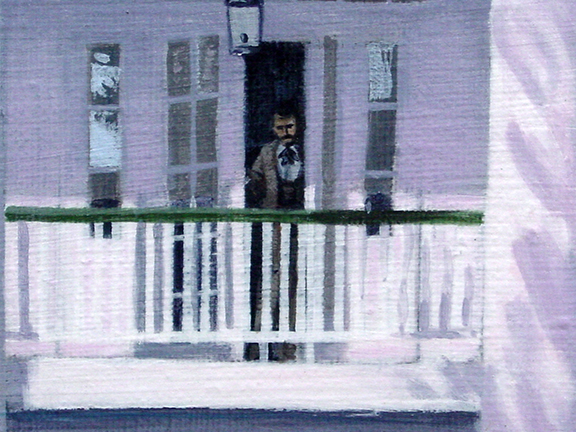
Houmas Man

Houmas Tree

At that point it all came together for me. I connected why I like writing to why I didn’t enjoy painting. I really want to start painting again, but this time I want to work less detailed and enjoy the ride—each and every brush stroke.

Thank you, Erin! I look forward to learning more from you.

Leave a comment

Filed under Art

Hearing Impaired.

I am hearing impaired and began wearing hearing aids in 2012. I was pretty much forced to by my job and my wife.

As for the job, I decided it was a bad idea to continue to complete meetings with clients and then have to ask my account executive what we just agreed to do.

Janis was another matter. I had to turn the TV up so loud it bothered her. Wearing TV headphones helped that. I could crank the volume up in the headphones, and she could listen through the speakers at normal levels. And by-the-way, she has the hearing of an Arctic Fox hunting for moles under three feet of snow.

That worked until I bought a new TV and later, Apple TV. Apple TV doesn’t go through the Dish Satellite DVR, which is what the headphones are plugged into. No problemo! I bought an audio system with six speakers, thinking I could plug my headphones into the TV, which silences the sound coming out of it, and Janis would listen through the nice six-speaker audio system, while I listen through the headphones.

One minor problem: The TV doesn’t have a headphone jack!

That means whenever we are watching something on Netflix through Apple TV, I have to crank the volume way up (nice bass!) and past Janis’ comfort level. Now I have to buy a new TV with a headphone jack.

“How did this hearing problem happen?” you ask.

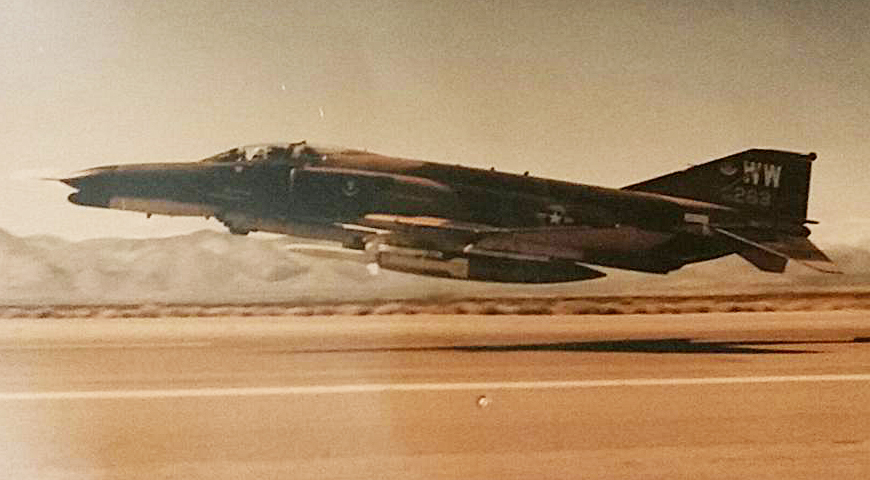
Listening to loud rock music through headphones, gunfire without hearing protection, and listening to F-4 Phantom IIs take off on a daily basis while in the Air Force. The weather observation site where I worked was about fifty yards from and about halfway down the active runway. And that would be about where they “rotated,” meaning just as the front landing gear came off the ground and both engines were under full, screaming, flame-spitting, afterburner power. Yes, it was loud. Very loud! We were issued hearing protection, but I know of no observer who ever used them.

F-4 Take Off

When I mustered out in 1972 at Elmendorf AFB, Alaska, they did a full physical makeup to compare to when I had entered service four years earlier. I distinctly remember the audio tech commenting as he read my latest test compared it to the older one. “Boy, you have lost some hearing in the last four years.”

I was thinking, So what! I can hear fine. Just give me my discharge.

Well, I couldn’t hear fine, and it progressively got worse. I began to realize something was wrong when I was in bed at night and I could hear crickets chirping—in January! That is when I discovered those “chirping crickets” were tinnitus—hearing loss that is not recoverable.

Where am I going with this?

Some funny stories, of course.

Being hard of hearing has led to some humorous situations, usually the result of me attempting to “fill in the blanks” of what I just heard someone say. My brain hears a few words of a six-word sentence and “logically” supplies what the other words must be. Trouble is, my brain usually gets it wrong.

One such incident occurred in Baton Rouge while we were displaced because of Katrina. We were having dinner one night with my sister-in-law, Beth, and her husband, Sid. Beth had invited some of her realtor friends to join us. None of them had arrived when Beth and I got into an argument over something she said and I didn’t understand. Actually, it may have been several things I didn’t understand, and she got flustered over me guessing wrong or asking her to repeat what she said.

About then one of her friends arrived, and Beth did the introductions. When she got to me, still a bit flustered, she said, “This is my brother-in-law, Lane, and he is hard of hearing” But she said the “hard of hearing” part loud for emphasis.

The poor woman took Beth’s comment in an overly literal fashion. Extending her hand to me, she said in a very loud voice, carefully enunciating each word, “HI—I—AM—MARY—GLAD—TO—MEET—YOU.”

We all laughed—except the very confused Mary.

Another incident happened just the other night. Janis had met with a contractor about doing some work on our fireplace chimney, and she was briefing me on what he had said. She concluded her report with, “And he lives nearby.”

To which I responded, “I really don’t care what his sexual preferences are as long as he does good work.”

She looked at me like I had two heads. “WHAT?”

“You said he lives with a guy.”

She lost all control then. Between bouts of laughter and teary-eyed she yells at me, “I said ‘he LIVES NEARBY,’ not he lives with a guy.”

“Oh!”

This will not be the last of such stories. Standby for more…

1 Comment

Filed under Family History, Growing Up

Meet Theo — Excerpt from The Avenging Angel

B3 AA Cover Master1Book 3 of the Catahoula Chronicles Series is moving right along. Still planning on a summer publish date. The Avenging Angel takes place in 1866, a year after the war and during one of the most troubling periods in American history, Reconstruction.

Some old characters you haven’t seen in a while will be returning, but there will also be some new characters introduced in The Avenging Angel. In this excerpt you will meet one, Theogene Henri Leboeuf. Theo will have a profound impact on the lives of Rachel and Ethan.

*****

 Scene setup: Ethan is having a confrontational discussion with his neighbor, Melvin Norgood, and one of his sons, Owen, when they are interrupted by a third son, Billy.

“I caught him, Paw! I caught the little thief!” Billy yelled as he stopped at the bottom of the front steps. The kid he had by the arm was filthy dirty, his long hair was matted and tangled, and his clothing was mostly rags. Issuing forth from his mouth was a constant stream of curses that would make a sailor blush, mostly directed at Billy, but the old man got his share.

Norgood and Owen descended the steps, and I followed.

“Got ya this time!” yelled Norgood, who by then had lost interest in me. “I’ll teach you a lesson you’ll long remember. Billy, beat him good and make sure he never comes back here.”

I looked at Norgood. “You serious?”

“Hell yes! That kid has been a pain in my rear all summer now.” He turned back to Billy. “Beat him, I said! Beat him good and proper!”

“Wait! What did the boy do?”

Norgood turned and glared at me. “He’s a thief and ruffian. He steals from my kitchen, steals my chickens, and breaks my windows. And I’m sick of him.” He turned back to Billy. “What are you waiting for? Whip him, I told ya!”

Still holding the squirming boy with one hand, Billy unbuckled his belt with the other. And the boy wailed all the louder.

“Oh, no you don’t,” I said as I marched over and grabbed the boy and pulled him away from Billy. “You will not strike this child!”

He looked at me. “You gonna stop me?” And with that, to make his point with me, he backhanded the kid and sent him sprawling on the ground. As Billy turned back to me, I was ready and planted my fist in his face and sent him sprawling on the ground beside the boy.

The boy jumped to his feet and wiped a spot of blood from his split lip. Then he hauled back and kicked Billy in the shin.

Melvin went to draw his pistol.

“Not a good idea, Norgood,” I said as I drew my own Colt and pointed it at his head. “You aren’t fast enough to live through this.”

“And neither are you, Ethan,” said Owen with his Colt pointed at me.

I looked around at the three Norgoods. Billy was still struggling to stand, but the two other Norgoods had cocked pistols pointing in my direction. “Looks like we have a standoff, boys,” I said with a smile

“Looks like it,” said Norgood, “and I’m going to end this—for now. Ethan, I think you had better leave. And take that boy with you, and make sure he never shows up on my property again. If he does, I’ll kill him.”

Still holding my Colt on Norgood, I said to the kid, “Over by my horse, boy, and move it!”

“Yes, sir,” he replied before he stuck his tongue out at Norgood.

I pointed the pistol skyward and let the hammer down to half cock as I backed away toward Pepper and the boy. Norwood lowered his own and gestured to Owen to do the same.

Pistol holstered, I swung up into the saddle and, once situated, leaned over and extended my hand to the boy. He got the message and grabbed my arm, and I pulled him up behind me.

“You settled?”

“Yes, sir,” he replied as he put his arms around my waist to hold on.

“Good day to you, Norgood,” I said with a tip of my hat. He did not smile and made no gesture towards me.

I touched Pepper’s flanks with my heels, and we headed down Norgood’s drive for the road.

“What’s your name, boy?”

He seemed to hesitate before answering. “Theogene Henri Leboeuf, but you can just call me Theo.”

“Any relation to Corporal Antoine Leboeuf with the 1st Louisiana Brigade? From up around Jena?”

“He was my paw, and our farm was near Jena. You knew him?”

“I did. Wounded at Sharpsburg. Lost a leg and an arm as I recall.”

“That, he did. He come home that winter only half a man to find  my mother dead of pneumonia by just a week. That was a bad winter—a very bad time.”

“What happened after that?”

“He died ‘bout a year later. Kinda hard to manage a mule with only one leg and one arm. I tried to help, but it weren’t enough. The farm work finished off what the war started.”

*****

Leave a comment

Filed under Excerpts, The Avenging Angel

SCUBA — Part 3

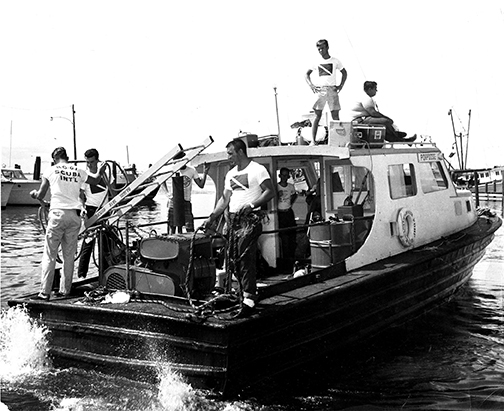
Didn’t expect a P3, but I was cleaning out a storage building in preparation for tearing it down and found a treasure trove of “Memory Lane” stuff, everything from my old Air Force papers, to art I did as a kid, and some old mags and photos. Among the photos was my “missing” picture of the Porpoise returning to Grand Isle on the last day of the NOGI Spearfishing Tournament mentioned here.

Sadly, many in the picture are gone now.

Porpoise NOGI R


I am the second from the left, handling the rope. Moving right, Dee White is next, partially hidden behind the ladder. Buck Roy is standing on top of the cabin with Mickey Rodosti (SIC?), who is sitting and gazing into the harbor. Dee, Buck, and Mickey are gone now. Al Easterling is standing in the cabin door, and I think he is also deceased. I can’t remember the names of the other two “rope handlers.”

Long time ago and so many good memories….

And what do we learn from that? Life is short—I didn’t think I would grow old so fast! And we need to spend more time with friends, because there comes the day when they may not be around any more—or you may not be around any more. Get together, crack open a brewski, and swap “lies” and laugh while you still can.

Leave a comment

Filed under Friends, Growing Up, Kenner

Fire and Fireworks

Boys have a fascination with fire. The fact that we like to grill is an indication of that. One of the reasons I joined the Boy Scouts (Troop 176) was so I could play with fire. But I was attracted to fire long before that.

As kids in rural Kenner, we had plenty of opportunities to play with fire. We never missed an excuse to build a campfire in the Manard’s key lot and cook something, sometimes one of our fingers—ouch! Our parents always tried to discourage our fire building and cook outs in the key lot with a lame excuse, like the City of Kenner doesn’t allow fires.

“And? So what?” was our usual come back. What followed was about ten minutes of a half dozen kids badgering parents, who only wanted to be left alone and drink beer. “Oh, OK! But don’t come running to me with burnt fingers.”

And we had a one-match fire going within minutes. (Hint: gasoline helps.)

A favorite Boy Scout meal was foil stew. It was easy to prepare. You simply make a pouch out of some heavy duty foil (preferably) and fill it with chunks of meat, potatoes, carrots, and a little seasoning. Add just a small splash of water and seal it up real tight. (The water part became beer when we got older)

You get a good fire going and let it settle down to coals, spread those out and flop that pouch of foil-delicious on them, then add some more coals on top. Let that puppy cook for about 20 minutes and pull it off the fire.

Carefully slice the pouch open and peel back the sides to make a bowl—and dig in. I ate many a foil stew while in the Boy Scouts and with my boys on later camping or hunting trips.

Fire included fireworks, and in those days we had M-80s. If I had to guess, I would say an M-80 was close to a half a stick of dynamite! Well, it seemed like it, and was close enough you can’t get the “real” M-80s today. It is amazing we never blew fingers off, and yes, we did hold them, light-em-up and throw them, not advisable, especially with a “half-stick-o-dynamite” M-80.

Son and Margie Manard, Bobby and Melanie’s parents, had discarded a kitchen trash can. It was the kind made out of steel with a pop-up lid and a removable can insert for the garbage, also made out of heavy steel. It was in July when we had ready access to M-80s, and we decided to see how high an M-80 would propel that heavy steel, can insert. So, we got out in the middle of Sixth Street and flopped that can face down over a sizzling M-80. After which, we all ran for cover.

BOOM!!!

That can went straight up almost as high as the nearby trees were tall, forty feet or more! WOW! We gotta do that again! And we did; numerous more “agains,” until that can was all bloated looking and dented from M-80 detonations.

I was really into building plastic model airplanes, and another of my favorite uses for fireworks was to glue bottle rockets under the wings and make my plastic F-80 or P-51 fly. Trouble is, it never quite worked out like I expected. Getting the two bottle rockets, one on each wing, coordinated was something outside my skill set at eleven years old. My airplanes mostly went in circles as one rocket fired off before the other, and the in the opposite direction when the other finally lit up. Then the wings melted from the heat. That game got expensive, so I gave up.

This fascination with fire lasted even into my parenting period. I went on a father/son camping trip with my youngest son’s (Ryan) Scout troop. We stayed in the Group Camp Cabins at Fountainbleau State Park. Part of the weekend pitted the scouts against their dads in various scouting skills like first-aid, wilderness navigation, and, of course, fire building. The dads faced off against several teams of scouts on who could build a fire and get it going enough to burn through a thread stretched over the fire at eighteen inches above the ground. And we had to use flint and steel to start the fire. The scouts, not being clever like their devious dads, went the traditional route: first laid down some flammable material like dry leaves, then some kindling , then larger twigs, and finally some sticks.

In our scavenging through the woods for materials to build our fire, I discovered that dry Spanish Moss, the black stuff, burned like it was soaked in gasoline.

You know what’s coming.

With all our fires built and ready to fire up, the scouts looked questioningly at our mound of dry, black Spanish Moss, piled up high enough to almost touch the thread.

Ready, set, GO!

I struck flint to steel and FFOOOMMMPP! In a blaze of fiery glory, that thread disappeared in about three seconds flat.

We won.

Ah, the good old days. And I suddenly feel the need to fire up the Weber…

Leave a comment

Filed under Family History, Growing Up, Kenner

Going Downtown

For us living in Kenner, even though “downtown” New Orleans was less than ten miles away, going “downtown” was somewhat akin to a trip to Jerusalem and held near religious significance. We made these trips maybe once a quarter.

We didn’t just hop in the car and head for Canal Street like we do today. This was more like an expedition, requiring careful preparation with a ritual-like execution.

First, it was expected to be an all day affair, leaving early in the morning and return about sundown.

And you dressed for the occasion.

That means the women wore nice dresses and fashionable shoes, usually heels. I was forced to forgo my shorts for nice trousers, a pressed shirt, and shoes and socks. And my hair was greased and combed.

My grandmother drove her Ford downtown. She ALWAYS had Fords; never knew her to own anything but Fords, and in the nearly thirty years of our shared time on earth, I can recall only three, and the first two had standard transmissions. We piled into her Ford and made the trip down Airline Highway to “downtown.”

She always parked in the same parking lot on the corner of Iberville and Burgundy. We then made a circuit of the stores on Canal Street, first the upriver side and then the downriver side. My favorite was Kress’ Five and Dime Department Store, which had a great toy selection. We usually ate lunch in the D.H. Holmes cafeteria and ended up back at the parking lot in the late afternoon loaded down with packages.

Many years later, when I started dating, one of our frequent destinations was downtown to one of the movie houses on Canal Street like the Joy, or the Saenger, or the Lowes, or the Orpheum on University Place, because they got the first run movies. In those days (late 1950s-early 60s), these dates required coats and ties for the men and nice dresses and heels for the ladies.

The Joy had a curving staircase to the balcony level (which was perfect for necking, BTW). One night, after the movie, when Janis and I were descending the stairs, I was not paying attention to my date as I should have been. As I made my way down the stairs, Janis, who was one step behind me, suddenly passed me on the way down. Trouble is she was bouncing down the stairs on her butt, skirt all in her face and high heels in the air. She reached the bottom before I could catch up to her.

That date did not end well.

But most other dates downtown did end well, usually for pizza at Gibby’s on North Rampart, but that’s another story.

Leave a comment

Filed under Family History, Growing Up, Kenner

Playgrounds? What playgrounds?

I feel sorry for kids today. My son won’t let his daughter play outside alone, and they live in what most would consider a very safe neighborhood. It wasn’t like that back in the fifties, sixties and even later into the seventies. We came home from school, changed clothes, and disappeared into the neighborhood. Our parents never knew where we were, and we were never in any danger, except to ourselves, because of some of the stupid things we did. We sometimes stepped on a nail—tetanus shot. Cut a foot or hand on a piece of metal—tetanus shot. Burned a finger with a match or firecracker—tetanus shot. Fell in the ditch—tetanus shot. My dad dispensed so many tetanus shots and penicillin shots we were probably immune to every disease known to man. We lived through it, even thrived, and we certainly had fun, and our parents worried very little.

We never had any formal playgrounds. The whole world was our playground. Unless it was raining, we were outside. And we stayed outside, until it either got dark, or we were somehow rounded up by a parent.

Our homes had fairly large yards, but only rarely were they large enough to contain our activities. We needed and sought more room and more varied topography to play in—and, in Old Kenner back then, there was plenty of variety.

For organized sports, like football or baseball, we had at least two immediate choices. There was an open field on the corner of Sixth Street and Minor Street. It was plenty large enough for us to use for baseball and football until we grew old enough and strong enough that it became too confining and we risked putting a baseball through Mr. Giammalva’s window. No problem—when we needed larger, we had a whole city block to play in. Our Lady of Perpetual Help School now occupies that block. When we were growing up in Kenner, it was completely unoccupied by any permanent structure.

Kids love the woods, and we had plenty of wooded lots to choose from. When we were really young, we had Joe Lorio’s wooded lot between my grandmother’s house and the Manard’s house. It was small but large enough we could hide from parents and do kid stuff in it.

After that we had the Manard’s key lot behind the double belonging to the Manards and the Legasses. It was only lightly wooded but remote enough to be a wonderful playground. Next door was a huge (to us) wooded lot facing Williams Street. When we were old enough to be allowed machetes and hatchets we chopped down small trees in that lot and built forts in the Manard’s key lot.

On that aforementioned wooded lot on Williams, one year they went in and bulldozed most of the trees and pushed them into big piles and left them there like gracious gifts for us kids to play in. We scampered over those piles of trees with our hatchets and machetes and built even bigger forts to play army in.

Every summer the Lagasses would bring in a load of spillway dirt and dump it in their key lot, and they “allowed” us kids to level and distribute it for them. That process started with “dirt wars.” There was enough clay in the dirt we could make balls and throw them at each other like snowballs. And they hurt! Then we dug small tunnels and built little villages in it to play with our toy trucks and cars. At dusk, we all went home covered with river sand and tracked it into our respective houses. My mother hated those dirt piles! (I am still trying to figure out how they got that dump truck back there?)

On Minor Street near the IC tracks, two blocks from my home, was another wooded lot. Beside it was the closest thing we had to a creek in our little world, a nice deep ditch with flowing clear water containing small fish and crawfish.

Me, Manard, Joey 1953In the summer our “uniform of choice” was shorts—period—no shoes, no shirts. That was from the end of school in May until it started again in September. At the beginning of summer our feet were tender and very sensitive from a year confined to shoes, and our skin was pale white. By the end of summer our feet were so calloused we could run across the clamshell-covered streets and feel no pain, and we were nearly as dark as some of the African Americans in Kenner.

Doors were not locked unless you were leaving your house for an extended period of time. We slept with our windows open and an attic fan roaring in the hall drawing the “cool” night air in through the open windows.

We had no TV. The elderly Manards were the first to get a TV in our part of Kenner. (Why them, I have no idea?) We had one or two stations broadcasting only a few hours a day. It was a novelty for us kids, but outside was far more interesting.

People lived their leisure lives outside or at least semi-outside on screened porches. The Manards and Legasses living across the street were always on their front porch or in their small patio behind the house. My grandparents had a screened back porch and they spent as much time as they could out there in rocking chairs.

Life was so different back then (1950s-1960s), so much less stressful, and much more interesting for kids than playing on an iPad.

1 Comment

Filed under Family History, Growing Up, Kenner