Category Archives: Family History

SCUBA — Part 2

Continues from Part 1 here.

The NOGI Spearfishing Rodeo was our big event of the year. Unlike the larger Grand Isle Tarpon Rodeo a month later, which was mainly a fishing rodeo with some added spearfishing categories, NOGI was a spearfishing rodeo with some line fishing categories. NOGI stands for New Orleans Grand Isle and was held in Grand Isle, Louisiana. Handmade from Honduran mahogany and signed by the artist, the NOGI trophies were highly coveted. The Bajaos sponsored one, and it cost us $100 back in 1964. They were beautiful works of art with sterling silver award plates. I have one, which takes me to the story of how I won it.

In 1964 we participated in the three-day NOGI Spearfishing Rodeo. We arrived in Grand Isle late Thursday night expecting our chartered boat to be waiting, a stripped down shrimp lugger capable of handling the dozen-plus members of the Bajaos on the trip and all our dive gear plus a compressor to fill the tanks while out in the Gulf of Mexico.

No boat! It was broken down, so a scramble began to secure another boat to get out into the Gulf before dawn on Friday, the first day of the rodeo. It was late, but we dug up an oil field crew boat, 60 feet as I recall. We managed to get everyone onboard and headed out sometime after midnight.

After several hours of travel and maybe an hour before dawn, we arrive at a some oil rigs. Anyone recognize these? Nope! Where are we? We had to wait for dawn to be able to read the rig’s nameplate that we tied off to. And with the dawn came the realization we were nowhere near where we thought we were. How did we get here? That is when we discovered the flashlight laying right next to the compass.

A quick scan of the maps showed we were about twenty miles from Grand Isle and in over 200 feet of water. But oh, what beautiful, clear, blue water it was! We decided to stay right where we were. That turned out to be a good idea. The rig was crawling with fish: Amberjacks, Barracudas, Red Snappers, Shark, and low and behold—down on the bottom, 220 feet down on the bottom, were Warsaw Grouper, which were rare to find during the summer months. They were in the deep cold water down there and living in the crumpled and cast off steel from the rig above after it had been rebuilt twice, once burned by a fire and another when a ship hit it.
Porpoise NOGI R

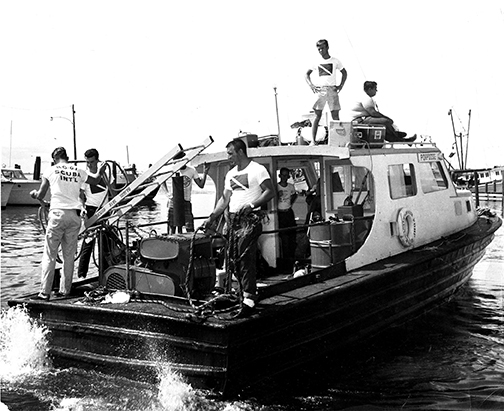
Bajaos returning on last day of NOGI on the “Porpoise.” I am second from left, third behind the ladder is Dee White, and Buck standing on the cabin.

We started hauling in lots of fish—trophy winning size fish! We returned to Grand Isle that evening and weighed in with our catch. Many Bajaos went on the leader board, including me with a nice Amberjack. We told no one where we had been and went back out later that night and again the next night. We took more trophy-winning fish, but some of our fish were getting bumped by larger fish as more divers returned with their catch. I was bumped right off the board by three larger Amberjacks.

Sunday rolled around, and I was off the board and getting desperate. I dived two tanks on two deep dives down as far as 180 feet with no luck. After consulting the dive tables, I decided I could make one more dive if I didn’t go very deep, but I would have to make two decompression stops to rid my body of absorbed nitrogen before surfacing if I wanted to avoid a painful helicopter evacuation to a hyperbaric chamber. I asked my buddy, Dee White, to dive with me on a fresh tank and stay well above me so I could buddy-breathe with him if I ran out of air before completing my decompression stops.

I was going after the largest Amberjack I could find, and there were plenty of them still down there. I found a school passing through the rig and picked the one I thought was the largest and shot him. The spear entered his side right behind the gills, and he seemed to barely react.

Amberjacks are said to be pound-for-pound the strongest fish in the ocean. I am not sure how accurate that is, but I do know they are very strong and very fast. The ones we were chasing were about 5 feet long.

Because of his non-reaction, I assumed I had hit his spine and paralyzed him, so I worked my way down the cable to the spear and got right next to him. He was looking at me.
Lane Tripletail RED

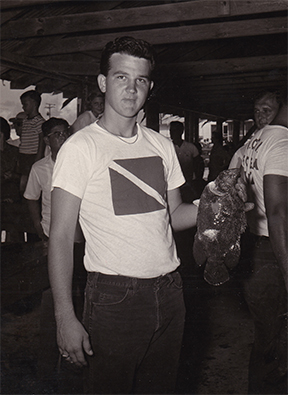
My “monster” Triple Tail.

Shooting them is only the beginning. You have to get them to the surface and on the boat, and that is usually after an exhausting fight that sometimes involved a wild ride through the rig. Taking them to the surface means grabbing them by the gills, actually the strip of body under the gills, and taking him up, assuming he wants to cooperate, and they often find new life part way up and drag you back down.

I reached out and slipped my fingers into his gills on the far side and my thumb into his gills on the near side and grabbed him.

He woke up!

He clamped his gill plates down on my fingers and thumb and took off like a bat out of hell! Since I was on one side of him and creating drag, that meant he went in circles with me as the hub. Round and round he went, and I am spinning like a top and wishing he would let go of my hand. Though my mask was gone, I had a death bite on the mouthpiece of my regulator to prevent it from disappearing, too.

Finally, he let go of my hand and took off. I held onto the cable attached to the spear, anticipating that wild ride through the rig, but the spearhead pulled out, and he disappeared into open water.

And frankly, I was glad!

I located my mask on the side of my head, repositioned it over my face again, and cleared it, then made my way up to meet Dee. We made our decompression stops and returned to the boat, where Dee told me he watched the whole thing from thirty feet above and was laughing so hard at how that fish was having his way with me, that his mask filled with water.

I was over my bottom time limit and risked the bends if I dived another tank, so I was done with SCUBA for the day. We left that oil rig and made one more stop at another one nearby for those with some bottom time remaining. I donned mask, fins, and snorkel, grabbed my speargun, and hit the water for one last shot at a trophy. As soon as I reached the rig, I saw a fish, feeding on the growth on the stanchion, that I had never encountered before. Its dorsal and bottom fins extended almost all the way back to its tail fin. I later found out it was called a Triple Tail. We played cat and mouse around the rig, until I got a fleeting going-away shot and nailed him. Back at the boat I was told its name, and it was a category on the NOGI board.

Lane NOGI Trophy RED

OK, so the trophy was bigger than the fish.

With everyone back onboard, and it getting close to weigh-in closing time, we headed in to Grand Isle and got there just before the scales closed. We had several fish from our boat that got on the board, including my Triple Tail, which was first place at 2 pounds 4 ounces, a smallish specimen, but the ONLY Triple Tail taken during the whole three days of the rodeo.

And to top it all off, they had several drawings for $100 each. Yep, I won one of those, and that was a lot of cash for an 19 year old back then. I went home with a NOGI trophy, $100, and a great story to tell!

Oh, and I never messed with amberjacks again after that.
Continues with P–3 here.

1 Comment

Filed under Family History, Growing Up, Kenner

Here kitty, kitty…

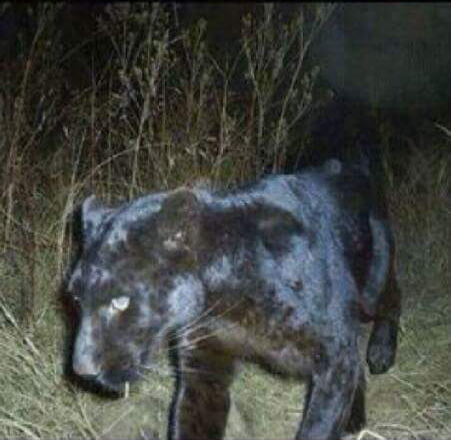
pantherI found this image of a panther on Facebook. Look closely and you can see it is a black variation of a spotted panther. You can see the spots on his foreleg. Folks say they don’t exist in Louisiana. Well, supposedly this game camera image was taken in Louisiana. (For the uninformed, game cameras are set up in the woods, usually strapped to a  tree along game trails or looking over automatic deer feeders. They take a picture automatically when the sensors pick up the evidence of something moving nearby.)

Panthers are indeed out there, but sightings are extremely rare and usually at a distance where it could be argued what was seen was something else, like a deer or a hog, or even a big house cat. But I know two people who have seen panthers.

One was my friend Sharon P. She saw hers in south Mississippi—close to Louisiana, right? Sharon is an avid hunter and has trophies on her wall that would make most any hunter envious. My point is, Sharon is a savvy woods-person and is not prone to hysterics, thus, in my book, if Sharon saw a panther, Sharon saw a panther.

The other sighting I am aware of was by my friend Buck. He was a heavy equipment operator in his early life after discharge from the Army and was working as a dozer operator on the Sunshine Bridge, which was built in the early seventies, if not mistaken. The equipment was stored at night in a marshaling yard some distance from the bridge site, and each morning Buck had to drive the dozer to the work site on a levee . There were cane fields on one side of the levee and woods on the other, if I am remembering this correctly.

This particular morning was extremely foggy with restricted visibility such that you could see only a few yards. He waited for the fog to lift but soon got bored with that and cranked up his dozer and started the trip to the site. Even though the fog had lifted off the ground a few feet, up in the elevated cab of the big dozer, he could see only a few yards ahead, and staying on the levee was difficult.

He got aggravated with that, so, he shut it down and lit up a cigarette and sat there in the dead silence, waiting for the fog to lift.

It didn’t, and he eventually had to relieve himself of his morning coffee, so he stepped out of the cab onto the track of the dozer, then dropped to the ground. Upon landing, he was face-to-face with a black panther.

The cat screamed!

Buck Screamed!

The cat did an about face and took off!

Buck did an about face and took off—but his trip was cut short when he ran smack into the tracks of the dozer. That hurt!

Buck said he spoke to some farmers about this later, and they confirmed they had also been seeing a panther in the area. So, don’t let anyone tell you there are no big cats in Louisiana.

Leave a comment

Filed under Family History, Growing Up

Joey Giammalva

Last night Janis and I ran into Beverly Giammalva at a function. She is the widow of a very dear old friend, Joey Giammalva. Joey and I grew up together in Kenner, and we go back as far as I can remember, like when I was around six. I lived on Sixth Street near the corner with Williams Street. Joey lived on the same block as me but facing Minor Street, and just so happens right across the street from my future bride, Janis Cristina.

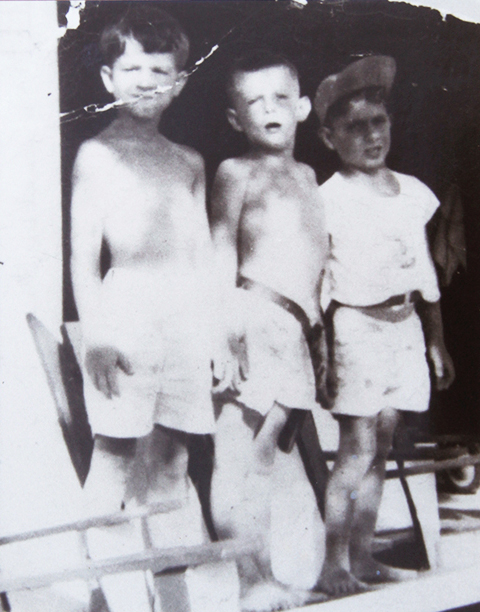
Me, Manard, Joey 1953Joey, Manard Lagasse, and I were the closest of friends in those days and remained so through high school, even though I went to East Jefferson, and Joey went to De La Salle. We kind of drifted apart after that, simply because we were separated by schools. Both Manard and Joey were two years younger than I was. Joey and I reconnected a bit, when I transferred to the University of Southwest Louisiana, and he was attending there.

As I was talking to Beverly, my emotions were flooded with memories of Joey and me as kids. What came to mind?

For one, his home on Minor (in which Beverly still resides). I can still picture every room. I would show up there on Saturday morning and find Joey watching TV in their den, a smallish room at the back of the house. He had a back porch that was initially only screened, and then Mr. Giammalva added jalousie window glass. We were not allowed in the living room. The sofa was even covered with plastic. No, I’m not making that up. I think they used that room only once a year, Christmas.

And, of course the kitchen.

Mrs. Giammalva (Miss Mary) was a fantastic Italian cook and somewhat tradition bound, because they had the same meal every Sunday at noon: spaghetti and meatballs and fried chicken. I’m not sure, but I don’t think fried chicken is very Italian? Whatever, it was great fried chicken! I must confess that I sometimes managed to be around the Giammalva house about lunch time on Sunday a bit more often that perhaps I should have been, and naturally, they invited me to eat with them.

Mr. Giammalva was an ice peddler for my future wife’s family business, Cristina Ice in Kenner. He delivered ice (some of us still had “ice boxes” then) to homes and businesses in his red, stake-bed, Studebaker truck. I will never forget that truck.

And get this! His helper was none other than Lloyd Price, before he became a famous recording artist. Some of his hits: Lawdy Miss Clawdy, Staggerlee, Personality, and I’m Gonna Get Married. A resident of Kenner who made good.

Mr. Giammalva also was a part-time trapper. He ran a trap line somewhere west of Kenner and brought in muskrat and little animals I think were mink. He treated the skins and hung them to dry in his two-car garage.

I spoke elsewhere of Joey and me having Red Ryder BB guns. Did you know robins were good table fare? I didn’t either, but the enterprising Mr. Giammalva did. Robins migrate and in the fall stopped on the way south in his hackberry tree to feast on the little hackberries, often filling that tree with robins by the hundreds. Mr. G and Joey’s Red Ryder BB gun were waiting for them. Many robins went into his freezer after getting their fill of hackberries. And no, that wasn’t legal. But, hey, it was Kenner in the 1950s.

Joey was a bit chunky when we were young but slimmed down as an adult. He suffered from flat feet, and I mean flat as pancake. We often played with the hose on the summer and Joey’s feet would make flatulence sounds on the wet concrete. Funny what you remember. And that one brought on the tears.

We also had go-carts, and we were often chased by the Kenner Police for running them on the streets of Kenner. I wrote about some of those adventures here and here.

The photo above of (from left to right) me, Manard Lagasse, and Joey was taken by Mrs. Giammalva in Joey’s back yard. He carried that old photo around in his wallet for decades. Finally about twenty years ago, he made 8×10 copies for Manard and me and presented them to us. It hangs in my home office. I am sorry to say that both Manard and Joey are gone now.

I miss them both, and unfortunately, we often don’t realize how much we miss someone until they are gone. If you have friends you love, spend time with them, because they won’t be here forever, and neither will you.

4 Comments

Filed under Family History, Friends, Growing Up, Kenner

Waveland

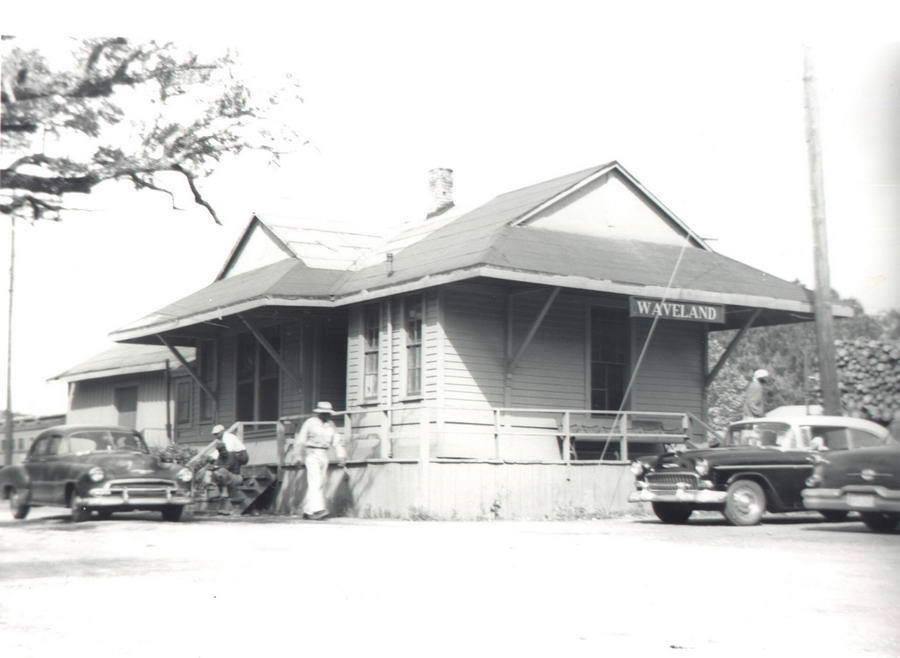
In this blog I have mentioned Waveland, Mississippi several times. In fact there is a whole category for “Waveland” here. It holds many memories for me and my two sisters as well as our cousins Melanie and Bobby. I stumbled upon this image on FaceBook and it inspired me to write a little about Waveland.

WavelandTrain

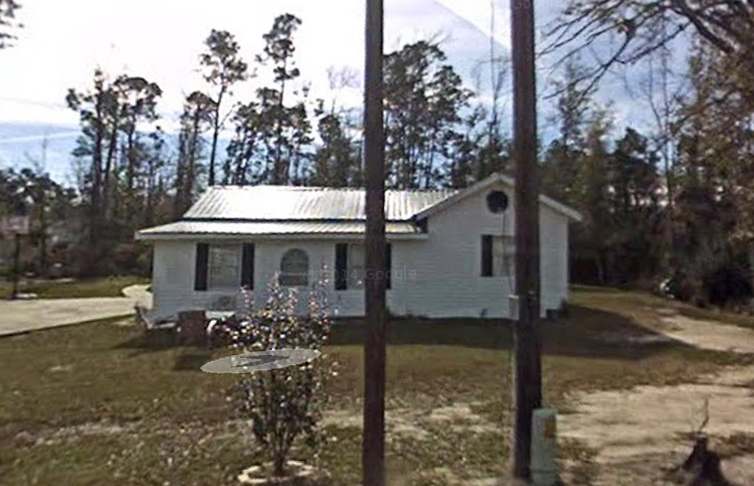
As I mentioned in one of my previous blog posts on Waveland, we had a house there on the north side of the tracks. MB and his friend Pete built it on weekends and summer vacations from material they salvaged from a house they tore down in New Orleans. It wasn’t anything fancy, three bedrooms, one bath and a kitchen/living room combo with a fairly large screened porch on the front. In the summer, I slept out there under the blast of a huge window fan sucking air out of the house and across me in the top bunk of the bunk bed. I LOVED sleeping there. In the winter I moved inside for obvious reasons.

We fished, and crabbed, and swam, and floundered, if you can call it that, and explored the endless woods surrounding the house. It was the greatest place in the world for a boy to grow up. I so miss Waveland. My biggest regret in life is we were never able to afford a place like Waveland to take my boys in the summer.

We kids would sometimes walk into town to do whatever it is we did in the metropolis of Waveland. The route was along the railroad tracks. One time, we took Michael Manard with us, and he was quite young. Why we did this, I don’t recall, but Melanie might, because she tells this story on occasion. But we left Michael hiding the the culvert of the railroad while the rest of us went into town. Very responsible, weren’t we?

The image of the Waveland train station reminded me of a story MB used to tell. Before the war and before he lost his “fortune” in the Depression, Martial, MB’s dad, would lodge his family in Waveland in a rented house along the beach. They would remain there all summer. It was fairly common for New Orleanians in those days, those who could afford it, to move out of the city during the hot summers (no AC back then), and places like Mandeville and Waveland were popular destinations. Waveland was an easy choice because it was so convenient to New Orleans, and I don’t necessarily mean by car; I mean by train.

During those summers, Martial would depart Waveland for New Orleans by train on Monday morning and tend to his businesses in NOLA all week long. He owned eight drug stores in New Orleans back then. On Friday, he would catch the train and get off in Waveland to rejoin his family.

MB would sware they weren’t wealthy, and I am sure, during the Depression when Martial lost most of his holdings, this was true. But before that, they lived a lifestyle that bordered on wealthy, probably upper middle-class when there weren’t a lot of people who could claim such status.

Waveland Ware

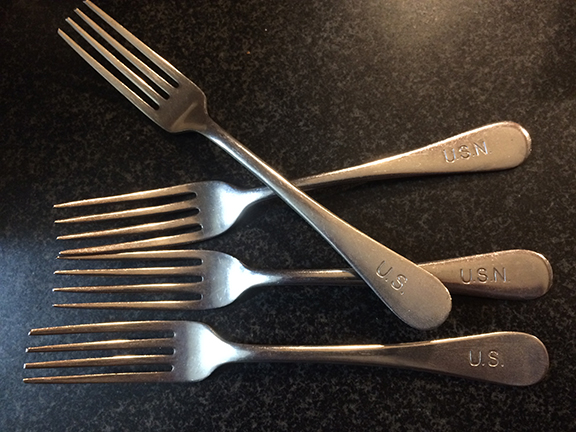
Waveland fell into disuse during the sixties and early seventies. I was either off in college and working out of town during the summers or in the Air Force. My sisters often had other interests, and MB sold Waveland in 1973 or ’74. My sisters and I briefly considered buying it. I was recently discharged and barely making a living, and Jeanne and Martia weren’t any better off financially, so we backed down, and Frank Cavalino bought it. We made one last trip to Waveland to collect our stuff before Frank moved in. I got the stainless dinnerware from there, all war surplus and marked either “U.S.” or “U.S.N.” We use it as our everyday ware today, and every time I sit down to dinner, I am reminded of Waveland.

Ice Box R

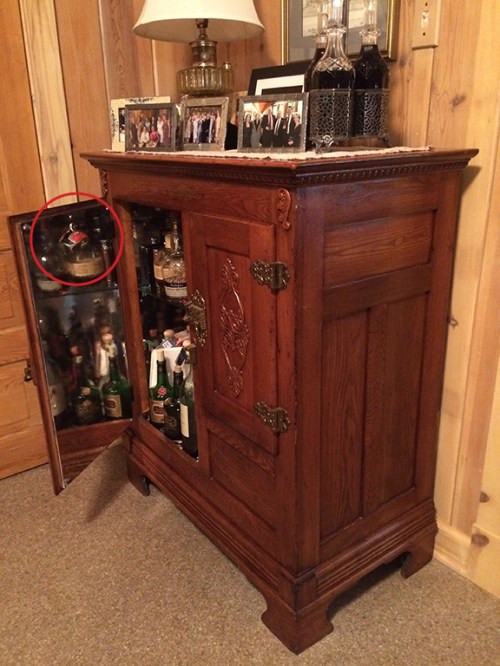
I also got the Coca Cola bottle opener off the wall. (MB was not happy I did that.) I opened many a bottle of “pop rouge,” or Seven-Up, or Nehi Sodas on that opener. It resides on the inside of the door of the antique, oak ice box I converted into a bar, and I think of Waveland every time I open that bar to get something out.

Waveland House

Image is clipped from Google Street view.

The house is still there, and a neighborhood has grown up around it. I drove past once about ten years ago. The owners have closed in the porch, and all the pine trees are gone, probably taken down by Camille and Katrina, leaving the house looking a bit forlorn. I experienced mixed emotions that day: sad because it isn’t mine or even like it was when it was mine, and happy for the memories it brought back.

I miss Waveland.

1 Comment

Filed under Family History, Growing Up, Waveland

Miss me?

I have been “off the air” for a while due to a death in the family. My granddaughter’s husband died, leaving a young widow and two beautiful kids. That prompted a trip to Buffalo Gap, Texas where they live for the funeral. Needless to say it was a sad time, but we did get to spend some good time with Heath and Sue, our three grandkids, and our four great grandkids. (Yes, I said “great.”)

The kids were noisy with screaming the normal volume level for play, and they were high-pitched screams. My hearing aids went on sensory overload. But they were well behaved and well mannered, especially considering their ages.

Harrison, Caleb, Kendall Nov2015

From left to right – Harrison, Caleb, and Kendall. Harrison had serious health issues until they figured out the cause. Last January (2015) he was in the one percentile for his age and one miserable little dude, then the doctors figured out he had numerous food allergies manifesting themselves internally and how he digested food. With that sorted out and a careful diet, ten months later, he is now in the eighty percentile for his age and doing great!

Abigail Nov 2015

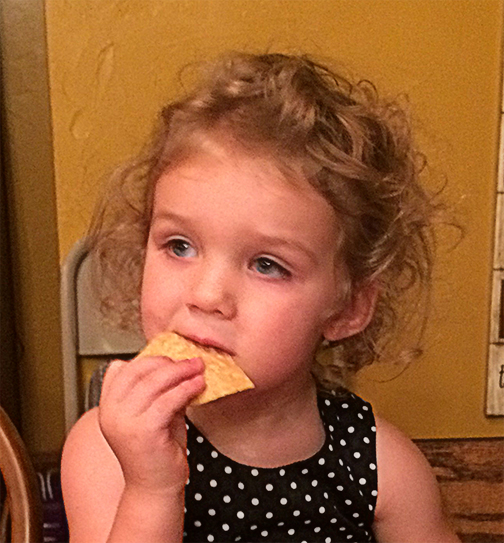
This little darling is Abigail, and she is a tad camera shy. Couldn’t get her to look at the camera. It was Abby and Caleb who lost their father.

I was much impressed with how their church community came out in support of the family. The amount of food was overwhelming, enough they had to say “stop!” The culture of Buffalo Gap and neighboring Abilene is very different from New Orleans. The area is largely Protestant and mainly Baptist from what I can tell, and their faith plays a much larger role in their lives than we are accustomed to seeing in NOLA.

Heath seems to have taken on more than he should. Not only does he run his own business, Spitfire Aerospace Services, but he is finishing his house, doing a body-off restoration of a Jeep, restoring an old Coke machine, building a greenhouse and a garden, and establishing a pond—just to name a few, and now he will be a father again at 45. Lauren and the kids have moved in with them. He may have to let go of several of his projects for a while.

1 Comment

Filed under Family History

Check Your Boots!

There is an old saying among campers and the military, “Check your boots before you put them on.” I learned that saying is true the hard way.

Back when I was into deer hunting—long time ago—and was in a deer club in Alabama, our “lodge” was an old motel converted into a deer camp. And it wasn’t terribly vermin-tight.

Awakened before dawn to go hunting on a particularly cold early January morning, I slipped into my long johns, heavy pants and wool shirt and heavy woolen socks. Still sleepy-eyed, I tried to put on my lace-up hunting boots.

I have a high instep, so boots are usually an issue for me, at least until I get my foot fully inside the boot. That was compounded by the fact the laces needed to be let out some and I had on heavy socks. I struggled to get my boot on but eventually managed to get it done.

But there was a problem.

It felt like my socks were balled up at my toe, so off the boot came to adjust my socks. And we started the process all over again.

The second time I had even more difficulty getting my high-instepped foot past the laces. So I stood up and pulled at the boot tops at the same time. Finally it gave way and my foot went all the way in with a thud when it hit bottom.

But this time there is a lump under my heel.

“Blasted socks again!” (Only I didn’t say “blasted.”)

Off comes the boot, and getting it off was even more difficult than getting it on, requiring me to get my foot up high enough to get good leverage with booth hands and wiggle the boot off. Finally, it gave way and the boot came off.

And a dead mouse dropped out into my lap. And he was rather flat. A mouse pancake.

I picked it up by the tail and tossed it out the door, then went on with my morning hunt.

As it happened, that night was the night of our annual “trial,” where violators of all manner of real and imagined offenses were brought up before a kangaroo court presided over by a “judge” and a “jury” of my “peers.”

To my surprise, I was brought up on charges of “animal cruelty” and “murder” of a mouse—and they produced the pancake mouse corpse as evidence, and it was getting a bit “ripe” by then.

I was found guilty, of course. That meant I was subject to having my shirttail cut off and hung up as a trophy at next year’s trial like the dozens of others already displayed from previous trials. Now, I was rather fond of my shirt. It was a nice heavy flannel and very warm.

The judge gave men an out. If I could tell a joke that would make everyone laugh, he would let me off.

So I told a joke and they all laughed, and that wasn’t all that difficult, considering most had been consuming adult beverages for the last few hours.

I kept my nice flannel shirt.

Leave a comment

Filed under Family History, Growing Up

Manard Lagasse Hated Getting Shots!

Me, Manard, Joey 1953I had a brief discussion with Elton Lagasse, Manard’s older brother, at a meeting the other night, and he reminded me of a story from our childhood. Manard had a needlephobia, a really bad needlephobia. I never really considered Manard to be a coward. He was always there with the rest of us, doing all the stupid and risky things boys did back then, but he really feared getting shots. (Manard is in the middle in the image on the right.)

As mentioned elsewhere in this blog, my dad, Dr. M.B. Casteix, used to periodically round up all the kids of our extended family for inoculations for just about every disease known to man. Those were followed in a few weeks, or a few years, maybe both, with booster shots. And then there were the tetanus shots for our frequent wounds and rusty nail punctures in our bare feet, and we were always barefoot during the summer. Seemed like we were always getting shots for something when we were kids.

The call would go out, and all us kids would be required to report for inoculations, usually on Saturday afternoon or at night after the my dad’s office closed. The roundup included Manard and Elton Lagasse, Bobby and Melanie Manard, Kibby Manard, and sometimes even my cousins, Stephanie and Robin, and sisters, Jeanne and Martia, who were all quite a bit younger than the first mentioned group.

All of us had “side-entrance privileges,” which means we could go in the side door of the office. Usually escorted by parents, we marched into the last examining room at the side entrance end of the hall and lined up for our shots. On one of the first such inoculation roundups, Manard managed to be at the head of the line, and he was looking a bit nervous—maybe a lot nervous?

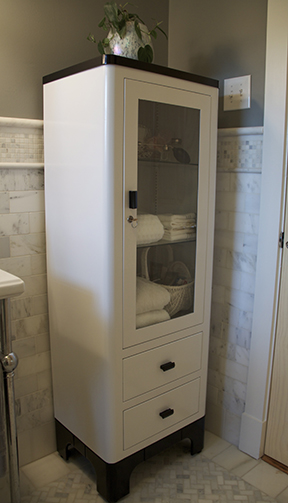
CabinetMB went to his instrument cabinet (which now resides in my bathroom) for a syringe. Whatever it was he came out with, Manard evidently thought it resembled something on the order of a turkey baster with a big needle, because his eyes got got as big as saucers, and after only a brief moment of indecision, he concluded he wanted no part of that thing and promptly decamped.

Panic stricken, he headed out the examining room for the side door, but Henry Lagasse, his dad, waiting there for him to take him home, happened to be blocking his way. Upon seeing his dad standing there with a questioning expression on his face, Manard did an about face and headed up the hall that ran the length of my dad’s office, but that offered no means of escape; the front doors were locked. Henry knew something was up and was in hot pursuit of his youngest child. He caught up to Manard in the little room at the end of the hall where the bathroom and coke machine were (Heath has that over in Texas, the coke machine, that is).

Somehow, Manard got past his dad, bolted out of the coke room, failed to navigate the turn and bounced off the hall wall, then headed back down the hall at a full-tilt run for the side door—and needle freedom! About then MB innocently stepped out of the examining room with the syringe in his hand to see what was up with Manard. As soon as Manard got a  look at “Dr. Frankenstein” with his turkey baster hypodermic, he slid to a halt, his Keds making little screeching sounds on the highly-waxed, asphalt tile floor. He did another about face only to run smack into his dad, who was still in hot pursuit but obviously gaining on him.

Henry manhandled the loudly protesting and squirming Manard into the torture chamber—er, I mean examining room—for his dose of whatever it was we were getting that day. MB stuck Manard, and he squealed like a stuck pig.

Kip and ManardThe rest of us kids stood around kind of big-eyed and slack-jawed in complete awe of what had just transpired. Most of us were thinking maybe we should be considering some kind of escape plan ourselves? But the door was by then well covered by at least two parents, and seeing no way out, we reluctantly got our shots with only minimal whimpering. They stung a little, but we lived.

The whole affair became a source of humor for all of us but Manard, of course. All future inoculation summons were somewhat looked forward to, because we wanted to see what Manard would do, and he never failed to impress us with his fear of the needle.

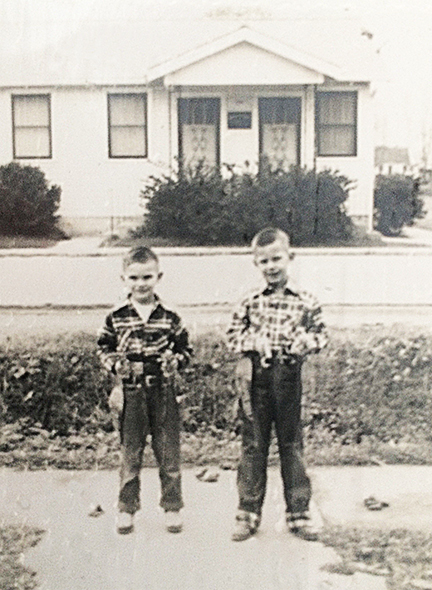
The last photo is of Kibby (on left) and Manard with my dad’s office behind them. Thanks to cuz Bobby.

2 Comments

Filed under Family History, Growing Up, Kenner

Buck Barbre and Me

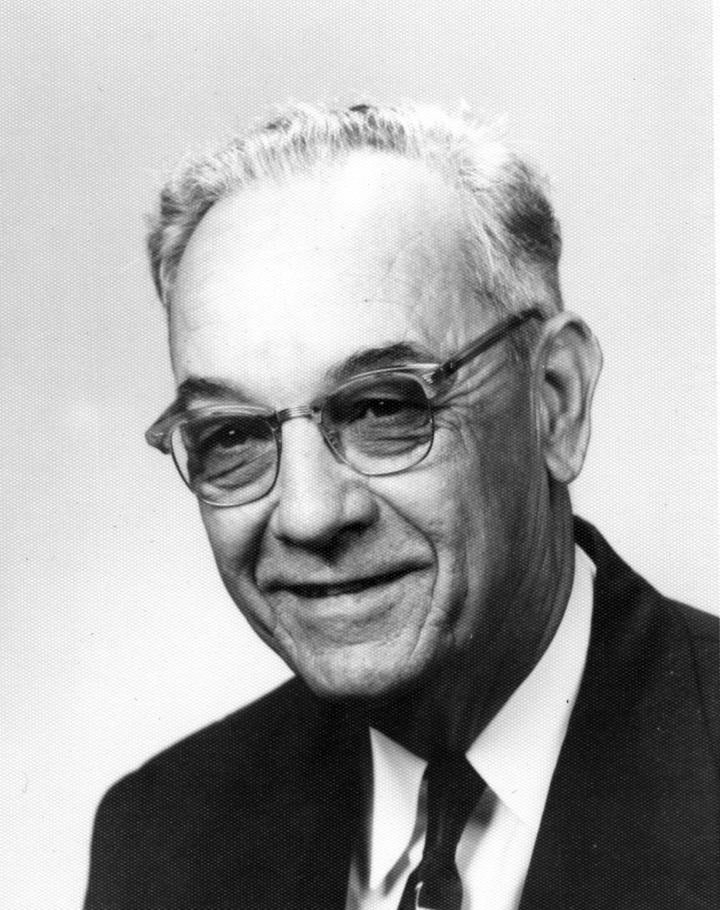
Buck Barbre RThere have been two Bucks in my life (not counting the deer). Both are deceased. One was my good friend Michael “Buck” Roy. The other was my grandfather, Stephen Jefferson “Buck” Barbre. He was known as “Prof” by most of his friends and acquaintances, because he was an educator. But I knew him as “Buck,” not “Gramps” or “Grandfather” but just “Buck.” My sisters and cousins also called him “Buck.” And no, I don’t know why.

Barbre is French, and the family tree shows it spelled several different ways. Buck Barbre hailed from McCrea, Louisiana in Pointe Coupee Parish. He went to college at the Southwestern Louisiana Institute in Lafayette, Louisiana. It was called the University of Southwestern Louisiana when I attended in the sixties, and is now known as the University of Louisiana at Lafayette. He later attended Mississippi A&M and Louisiana State University for advanced degrees.

Upon graduation, he took a position as a teacher at Carencro in Lafayette Parish and then another in Washington Parish, then finally at Jena High School in LaSalle Parish. There he met and fell in love with Rubye Ina Boddie. They married in 1922. From 1922 to 1924 he was principal at Loranger High School in Tangipahoa Parish.

51dvJGHSVPL

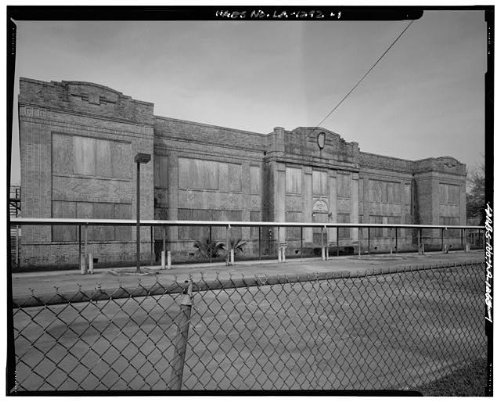
In 1924 a new high school was built in Kenner, Louisiana in Jefferson Parish, and he took the position as it’s first principal. That building was designed by architect William T. Nolan who designed a number of buildings in Louisiana that are on the National Register of Historical Places.

When Buck and his young family moved to Kenner, they stayed in what I will call a “boarding house” until they could find proper housing. I think this boarding house was somewhere along the tracks not far from the Cristina Ice House. The only thing I remember them saying about this place was how the water from the cistern tasted funny. That was because they found a dead rat in it.

They then moved from there to a rented house on Third Street about a block from Clay Street. At this time the levee was being pushed back closer to Third Street with First and Second Streets disappearing into the Mississippi River. Like many back then, the Barbre family had chickens, and the levee construction crew overdid the dynamite just a tad and blew a hunk of tree stump over their house and killed their rooster in the back yard.

From there they moved to Williams Street between Sixth Street and Airline. They had chickens there too, and family lore has Buck catching a chicken-stealing possum by the tail as he exited the coop. He dispatched him with a whack on the head with a hammer.

They then built a house on the corner of Sixth Street and Minor. Son Lockbaum built that house. That was around 1947 or 48. They remained there until both Buck and later “Mother,” as we called Rubye, passed away in the seventies.

When Jefferson Parish built East Jefferson High School in 1955, they picked Buck to be its first principal. I graduated from there in 1962.

He never drove a car. My grandmother or a friend always chauffeured him around. She took him back and forth to Kenner HS, and later, Joe Yenni drove him to EJ and back. And no, I don’t know why he never drove. We were never given an explanation when we asked.

Buck and I were very close. My mother and I lived with them between her divorce from her first husband and when she married Dr. M.B. Casteix in 1950. She worked at Keller Zanders on Canal Street, so Mother and Buck took care of me while she was at work.

I had a pedal car of sorts that was like an airplane with stubby little wings and tail. I was only about four and got into some paint and proceeded to paint it white. Mother caught me down in the garage with paint splattered all over my airplane/pedal car, the garage, and me. “What are you doing?” she asked. “Painting my airplane, and I have to hurry and get this done before Buck gets home and catches me,” was my lame answer.

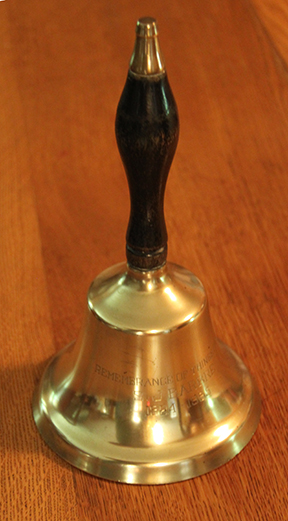
School Bell 2RBuck retired from EJ in 1964. At his retirement party, they presented him with a copy of the portrait that had hung in the office at Kenner High School. They also gave him the handheld school bell he used to ring to start classes at Kenner HS before they put in the electric bell system. That’s it on the right. During the many speeches at his party, someone asked him why he waited so long to retire, probably expecting some pontificating from him about personal dedication to the job and the kids of Jefferson Parish. His replied with a chuckle, “I wanted to make sure Lane graduated from high school.”

Buck died in December of 1972 right after I got out of the Air Force. He went in for heart surgery and died of complications from the surgery. They could not account for all the surgical sponges after they closed him up and had to open him up again to search for the missing sponge. They did not find it inside him but later found it in a trashcan. He never recovered from that. He lingered on for a few more days, and one of the last things he asked was, “Is Lane home yet?” I had been discharged and was home two weeks before his surgery, but he was so disoriented he did not remember. Christmas that year was the worst I have ever experienced.

5 Comments

Filed under Family History, Growing Up, Kenner

“Nanna” and “Tanda”

Anna and Candy were our two dogs when I was a kid. If you were my mother, they were named “Nanna” and “Tanda”, which was my mother’s baby-talk pronunciation of Anna and Candy. They were medium size dogs, about 35 pounds, short-haired mix breeds. The vet thought they had a lot of Fox Terrier in them.

Anna came first. She showed up as a stray around 1951. My dad tried his best to run her off, but she always came back (probably because my mother was feeding her behind his back). Eventually, Anna became “our” dog, and she was pregnant—naturally.

Anna had five puppies in the closet that housed the hot water heater. It was warm in there and she needed it because it was late winter when she dropped her litter. MB managed to give away all five puppies, but my mother managed to get one back. Instead of black and white markings like her mother, this pup was rust and white and marked almost identical down to the thumb-sized spot in the middle of the white blaze on the forehead. My mother named the pup Candy (or Tanda, if you prefer).

Anna and Candy were not supposed to ever get in the bed, but they did and moved in with my mother and dad. Consider that back then, there were no Queen or King-sized beds; at least we didn’t have one. My parents slept in a double with the two dogs.

They were excellent guard dogs and protected their territory with ferocious-sounding barking. Our yard was fenced on all sides but one. My dad’s patients parked along Sixth Street or in front of the office on Williams Street. To this day, I am not sure how he even had any patients. If they parked on Sixth Street, and Anna and Candy were out, they had to “run the gauntlet” past the two dogs barking and sounding for all the world like they would take an arm off if not for the fence. It was so bad that Janis, my future bride, would cross the street when she had to pass my house to visit her friend on Williams Street.

Anna and Candy lived a long time, and where we went they went, and that included our vacations whether to our house in Waveland, Mississippi or a brief trip to Panama City, Florida, and these dogs loved the water.

We had a summer ritual of spending two weeks at our house in Waveland, which was my dad’s vacation. That, of course, included the dogs. We usually managed to go “floundering” at least once. That means we attempted to catch some unsuspecting flounders sleeping in the shallows at night, which was mostly not very likely. That was because we had the two dogs with us.

We would have our “trusty” Coleman lantern that MB would always have to install new wicks in and spent the greater part of the afternoon getting it to work properly. We had homemade flounder spears, which were old broom handles with a sharpened nail stuck in the end. Being a boy, I always went for the “harpoon,” leaving the nets to my two younger sisters. MB carried the lantern. My mother attempted to manage the dogs, unsuccessfully, of course.

So, there we are wading around in the dark in knee-deep water looking for flounders. In all the summers we did this, we never-ever went home with a flounder. I am thinking it might be because Anna and Candy were busy loping and splashing around ahead of us in complete abandon to our “serious” attempts to harpoon a flounder! No self-respecting flounder would hang around after such advance warning.

The dogs also went with us when we went swimming. MB always had a boat and never missed a chance to use it, even if it was just to run out of the mouth of Bayou Caddy, hook a right and drop anchor off the beach there that was not accessible unless you had a boat.

In the late fifties and sixties, it was a twenty-footer he had custom built by an old man up near Hanson City. He named it the Marjelou a combination name made from the names of my two sisters (Martia and Jeanne) and my mother, Neva Lou. (Boys don’t get their names on boats.) It was open with only a windscreen and a small deck forward, MB’s ideal fishing configuration. Aft he had two mismatched outboards, an Evinrude and a Johnson. (MB was frugal; he already owned one and picked up the other dirt cheap; why buy new just to have a matching set?)

On either side of the transom were two small decks about two feet square. Those were where Anna and Candy rode. Most of the time they managed to stay up there, but sometimes while underway, we would lose one or more dogs. No one ever actually saw them when they went overboard, so we were never sure if they fell off or they just abandoned ship to frolic in the water. It would be just like them to do the latter. Either way, we had to turn back and search for the missing dog(s). We always found them blissfully swimming along.

Like most dogs, Anna and Candy loved to hang out the car window and do the “wind-in-the-face” thing all dogs seem to get off on. Back then we had no AC in the car, so the windows were always down. One day while returning from Bay St. Louis along the beach road, Anna was hanging out the waterside of the car and must have had a notion to go swimming? She jumped out the window. We were doing about twenty, and she hit the concrete and rolled down the street. We stopped, called her and she ran and jumped in the car, none the worse for wear.

They were good dogs–unless you ask my wife.

Leave a comment

Filed under Family History, Growing Up, Kenner, Waveland

What I Did in the War – Observed Weather.

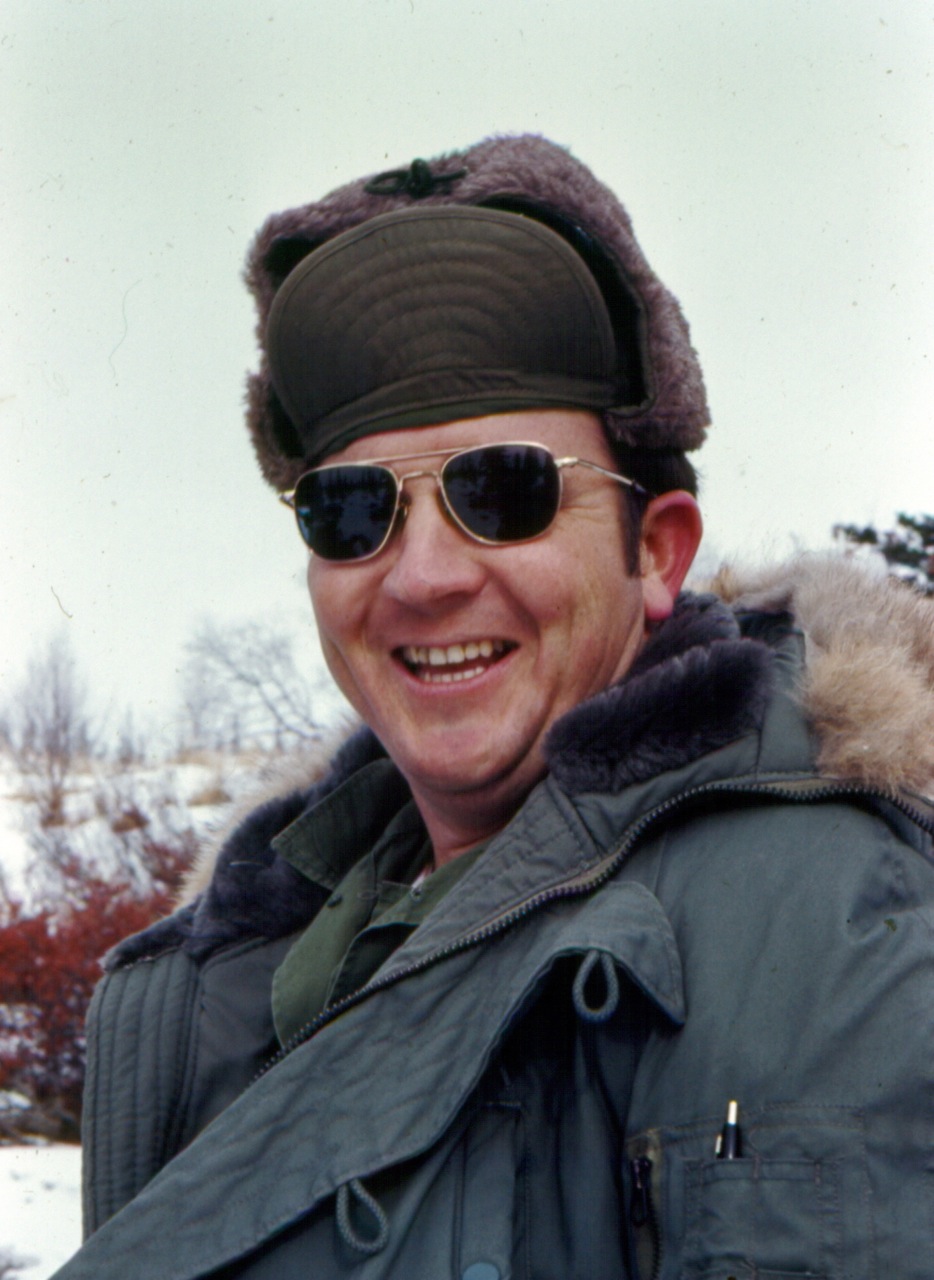
That is what I did in the Air Force for four years. Don’t laugh. Lots of your tax dollars went into training me and my fellow weather observers. And it isn’t as easy as it sounds. We didn’t just stand around all day gazing heavenward through our AF issue sunglasses. Yes, they actually did issue us sunglasses. How cool was that?

Just what did we do you ask? We observed weather and recorded it on a form WBAN10 (pronounced “way-ban ten”), encoded it, and sent it out over teletype every hour, sometimes more often if changing conditions met the criteria for a “Special Observation.” The data included cloud cover layers, height and amount, surface visibility, weather (if any), altimeter setting, temp, dew point, winds, barometric pressure, and lots of supporting comments when necessary. This information was sent out all over the world for anyone to use.

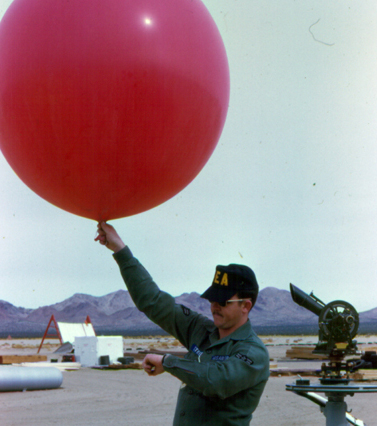
Lane PIBALWhat else did we do? Depends. Some of us, like moi, got to go temporary duty (TDY) to a place like Cuddeback AGGR (Air to Ground Gunnery Range) in the middle of the Mojave Desert. At Cudde we supplied surface observations (obs taken at the ground level) and winds-aloft obs (wind speed and direction at 1,000 foot intervals above the station). The latter involved launching a 1,000 gram helium-filled weather balloon called a PIBAL (pilot balloon) and tracking it with an instrument called a theodolite, recording azimuth and elevation angles at one-minute intervals, plotting those and deriving wind speed and direction at various altitudes above the station. The AF found this helpful for calculating bomb trajectories, and Cuddy was a bombing range. (I guess the AF just “winged it” when they had to drop real bombs on the enemy and no AF weather observer happened to be hanging around the target area taking PIBAL obs?) The U.S. Army also found it useful for calculating artillery trajectories. Winds aloft can seriously affect where a 155mm shell lands 20 miles away, which could be meaningful to friendly troops on the ground near the target.

Very generally speaking, most weather observers had two main operational environments. The first being in Base Weather, usually housed with Base Operations. This is where the pilots came for weather briefings and filing flight plans. The place was (in my day 1968-72) cluttered with all manner of weather maps and bits of teletype paper torn into strips according to their source and content and posted on clipboards for the duty forecaster to use. That was the olden days; they use computers now. The observer mainly supported the forecaster and his job of creating forecasts for the station and briefing pilots.

The second duty station was the representative observation site (ROS). They were usually located out along the main runway to collect data closest to where it would be used. The observer worked alone out there and took observations and transmitted them as described earlier.

Lane Alaska_1Weather observing was actually a great job, but it had its negatives. Aside from doing two-week TDYs at places like Cuddeback, the AF had a need to collect weather observations from some very remotely located places, like the wildernesses of Alaska. These weather stations were located at AF radar stations in the middle of nowhere again. The observer would find himself with usually less than 100 other lost souls at a station in the Alaskan wilderness hundreds of miles from anything remotely resembling civilization (meaning no McDonalds) and the only way in and out was by AF planes, which had to be ski-equipped in the winter. I was at one of those, King Salmon AFS, but it was larger (about 200 lost souls) and had a paved runway. That was because it was the home of armed interceptor aircraft standing by to scramble against any Russkies who might get frisky and violate US air space, which they did fairly often to test our defenses and response times.

Another drawback was the U.S. Army had a need for weather data to conduct field operations, especially those involving helicopters and artillery, but they maintained no weather services. Guess who supplied that? Yep, the Air Force. An observer could find himself assigned to an Army unit and in the field with said unit being shot at. Thankfully, I managed to avoid that aspect of the job. The book Seeing the Elephant by Dave Hornell does a good job of describing what that was like in Vietnam. It is also a humorous read.

Back in the day, during your four-year commitment, most observers would spend at least one of those years at a remote assignment like Alaska, Greenland, Iceland, Korea, or SEA (Southeast Asia – Vietnam or Thailand). Mine was Alaska, which was not bad if you like to hunt and fish like I did.

I just missed a trip to SEA, Thailand to be specific. During my last year at George AFB in California I was assigned to a Bare Base Mobility Team, which was an early version of a rapid deployment force. The team was designed for “bare base operations,” which assumed there were airfields all over the world, either active or not, that could support air combat operations on short notice. We were supposed to have our duffle bags packed and ready to deploy. Upon notice, we would report, draw field issue, including weapons if necessary, and be on a C-130 for somewhere to marry up with our MMQ-2 mobile weather van upon arrival. Security, air traffic control and weather observers were the first to arrive at the new base, which was expected to be conducting air combat operations within 24 hours of our arrival. While I was on a plane headed for eleven months of fishing and hunting in King Salmon, our team was activated and sent to Thailand for a year. Whew!

Another nice thing about duty at King Salmon was it was a joint-use airfield. The civilians were on one side, and the AF was on the other. FAA supplied administrative people, the Weather Bureau supplied the forecasters, and the Air Force supplied air traffic controllers and weather observers. Since I worked with Weather Bureau civilian forecasters for the whole eleven months I was there, I never put on a uniform except to get paid and travel on leave.

All in all, my Air Force service experience was not bad, especially considering the Vietnam War was going on. The work was interesting and frequently challenging, plus I got to meet a lot of great people and visit places I never would have otherwise.

6 Comments

Filed under Family History, Growing Up, War Stories