Category Archives: Family History

Red Ryder BB Guns

Every red-blooded American boy has to have a BB gun, right? Of course! As I recall Joey Giammalva was the first to get one in my little group. I was already something of a gun-nut even though I did not own any but toy guns, but my toy guns were almost real. I had a plastic Thompson Submachine Gun that looked real, I mean really real! I had a cast aluminum M1911A1 .45 auto pistol. The mold was made using a real pistol, so what came out of that mold looked just like a real 1911A1. Wish I still had it!

Red RyderBB guns were another matter. While the Red Ryder Lever Action BB Gun bore only a passing resemblance to the famous 1892 Winchester seen in all Westerns of the day, the fact that it propelled a projectile out of the barrel was sufficient compensation to get over its somewhat lame and unrealistic appearance. Besides, Joey had one, so I had to have one, too. My first request was rejected by my parents. That meant I had to pitch a kid-fit, and they are usually successful, especially if maintained long enough.

They folded. (Parents have a low threshold for kid-fit pain.)

Next day we made a trip to Cavalino’s Hardware, and I came home with my new Red Ryder BB Gun. Joey and I commenced to terrorize the bird population of our neighborhood to the chagrin of bird lovers everywhere. Don’t worry; the birds remained relatively unscathed since we were pretty lousy shots. That, however, would change with time.

That started a trend. Manard Lagasse acquired a BB gun next. We were then a three-some of bird terrorists. How we did not shoot someone’s eye out is something akin to a miracle, but we didn’t, at least not until later—almost—but that is another story.

My bride loves to remind me of how one of us put a BB through her parent’s front window.

And I will deny that to my grave!

Eventually, we mastered aiming our BB guns, which were not terribly accurate. If you could hit a tin can twenty feet away you were doing good. Terminal performance depended largely on what I would call the shotgun effect, albeit delivered one BB at a time. Shoot at something enough times and eventually you will hit it, like a living room window, even if by accident.

3 Comments

Filed under Family History, Growing Up

Ode to Gibby’s Pizza

I am not sure when and where I tasted my first pizza. If memory serves (and it may not) it was at Pontchartrain Beach, of all places, in about 1959. Furthermore, I am not sure when I first tasted a Gibby’s pizza, perhaps a year later? But on that day, what the perfect pizza was supposed to be was eternally etched into my psyche.

In the sixties dating usually meant going to a Pontchartrain Beach, a sock hop (raise your hand if you know what that is), or the movies. Going to the movies usually involved going “downtown” to the Joy, Saenger, or Orpheum. And that meant dressing up in a coat and tie for the guys and heels for the girls. For Janis and me, the evening almost always concluded with a pizza at Gibby’s on North Rampart. It was a tradition!

Over the years we consumed many pizzas at Gibby’s, usually sitting at the table under the glass enclosure surrounding his kitchen, where we watched a smiling Gibby toss the spinning dough into the air before gently laying it down to receive the succulent sauce, spicy pepperoni, anise-flavored Italian sausage, fresh mushrooms, and its topping of cheese. That is the way we always ordered it. I can, this day, still picture that glass cubical of a kitchen and Gibby tossing that dough, although his face is just a hazy blur because my focus was always on the aerial dance of that hypnotically spinning dough. What a marvelous way to make food!

Over the years I spent enough money on Gibby’s pizza to have contributed a substantial portion to his children’s education. This relationship went on with Gibby until 1962, when I graduated from high school and went off to college. After that most of our visits were in the summer, and even that became infrequent because I worked in Grand Isle during the two summers before Janis and I married in 1967. Until then and whenever we were in town, we always tried to visit Gibby’s.

We had our wedding rehearsal party at Colonial Country Club with lots of food and plenty of drink. A small group of close friends concluded the night at Gibby’s for pizza. (I must now confess that I had too much to drink and threw up in Gibby’s bathroom that night.)

Alas, the visits became even less frequent because we lived in Lafayette as Janis and I finished our college educations.

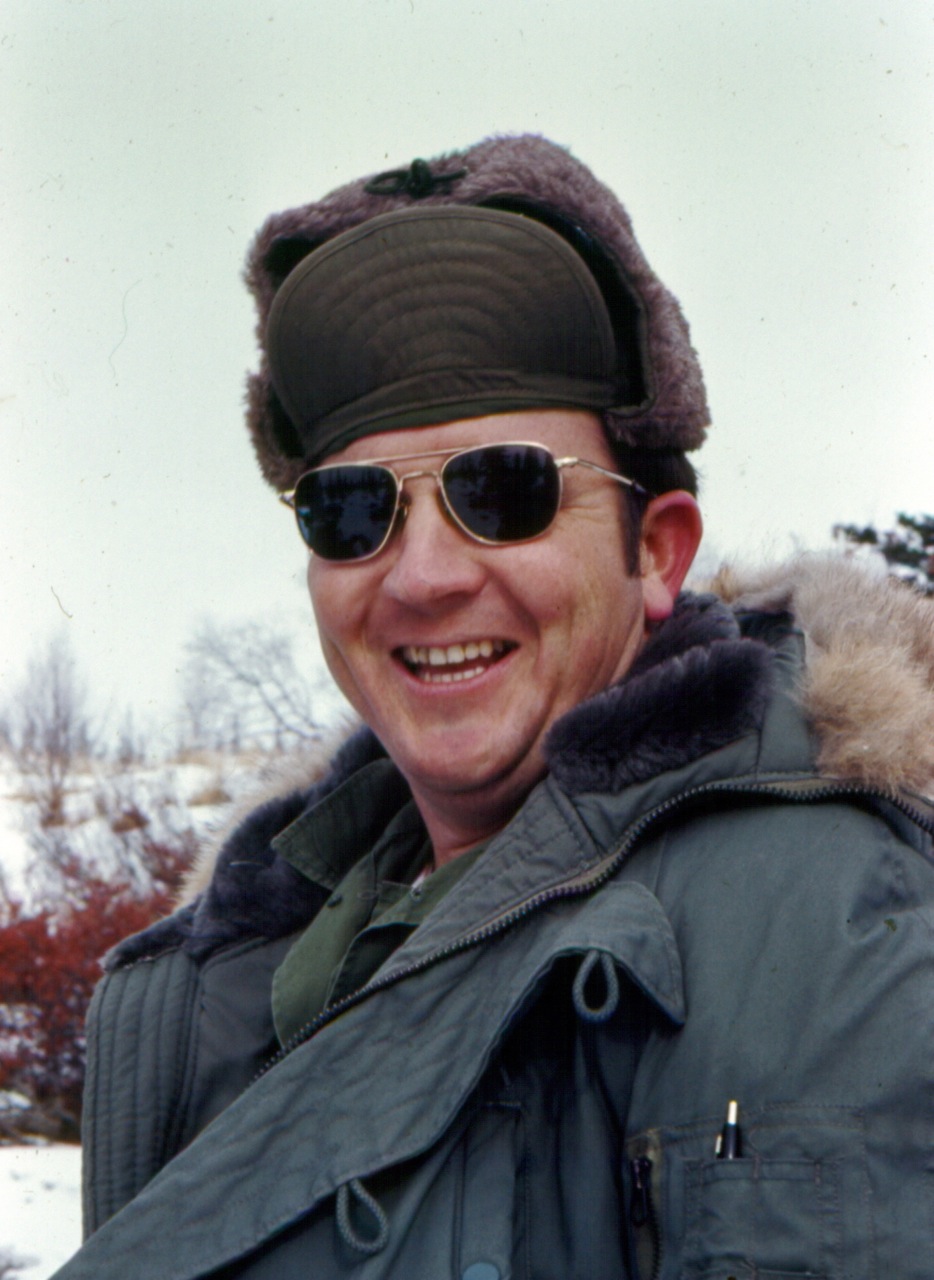
Lane Alaska_1I went off into the Air Force in December 1968 and was stationed in California, far away from any hope of a Gibby’s pizza for nearly four long years. During the last year of my service, I was stationed at a remote site in Alaska, which was an “unaccompanied tour,” meaning Janis and our infant son could not join me there. During the nine months we were separated before I could take leave and come home for 30 days, we planned what we would do when the happy day arrived. Janis would pick me up at the airport with a room reserved in a hotel in the Quarter only a few blocks from Rampart Street. The second thing we planned to do after we checked in was to go have a Gibby’s pizza. (Or maybe it was the third or fourth thing, I forget now.) This was August of 1972.

My 30 days leave started off badly, a harbinger of things to come, when I was bumped from my “space available” flight out of King Salmon, AK on an Air Force C-110 by General Jimmy Doolittle’s salmon catch. Yes, I was kicked off the plane because of a bunch of fish! But they were a general’s fish! And a Medal of Honor winner so I should be honored.

I managed to get out a day later and landed at Elmendorf AFB in Anchorage. I immediately applied for “space available” (free) on any military flight back to the Lower 48. I didn’t care what kind of plane it was or where in the Lower 48 it landed as long as I didn’t have to pay for an expensive commercial flight from Alaska. Two days later I was finally booked on a flight with a bunch of Ohio ANG troops returning home to Toledo from their two weeks summer training. I spent eight long hours in the cargo hold of a C-130 in a canvas jump seat with wax stuffed in my ears to drown out the droning of the engines. The whole time I dreamed about my Gibby’s pizza (and other things)!

I arrived in Toledo just as the civilian terminal was closing for the night. I begged and they allowed me to spend the night in the locked terminal. The uniform must have helped. I spent a fitful night sleeping in one of the terminal chairs and took a “bath” in the men’s room the next morning, changing into a fresh uniform for the final leg of my trip home.

After spending most of the day hopping from airport to airport, I finally arrived in NOLA, and Janis met me. Immediately, we went to the hotel and later headed straight to Gibby’s on North Rampart for a pizza.

We rounded the corner onto North Rampart and went straight to where Gibby should be.

What the—?

There was a flower shop there, a (expletive deleted) flower shop!

“No problem,” I tried to reassure myself. “We are just in the wrong block!” So, we went another block up North Rampart—and NO Gibby’s!!

Again, I calmed my anxious self with the reassuring hope that time had played tricks on my memory, and Gibby’s was in the other direction!

So, we went two blocks down, and NO GIBBY’S!!!!!

I was devastated! Gibby was gone! Forever! No more smiling Gibby behind the glass! No more hypnotically spinning disks of dough! No more Gibby’s pizza! No more barfing in his bathroom!

Since that fateful day, I have searched for a replacement and found none. Friends hear the story of my pizza quest and tell me about their favorite pizza place as “the best I have ever had! You must try it!” I reluctantly try them, and—nope, it is never even close. Their dough is often like soggy cardboard. Their pepperoni is nothing more than greasy, tasteless, red disks, their Italian sausage is sausage and Italian in name only. Their sauce, well, is just red, and the cheese a stringy, flavorless mass of gelatinous goo. And it sure isn’t what I remember from Gibby.

Janis says I am too harsh in my judgment of latter-day pizzas. And perhaps I am. I do know I am doomed to this Gibbyless hell for the rest of my life.

I am, however, considering building a shrine to Gibby in the corner of my man cave. Janis thinks I am sick, and maybe she is right, but I sorely miss Gibby!

5 Comments

Filed under Family History, Growing Up

Girls!

You knew this was coming.

There is a season in the heart of every male when his thoughts turn to sex—I mean girls! Ah, adolescence, that golden time when boys discover there is a difference between boys and girls beyond that one likes pink and the other likes olive drab, one likes cute ponies  and the other likes hard-charging horses, one likes dolls and the other likes BB guns. Suddenly, it becomes obvious that girls are shaped differently—no, actually they are morphing into a different shape than we have been accustomed to seeing, and right before our very eyes!

Oh, the wonder of it all!

I am not sure how much of this I should divulge, as it might mean compromising some long kept secrets we boys are obliged to protect, kind of like protecting secret fraternity handshakes from the uninitiated. Basically, when boys reach adolescence they start thinking with an organ other than their brains, if you get my drift? The subjects we discussed in “Our Ditch” gradually changed from two-stroke engines verses four stroke and Chevy verses Ford to observations about this newly discovered female shape and what all that means in the greater scheme of boyhood. (And don’t think for a moment that girls aren’t aware of their newfound influence on boys. What they underestimate is how strong that influence is, and thank goodness they don’t get it!)

Dating, whatever that meant to us in the beginning, was a new word added to our vocabulary right alongside “cowboys,” “guns,” “motorcycles,” “cars,” and “M-80s” (and I am not referring to today’s emasculated version of the M-80 but the real M-80 of yore that was every young male’s favorite explosive device perfectly capable of propelling the heavy, steel, inside liner of a kitchen garbage can thirty or more feet into the air. And we know this because we have done it.)

Oh! Sorry! Back to the subject . . .

Girls, first they captured our eyes, and then the sneaky devils captured our hearts. What was, at first, a passing interest became more of a hunt, only we thought we were the predators and not the prey, which is what we really were.

0083 JanisI went through several brief flirtations with different girls, but then I saw one cute little girl walking home from school down Minor Street in her pleated Catholic school skirt, white blouse, and saddle oxfords. She had her books clutched to her breasts by her crossed arms, and her blond ponytail was swinging back and forth behind her head. And she lived less than a block away! All my life I had seen her around, even spoken to her a few times, but suddenly, everything had changed. I had previously passed her over, barely paying her any notice, but now was smitten!

My first real kiss was with her. In fact, all of my “firsts” were shared with her. She was barely fourteen and I was sixteen, and I was in love and didn’t even realize it at the time.

Of course, I married her, and we had two kids, boys, and yes, we are still married. Her name is Janis and she was the daughter of Bob and Mickey Cristina who lived on Minor Street.

Leave a comment

Filed under Family History, Growing Up

How Kenner Got a New Doctor

PO.Abdos, MB Office

I am going to tell you an old Kenner story few, if any, have ever heard. My dad was Dr. Martial B. Casteix, Jr. Most folks called him “Doc” or “MB.” He had his office on Williams at Sixth Street (now Toledano), but that was not his first office.

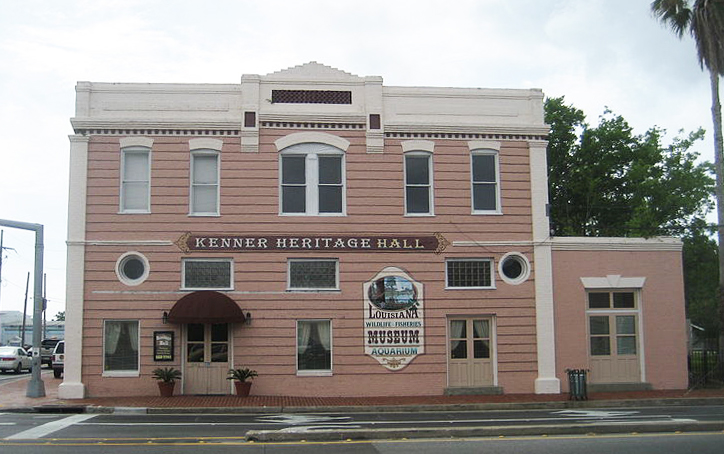
In the modern day image above, the door on the left was the US Post Office back then. The second door was to Abdo’s Drug Store, and the little attached building on the right was MB’s original office (later Shirley’s Jewelry Store) before he opened the office on Williams at Sixth.

MB was a major in the Medical Corps in WWII and served in North Africa, Sicily, and Italy with the Fifth Army. His sister, Margie, was married to Robert L Manard, Jr. (also called “Son” or “Boo”), and they had a daughter, Melanie, in 1943. After the war Boo was an insurance agent, and Margie taught at Kenner High. I had her for math in the 9th grade.

Margie’s and MB’s dad died while he was in Italy during the war. He came home on leave to help settle the affairs of his late father. This was near the very end of the war in Europe, and every time he reported to a port of embarkation to return overseas, something happened, and he was sent home to wait for new orders. He was not paid during this period, and he insisted until his dying day the government owed him money—with interest. But he never challenged that for fear they might decide he was AWOL to avoid payment. The war ended and he was honorably discharged (I have his discharge papers to prove it).

While in this state of limbo and after his discharge, he lived with his sister and her daughter Melanie, and later her husband when he eventually returned from the war. Margie and Son lived in a shotgun single on Williams in Kenner right across from where MB eventually located his office. With the war over, MB intended to go back to med school and specialize in pediatrics.

Circumstances were about to squash that dream.

Dr. Kopfler was the only other doctor in Kenner then, and he was retired. When the citizens of Kenner heard there was a new doctor living with Margie and Son, the sick and wounded started showing up at their house. They came at all hours of the day or night suffering from every malady imaginable, including broken bones and knife wounds from bar fights. They bled and barfed on Son’s sofa and rugs.

Boo had enough!

He took his brother-in-law aside and told him, “MB, I can live with the people showing up all hours of the day or night and throwing up or bleeding on my furniture and rugs, but I just can’t deal with the ones having convulsions on my living room floor. GET AN OFFICE!”

And so he did. And that is how Kenner got a new doctor in 1945.

2 Comments

Filed under Family History, Growing Up

Jim 1 / Boo ZERO

This story takes place not in Kenner but over on the Mississippi Gulf Coast in Waveland. Waveland was such a huge part of my growing up, that I can’t tell stories about life in Kenner without mentioning it.

We had a summer home there. It wasn’t anything fancy, just a three-bedroom house with one bath, a kitchen and sort-of den, and a screened porch. My dad, MB, and his friend, Pete Constancy, built it themselves on weekends and summer vacations, mostly from materials they scrounged from a house Pete was tearing down. It wasn’t on the beach, either. It was back behind the RR tracks that run through Waveland, about 4 or 5 blocks off the beach. As you can see, I am not talking fancy summer beach home here. Such was not my father’s style. It sat on about an acre of land purchased from my uncle and aunt, Son and Margie Manard who lived in Kenner on Williams at Sixth.

Son Manard’s name was Robert L. Manard Jr. Most adults called him Son or Sonnyboy. We kids knew him as Boo, which is a term of endearment down south, especially in South Louisiana.

Boo and Margie owned ten acres as I recall. They called it “Manard’s Manor” and even had a “fancy” sign hanging over the entrance gate announcing its name. Their house wasn’t any fancier than the one my dad would eventually build, a low slung three-bedroom with a screened porch. Before our house was built, we would visit Boo and Margie at theirs for weekends and even use it for a week at a time during the summer. Often there would be a crowd of people there, mostly family, and lots of kids.

That ten acres was heaven for us kids. About a two-thirds of it was wooded and the rest mostly open with scattered pine trees. We played baseball and football in one of the fields and explored the woods, discovering all manner of animals and other interesting stuff not found back in Kenner. Those were absolutely wonderful days! Waveland was a really cool place for kids and adults.

The story I am about to tell took place one summer at Manard’s Manor around 1952. I was about 8 years old at the time. I was witness to the first part and only found out the conclusion many years later when my dad told me.

My aunt and uncle and my two cousins, Melanie and Bobby, were there. My family was also there as guests as well as a few others from the Lagasse clan for a weekend of swimming, fishing, crabbing, and fun. The kids had ten acres to play on, and the adults had lots of adult beverages cooling in a tub for when we weren’t at the beach or fishing or crabbing.

Jim and BooTwo horses resided at Manard’s Manor: Jim and Nancy. Jim was a big gray horse and very gentle. Their days were largely spent grazing on the grasses and drinking cold water from the continuously flowing artesian well on the property, a pretty easy life for a horse.

On this occasion, Boo decided he wanted to ride Jim, and when Boo got something in his head, it was hard to get it out. Normally, Jim would come right up to you, and you could pet him or feed him treats. But instead of a slice of bread or sugar lump, Boo approached him with a bridle. Jim took one look at Boo with that bridle in his hand and knew exactly what was coming, and he wanted no part of that program. Jim promptly turned and decamped with Boo in hot pursuit calling to him, first in gentle dulcet tones eventually becoming a lot louder and laced with profanity.

Jim got the message, but Boo got the lasso.

Evidently, Jim also knew what a lasso was for, because he then put even more distance between himself and that crazy man with the rope.

Boo moved closer. Jim moved back. Boo threw the lasso. Jim ducked. The rope missed. Boo got madder.

If horses can laugh, Jim was definitely laughing.

After collecting the rope, Boo went after Jim swinging that lasso over his head like some deranged cowboy.

Jim ran. Boo ran. Jim was faster.

I don’t recall how long this game of “catch Jim” lasted, but it went on for quite a while. (Did I mention that Boo didn’t give up easily?)

I do recall sitting outside the house with my cousins, taking a break from play and enjoying cold Dr. Peppers, Nehi sodas, and such, when Jim came trotting from around behind the house, trotted passed us kids, and went trotting around the other side of the house. Boo soon followed swinging that lasso over his head, but he was obviously much blown from the effort.

Eventually, Boo caught Jim. I never knew how, but I am guessing he managed to corner him and get the lasso on him.

Then came the saddle.

Boo’s saddle was a genuine, war surplus, U.S. Cavalry, McClellan saddle. It was old! George McClellan designed it around the time of the Civil War, and they had been in continuous use by the Cavalry until they traded in their horses for armored vehicles about World War II. At the time, it could have been anywhere from nearly 100 years old to maybe only 20 or so. In my opinion, McClellan saddles are not the most comfortable looking devices.

Boo got the saddle on Jim and rode that horse all the way to Clermont Harbor, which was about six miles round trip. He arrived back at Manard’s Manor, feeling much the winner in this little contest of wills, and joined the rest of the party for dinner. Jim went back to slurping cold water from the artesian well—and probably laughing.

My dad told me the next part of the story years later.

Sometime after dinner when all the adults were sitting around talking and enjoying adult beverages, Boo started squirming in his chair. He leaned over to my dad and suggested they take a walk. Many reading this will know that MB was a doctor. Boo escorted MB into one of the back bedrooms where he confessed, “MB, my butt hurts! Bad!”

Now, MB couldn’t make a proper diagnosis without an exam and calmly replied, “Drop your pants.” Boo obeyed.

This is how he described what he found, “Lane, Boo’s butt was so inflamed that it looked like it was from one of those red-assed baboons in the Audubon Zoo!”

Boo couldn’t sit down and had to sleep on his belly for a few days. Jim had gotten the last laugh. I don’t recall Boo ever riding Jim again.

Jim 1 / Boo ZERO.

The image is of Jim and Nancy with Boo and my two cousins Melanie and Bobby in Waveland. Thanks to Bobby for digging this old image up – Lane

Leave a comment

Filed under Family History, Growing Up, Waveland

Kenner, Kids, and Go-Carts – Part 2

Well, it seemed like a good idea at the time.

I said in the post Kenner, Kids, and Go-Carts that another story would follow. Here is Part 2, the painful part.

I must have been about 14. It was a warm summer day in Kenner, and the “gang” was playing with roller skates and our go-carts, which, as it turned out, was a bad combination. The gang that day consisted of Manard Lagasse, Joey Giammalva, Bobby Manard, me, and several others I can’t recall just now. The skates were, of course, the old steel wheel versions you clamp onto your shoes. Kind of hard to do with Keds, but It can be done. You have to get the clamps tight enough the soles of your Keds are folded in half lengthways and your little toe is almost kissing your big toe.

In one of my more “brilliant” moments, I thought it would be a good idea to roller skate behind the go-cart, kind of like water skiing, albeit on a much less forgiving surface, concrete. This took place on Sixth Street between Williams and Compromise, and the concrete was the kind with lots of aggregate in it, meaning rough—very rough. Joey was elected to do the pulling with his go-cart, and I volunteered to do the skate/skiing. Seemed logical, since it was my idea. Actually, I think the others were smart enough to wait and see if I died before they tried it.

Disclaimer: Kids don’t try this at home. Dangerous stunts like this should only be attempted by professional idiots.

It began badly and ended worse.

With me holding onto the back of his seat, Joey headed down Sixth towards Compromise and soon reached maximum velocity, probably around 20mph. The rough concrete was taking its toll on my skates. With the ball bearings screaming, the steel wheels were heating up, and sparks started flying. Those steel wheels on that rough concrete were vibrating so much, I was sure the fillings in my teeth would rattle out. (OK, maybe all that was an exaggeration, but not by much!)

After about a hundred feet of roller skating terror, I decided I had enjoyed as much as I could stand and yelled for Joey to stop. Either he didn’t hear me, or he ignored me, because he didn’t stop. Louder yelling still got no response. With his head down low and leaning into the onrushing wind like some dog with his head out the window of the family sedan, Joey plowed ahead ignorant of my plight. My only option was to let go before the steel wheels melted and burned through the soles of my Keds. So, I did, just about when we hit the turn onto Compromise.

I thought (hoped) I could stay upright long enough to coast slowly to a stop. Didn’t quite work out like that. I managed to remain upright for, oh, maybe a second and a half before I crashed and burned, rolling down Compromise like a very large, wayward football. When I finally came to a stop, I figured something HAS to be broken and immediately took inventory. Feet and legs OK! Right hand and arm OK! Left hand—OH CRAP! NOT OK! BAD! VERY BAD!!

My bird finger was no longer straight but was zigzagged. The index finger wasn’t any straighter, but more significantly, it was not where it was supposed to be! It was on the side of my hand back near my thumb and pointing in a decidedly inappropriate direction—at me!

Manard, Bobby, and Joey stood there in awe, slack-jawed, eyes wide, and I am sure deciding not to try that themselves. One asked, “You hurt?”

I held up my mangled hand and let fly with a string of adult expletives.

“Yeah, he’s hurt!”

The still smoking skates immediately came off, and I headed home, which, fortunately, was only a block away. MB, my dad and doctor, was tinkering in the garage at the time I walked up and announced, “Look!”

He did. I guess his experience treating wounded in WWII had enabled him not to show emotion that might alarm the patient. His expression unchanged, he calmly asked, “How did you do that?”

I was thinking what difference does that make? Fix it!

Not waiting for an answer, with his left hand, he grabbed my wounded hand at the wrist and examined it. I suppose to avoid what would certainly have been my screaming protests, without a warning, he grabbed my dislocated finger and put it back where it belonged.

There, fixed.

I very nearly fainted!

MB decided the rest was beyond his bone setting skills and made me wait until he finished with patients in the office that night before he took me to a bone specialist to have everything set properly. I got to wear a cast for six weeks, which effectively ended my skating behind a go-cart career, not that I was disappointed at its loss. Both fingers healed fine, except I can bend them in directions that make some people a little queasy.

On the plus side, my finger now knows when the weather is about to change.

5 Comments

Filed under Family History, Growing Up

Kenner, Kids, and Go-Carts

Or better known as “hell on wheels.”

We were mostly young teenagers then and before we were allowed to drive a car or even begin learning how to drive a car, but we wanted to drive something. And just in time along came the go-cart craze. Joey Giammalva was the first on the block to get one, followed by Manard Lagasse. I think I was next, followed by Bobby Manard.

We had an interesting variety of go-carts. Joey’s and mine were the same model with a two-stroke engine, which required mixing oil with the gasoline. It was low slung and fast looking, with the emphasis on the “looking” part.

Manard’s go-cart looked more like a soapbox racecar stripped down to the skeleton without the outer body. It was long and not as wide as the ones Joey and I ran. Manard’s “soapbox” go-cart was powered by a four-stroke engine, and this resulted in long heated discussions on the merits of two-stroke verses a four-stroke engines, the precursor of later heated discussions on the merits of Chevy verses Ford engines when we graduated to cars.

My cousin Bobby’s go-cart was a two-seater, which I suppose was so he and his older sister, Melanie, could ride at the same time, although I don’t recall Melanie ever showing up with the “go-cart gang.” And Boo, my uncle and Bobby and Melanie’s dad, generally restricted Bobby’s go-cart activity with us older kids. When Bobby got the “keys” to the go-cart and joined us, he was just as bad as the rest of us, confirming his father’s suspicions.

Several other neighborhood kids also acquired go-carts, and one was Al LeBlanc who lived way over on Compromise Street. Getting together required someone traveling across Kenner and subsequently getting the unwanted attention of the Kenner police, since we usually used streets to get around when sidewalks were not available or inconvenient, and they were rarely convenient. They harassed us for a while but eventually gave up; I suppose resigned to the “fact” one of us would eventually get run over by a car and scare the rest into staying off the streets. Fortunately, that never happened, although we did have a few close calls.

Real helmets were non-existent then. We improvised with Army surplus helmet liners from WWII, which offered the barest minimum of protection. We used them mainly because they looked cool. Most of us painted them white, which did make us a bit more visible to motorists, and Ralph Marino painted clever names and logos on the front for us. I was “The Cheetah,” and my logo was a hand of cards comprised of five aces. Wish I still had that helmet!

As red-blooded American boys are wont to do, we pushed our go-carts to the limits. How fast can we go was the first question to find an answer for? We soon discovered they had two speeds: full-speed-peddle-to-the-metal and stop. If we weren’t stopped and jaw-boning, we were going full-speed-peddle-to-the-metal somewhere, which was around 20-25 mph. That was a guess, since none of us never actually clocked our go-carts to find out. Races were a common occurrence in the beginning, but since we were not modifying them to go faster, the results were always the same unless someone cheated. Racing soon got boring.

So instead of racing, we challenged each other to do stupid stuff with our go-carts. When we got older, this would be characterized by the phrase “hold my beer and watch this.” If we could find anything even remotely resembling a hill from which we could launch ourselves, we would see if the go-carts could jump. Actually, they do though not very well and landing was hard on the spine since they were not sprung. We discovered if we got up to full speed then jerked the steering wheel to one side or the other while we locked up the breaks, which were only on the rear wheels, we could do a 180 spinning turn, kind of hard on the tires but fun.

Unfortunately, this trick sometimes had unintended results. Once I led the pack doing this in the middle of Minor Street with Manard in his soapbox go-cart behind me. I stopped after accelerating out of my 180 turn and looked to my right just as Manard’s go-cart puttered past me—minus Manard. He was sprawled out on his back in the middle of Minor Street where he fell off while doing the 180 turn.

Another “fun” thing we did was mix go-carts with roller skates, but that is another (painful) story that will follow soon.

When I got older, and the go-cart craze wore off, MB removed the engine from mine and modified it with bicycle peddles for my two younger sisters to use. MB got the gearing wrong. The girls had to peddle like crazy to get the thing to even move at a snail’s pace. They were exhausted just going twenty feet, but maybe that was his intention. And thus was the ignoble end of my beautiful go-cart.

But that was OK with me; I had graduated to cars! Did you know you can do with cars a lot of the things you can do with go-carts? A lot, but not all.

4 Comments

Filed under Family History, Growing Up

The Ditch

I don’t know what it is about ditches, but they held a peculiar fascination for us when we were kids, and we had plenty of ditches to be fascinated with, as there were very few enclosed drainage ditches in Kenner. Most of them were open scars in the earth. We had little tiny ditches only maybe a foot deep and a foot or two wide, and we had bigger ditches that were three or four feet deep and just as wide or wider. And then we had at least one ditch along the IC tracks that was bordering on canal size. It was an easy eight feet deep and about ten feet wide. It always had about a foot of flowing water in it even when it had not recently rained.

Since there was no central sewerage system in Kenner back then, most homes had cesspools, which eventually drained into the ditches. That meant those ditches closest to homes might have some pretty dark mud in the bottom. We tended to avoid those. Even though we spent a lot of time fooling around in ditches, none of us got sick from it, not even Kibby Manard who seemed to always be falling into the ditches with the blackest cesspool mud. And then, maybe we never got sick because my dad gave all of us kids tetanus shots about once a week, or so it seemed.

Once we even found a small alligator in the ditch on the corner of Sixth and Minor Streets. Snakes, crawfish, and eels were common. The clear water of the IC ditch held lots of small fish, including some that looked to me like the fantail gourami fish you bought in the pet shop for your aquarium. Once I decided to “fish” in the Minor Street ditch beside my grandfather’s house. I used a stick I found in the Joe Lorio’s woods for a rod, with some cotton string and a safety pin. I forget what I used for bait, probably bread, but I “cast” my line into the ditch kind of under the culvert for my grandfather’s driveway, and dang if I didn’t get a bite! It was a big old eel, and he broke my “rod.”

But there was one ditch that was special to us. It was so special, that to this day, my cousin Bobby reminds me of it almost every time we get together for some family gathering. That special ditch would be the one in front of my grandfather’s house alongside Sixth Street. It was “Our Ditch.”

Three things made it special? The first was its shape. It was a shallow ditch only about two feet deep at the most and about four to five feet wide with gently sloping sides. The second feature was that it was lined with St. Augustine grass, which was the grass most everyone planted in their yards and was, of course, in my grandfather’s yard. The ditch was merely a slightly sunken extension of his front yard, and they mowed it just like the rest of the yard. The third feature that made it special was that it was almost always dry. It filled only during rainstorms and then quickly drained and dried out again.

If you have been paying attention, you may have noticed that, with the soft grass lining and sloping shape, this ditch was shaped an awful lot like a lounge chair, which is exactly how we used it. After a game of baseball or football in the empty lot across the street, or building forts in Joe Lorio’s wooded lot between my grandfather’s house and the Manard’s house, we would end the day lounging in Our Ditch just talking and enjoying the sunset.

Bobby keeps telling me he wants to go back to Kenner and lay in that ditch again. I am not sure how the current owners of my grandparent’s house would feel about that. Besides, it has long since had culverts installed and covered over. Yet another piece of our childhood lost forever. And to think, our great grandkids will never have the sublime experience of watching a sunset from a grass-lined ditch shaped like a lounge chair. Such is modern life.

5 Comments

Filed under Family History, Growing Up

Growing Up in Kenner

My cousin Bobby keeps reminding me we grew up in the greatest place in America and during the best time in America’s history. He may be right. Where exactly is this “greatest place” to grow up and when was that “best time”?

According to Bobby, and I agree, “where” was Kenner, Louisiana. It is now a suburb of New Orleans, but when we were kids, it was a small mostly rural community about 10 miles west of downtown NOLA. Kenner was far enough away to be somewhat isolated from the “city” and retain its small town feel, but that was changing even back then.

The “when” part was during the late 1940’s through the early sixties. But like many communities around America at that time, Kenner was experiencing a post-war boom that would forever change its rural, small community feel to a large almost characterless suburb. Back then Kenner had character, lots of it, and a lot of characters, as well.

Kenner is a fairly old city with a long history. LaSalle landed there in 1682 and the town was founded by Minor Kenner in 1855 on land that consisted of three plantation properties that had been purchased by the Kenner family. At the time, all land north of what is now Airline Highway (excuse me–Airline Drive) was swampland.

The population today is around 66,000, but when we were kids I remember the number 12,000 being tossed around. That would have been in the fifties.

Kenner today extends from the Mississippi River north all the way to Lake Pontchartrain, about six miles. It is bound on the west by St Charles Parish and on the east by Metairie and the unincorporated areas of Jefferson Parish. When I was a kid it was much smaller. While the east/west boundaries were already well established and north of Airline Highway had been drained as the city grew northward, everything north of what is now Veterans Boulevard remained swamp or land used for farms or grazing cattle. Williams Boulevard was a gravel road from about Veterans to the lake.

The most important feature of Kenner is the airport, called Moisant Field or Moisant Airport back then but now called Louis Armstrong International. The airport was carved out of drained swamp and built by a company out of Chicago, if I am remembering the story my father-in-law told about its construction. He claimed those Yankees were so stupid they used Kenner Mapthe very large and heavy bulldozers instead of smaller lighter ones to clear the drained land. They returned to work one morning to discover several had sunk out of sight into the muck. At least that is the way he told it.

But back “when” Kenner was the “greatest place” in America to grow up, it was just a small town with a main street (Williams Street, which became Williams Boulevard at Airline Highway Drive) and a CBD all of three blocks long. It was a bit longer until the Mississippi claimed a couple of blocks, and Third Street became the street closest to the levee. First and Second are in the river now.

The Kenner I knew is now called “Rivertown,” but we stick with “Old Kenner.” It extended from the river to Airline Highway, a distance of six blocks and two railroad right of ways. The one closest to the river was the Southern Pacific and the one along Airline Highway was the Illinois Central. I grew up between the two tracks on what was Sixth Street (now Toledano Street) and Williams Street, five blocks from the river.

Side note: My wife grew up a block away on Minor Street. My wife’s dad was one of nine siblings, and he claims those tracks were the reason he had so many brothers and sisters. They lived in a small three-bedroom house about halfway between the two sets of tracks. With so many kids and adopted cousins living with them, some slept in the bedroom with the parents. When a train came through in the middle of the night, usually shaking the house, Poppa would wake up Momma and—well, you know? New sibling on the way.

When I was a kid, Kenner, Louisiana was a small farming community of around 12,000 people. Many citizens of Kenner were of Italian descent and many of them were small truck farmers who would bring their produce to town where it would be packed and shipped north by rail. My future wife’s family ran the local produce packing shed and ice house that supplied the ice for this process.

Like most small towns, everyone knew everyone else, at least on the Airline Highway Drive side of Kenner. Many of my teachers lived within a few blocks of where I lived, so it was hard to get away with anything at school. The fact that my grandfather, Stephen J. (Buck) Barbre, was the principal also contributed to that. If I got into trouble in school, my mother knew about it long before I got home.

Kenner was a safe community, and doors were rarely locked. At night in the summer, we slept to the soft roar of an attic fan sucking in the cool night air through open windows. Air conditioning didn’t come along until the late fifties for most of us.

I feel sorry for kids today. My son won’t let his daughter play outside alone, and they live in what most would consider a very safe neighborhood. It wasn’t like that back in the fifties and sixties. We came home from school, changed clothes, and disappeared into the neighborhood. Our parents never knew where we were, and we were never in any danger, except to ourselves because of some of the stupid things we did. We sometimes stepped on a nail—tetanus shot. Cut a foot or hand on a piece of metal—tetanus shot. Burned a finger with a match or firecracker—tetanus shot. Fell in the ditch—tetanus shot. My dad, the town doctor, dispensed so many tetanus shots and penicillin shots we were probably immune to every disease known to man. We lived through it, even thrived, and we certainly had fun, and our parents worried very little.

We never had any formal playgrounds. The whole world was our playground. Unless it was raining, we were outside, and even when it was raining, we were sometimes outside. And we stayed outside until it either got dark, or a parent rounded us up.

Our homes had fairly large yards but only rarely were they large enough to contain our activities. We needed and sought more room and more varied topography to play in, and in Kenner back then there was plenty of variety. In my neighborhood alone, I could count three heavily wooded lots to play in, two quite large, plus several open fields, one of which was a full square block. And that was within two blocks of where I lived.

We could play cowboys or army and build forts in the wooded areas, or play football and baseball in the open fields. We always had some place to play, and our parents were never overly concerned about us or where we were, since we were usually within shouting distance.

For organized sports like football or baseball we had at least two immediate choices. There was an open field on the corner of Sixth Street and Minor Street. It was plenty large enough for us to use for baseball and football until we grew old enough and strong enough that it became too confining and risked putting a baseball through someone’s window. No problem—when we needed larger we had a whole city block to play in and only a block away. Our Lady of Perpetual Help School now occupies that block. When we were growing up in Kenner it was completely unoccupied by any permanent structure.

Kids love the woods, and we had plenty of wooded lots to choose from. When we were really young we had Joe Lorio’s wooded lot between my grandmother’s house and the Manard’s house. It was small but large enough we could hide from parents and do kid stuff in it. We also had the key lot behind the double belonging to the Manards and the Legasses. It was only lightly wooded but remote enough to be a wonderful playground. Next door was a huge (to us) wooded lot facing Williams Street. When we were old enough to be allowed machetes and hatchets, we chopped down small trees in that lot and built forts in the Manard’s key lot.

One year they bulldozed most of the trees on that lot and pushed them into big piles and left them there like gracious gifts for us kids to play in. We scampered over those piles of trees with our hatchets and machetes and built even bigger forts to play army in.

Every summer the Manards would bring in a load of spillway dirt and dump it in the key lot, and they allowed us kids to level and spread it for them. That process started with “dirt wars.” There was enough clay in the dirt we could make balls and throw them at each other like snowballs. And they hurt! Then we dug small tunnels and built little villages in it to play with our toy trucks and cars in it. After play we all went home covered with river sand and tracked it into our respective houses. My mother hated those dirt piles! I usually had to undress in the garage.

On Minor Street near the IC tracks, two blocks from my home, was another wooded lot. Beside it was the closest thing we had to a creek in our little world, a nice deep ditch with flowing clear water containing small fish and crawfish.

In the summer our “uniform of choice” was shorts – period – no shoes, no shirts. That was from the end of school in May until it stared again in September. At the beginning of summer, our feet were tender and sensitive from a year confined to shoes, and our skin was pale white. By the end of summer our feet were so calloused we could run across the clamshell-covered streets and feel no pain, and we were nearly as dark as some of the African-Americans in Kenner.

We had no TV. The elderly Manards were the first to get a TV in our part of Kenner. Why them, I have no idea? We had one or two stations broadcasting only a few hours a day. It was a novelty for us kids, but outside was far more interesting.

Though “unique” to us, I imagine Kenner was pretty much like many small towns in America just after World War II. It was indeed a great time to be a kid, and Kenner was a great place to grow up.

Some of what I will be writing in this blog will be short “remembrances” from my childhood. Mostly they involve me and my family and friends. I will try to keep them light and humorous. I intend for this to be a WIP (Work In Progress), as I remember more stories or my cousins and friends remind me of things I have forgotten. When I accumulate enough, I will publish them as a book. I hope you will enjoy reading about them as much as we enjoyed living them.

The next post on this subject will be a story that sort of started this, and that was Bobby reminding me of how much he loved The Ditch.


5 Comments

Filed under Family History, Growing Up

Maw Maw and Me

How many of you can say you have actually had conversations with someone who was alive during the War Between the States?

I can.

My great grandmother was born on Christmas Eve of 1861 in that part of Catahoula Parish that became LaSalle Parish when it was created from the western half of Catahoula Parish in 1910. She died just before Thanksgiving of 1964, just short of 103 years old. I was 20 at the time of her death.

She lived the winter half the year with my grandmother in Kenner and the summer half with another daughter in Shreveport. We had many conversations when she was staying with my grandmother, mostly about the war as that was of interest to me even when I was very young. Of course she was really too young during the war to remember much of it, but she told stories that were told to her by her mother and her father, who served in the Confederate Army, and some of her life after the war. Wish I had written all those conversations down.

One of her stories appears in An Eternity of Four Years*, but I changed it slightly. Here is the original.

During the war, with the men off fighting, the women had to run the plantations, farms and homes. Maw Maw spoke of growing up on a plantation, but it may have been no more than a moderate size farm for all I know. But they did own slaves, and one had become particularly malodorous because of his neglect of good hygiene practices. My great-great-grandmother took it upon herself to do something about that and presented the offender with a bar of lye soap. She then proceeded to tell him what to do with it.

“You go down to the creek and wash yourself. Start at the top of your head and scrub all the way down as far as possible. Then start at the bottom of your feet and scrub up as far as possible. And when you’re finished, give ‘possible’ a good scrubbing, too!”

My great-grandmother’s name was Martha Allen Davis, no relation to Morgan Davis, and evidently, no relation to Jeff Davis, either. She married Greg Negles Boddie, also of Catahoula Parish but originally from South Carolina. He died before I was born. They had nine kids.

I don’t remember her ever walking without the aid of a crutch, just one. She had fallen and broken her hip sometime before I was born. She would have been about 82 (or younger) when it happened. In those days, if you were unfortunate enough to break a hip, you gutted it out and healed—or died. She healed, but it left her lame. She used a slop jar at night, so she wouldn’t have to struggle to the bathroom, which was just outside her bedroom door.

She lived in her bedroom most of the day, coming out for meals or to join the family in the living room or back porch for conversations. Her bedroom was quite large. She had a rocker in one corner where she “held court.” The rest of us pulled up a chair or stool to talk to her. I asked questions, and she continued tatting while she answered, usually with an amused chuckle as she did so.

Her favorite candy was those sugar coated, gummy orange slices. She had no teeth but would suck the sugar coating off and gum the gummy part that remained. She always had a dish of those candies on the table beside her rocking chair. To this day, they are one of my favorite sweets, and every time I eat one, I think of Maw Maw.

She was born in the days of the horse and buggy, when steam engines were the latest technology, firearms were mostly single shot muzzleloaders, and lived through to 1964 and the age of automobiles, airplanes, and nuclear weapons. Amazing! Wish I had thought to question her about how that felt.

Hers was the first death that affected me emotionally. I wept at her funeral. Maw Maw is buried next to Paw Paw in Jena, Louisiana, the parish seat of LaSalle Parish.

*An Eternity of Four Years is Book 2 of the Catahoula Chronicles, a novel about two people who fell in love in antebellum Louisiana. The Last Day of Forever is Book one of the series and tells their story up to the beginning of the war. An Eternity of Four Years continues the story through the war. Both will be published soon.

1 Comment

Filed under Family History