The Whitworth Gauntlet

I began a discussion here about the Whitworth Rifle used as a sniping arm by both sides in the American Civil War. I promised an excerpt from An Eternity of Four Years that featured Ethan “interacting” with that rifle. Here it is. The scene takes place during the second day of the Battle of Gettysburg in July 1863.

*****
Book 2 1I left Pepper in the care of Blue at the Johnson home and made my way down South Stratton Street to find Hays. Aware of the threat of the sharpshooters, as I got closer to Winebrenner’s Run, I moved more cautiously from cover to cover to present as small a target as possible for them to take any interest in. At the end of South Stratton, I asked some Rebs taking potshots at Cemetery Hill from an abandoned building where I could find General Hays.

“He is in Winebrenner’s Run, sir. You ain’t planning on going down there are ya?”

“Yep.”

“You sure you need to do that, Captain? They’ll be takin’ shots at ya with them Whitworth rifles with the telescopic sights all the way down to the run. You’ll be a big fat target from here on.” He gestured towards the back corner of the building, and I saw a dead Confederate slumped against the wall with the top of his head shot away. “Ask him; he’ll tell you. He stuck his head out to just have a little peek, and splat! Them Whitworths are deadly. You’ll know when you have been shot at by one, ‘cause the bullet makes a shrill whistling sound on account of its hexagon rifling.”

That was sobering.

I nodded, and he shook his head. “It’s your funeral.”

I took several deep breaths to steel myself to run the “Whitworth gauntlet.” No use waiting any longer, I thought and pushed off. I had at least sixty paces of open ground exposed to observation from Cemetery Hill before I had any more cover, a small shed sitting forlornly out in the open. I was not even halfway there, when a ball kicked up dirt not two paces past me. Before I was to the little shed, a shot went past near my head, making the shrill whistling sound just described to me. Any slower, and I would have been hit. I reached the shed just as another round chipped wood splinters from its edge.

Some of the boys down in the run saw me coming under fire and began to cheer. I sank down behind the shed to catch my breath. For good measure, one of the Yanks put a round through the flimsy little building to remind me of the difference between cover and concealment. The ball whistled through the wooden structure right over my head. Had I been standing instead of crouching down as I was, I would be dead.

I peeked around the building to see my next objective, and they put a ball into the edge of my little shed just as I withdrew my head. I was most impressed with both their rifles and their shooting skills. I did see enough to know this next leg was going to be a long one. There was a sizable oak tree about ninety paces away. I took two deep breaths and then stuck my head around the left side of the shed to draw their attention but quickly withdrew it and ran around the other side and headed for my oak tree.

The ruse worked. They put three balls into the edge of the building where I had stuck my head out, but they were not prepared for me to show myself at the other side. I ran like I was headed for the Baltimore Pike then cut back in the other direction. They fired two more shots at me just as I changed directions. I made it to the tree as another ball chipped bark off its side. The stout oak was more than concealment; it was cover. The cheering from Winebrenner’s Run grew louder as others joined in, but I was getting tired.

One last dash left to go. This one was only about forty paces and then the relative safety of the run’s high sides. Even though I was getting winded, I could not afford to wait and allow the Yankee sharpshooters time to reload, so I took one quick breath and broke from behind my tree and headed for the run. I ran left then zigzagged right, then left again with balls hitting all around me. As I neared Winebrenner’s Run and leaped into the air to clear some brush on its bank, I felt a ball tear through my shell jacket. I landed in a heap against the far side of the run and pulled myself up against its protection as close as I could get. Cheers went up and down the line. I even heard a cheer from the Yankees on Cemetery Hill.

I examined myself to make sure I had not been perforated and only found entry and exit holes in my shell jacket but none in me.

“They ventilated your jacket, Captain?” asked a familiar voice. I looked up and realized I had landed almost in Hays’ lap.

“My apologies, sir. With the compliments of General Ewell…”

Whitworth-with-side-mounted-Davidson-scope-1

2 Comments

Filed under An Eternity of Four Years, Catahoula Books, Civil War, Firearms

Civil War Sniping and The Whitworth Rifle

The two main shoulder arms of the American Civil War, for both the North and the South, were the U.S. Springfield Rifle-Musket of 1861 and the British Enfield Pattern 1852 Rifle-Musket. Both were nearly the same bore diameter, the Enfield being .577 caliber, and the Springfield being .58 caliber. Both accepted the Minié ball, developed by a Frenchman Claude Étienne Minié.

imageD0AThe Minié ball was not really a ball shape; rather it was conical shaped with a hollow base. Prior to its development and general adoption, military muskets were smoothbore (no rifling) because they were much faster to reload than rifled arms, which required a lubricated cloth patch to surround the ball and engage the rifling, more reloading steps, and more effort to get the ball seated against the charge. The Minié ball in a rifled musket was as easy to load as an unpatched ball in a smoothbore musket, but rifled muskets loaded with Minié balls were considerably more accurate.

The Minié ball was sub caliber like the ball in a smoothbore musket, but when the charge detonated behind it, its hollow base skirt expanded to engage the rifling so the projectile would have a stabilizing spin. The combination of adding rifling to the muskets and the Minié projectile greatly increased the accuracy of infantry small arms. And since the Civil War was fought using tactics designed for the less accurate smoothbore muskets but used “modern” more accurate weapons instead, the casualty rate went up dramatically.

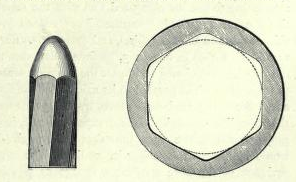
Whitworth-with-side-mounted-Davidson-scope-1Sniping was not new to the Civil War, having been used in previous conflicts, usually using a very heavy barreled target rifle and open sights or slow-loading “Kentucky rifles.” Along came a British gentleman by the name of Sir Joseph Whitworth, who experimented with rifled WhitworthBulletandRiflingartillery that used hexagon-shaped bores instead of rifled round bores. The hexagon-shaped bores were twisted like the rifling in traditional rifled arms, affecting the projectile like rifling does, giving it a stabilizing spin. He extended his ideas to small arms and developed the “Whitworth Rifle.” Not only was the bore hexagon-shaped, but the bullets were an elongated hexagon shape, matching the size and twist of the Whitworth Rifle barrels. Whitworth discovered the longer projectile needed a faster twist rate than the Minié to stabilize it. The result was a major leap forward in small arms accuracy.

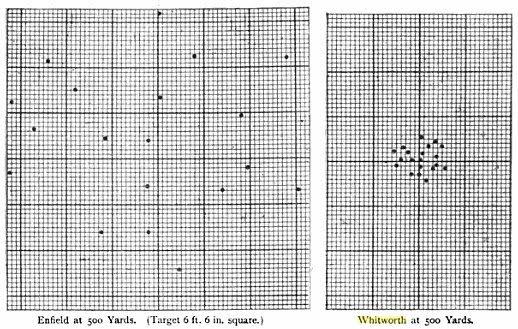
enfield-vs-whitworthTested against the Enfield Pattern of 1852 Rifle-Musket, the Whitworth could hold 9-inch groups at 500 yards (less than 2 minutes of angle), while the Enfield, which was considered very accurate in its day, could only hold 54-inch groups! For comparison, modern military small arms, like the M-16, can only hold about 2 minutes of angle (2 inches at 100 yards) unless accurized. The Whitworth could reliably hit targets out to 1,000 yards and beyond. Even though demonstrably superior in accuracy to the Enfield, the British rejected the design, because the Whitworth was four times more expensive than the Enfield to manufacture. That was not the death of the Whitworth.

Both Confederate and Union sharpshooters employed it as a sniper weapon, usually targeting artillery crews and officers at previously unheard of ranges. Most of these Whitworth Rifles used open, iron sights like those on the Springfield and Enfield, but some were equipped with 3-power telescopic sights mounted to the left side of the breech. These Whitworth Rifles were exceptionally deadly!

According to popular accounts, on May 9, 1864, during the Battle of Spotsylvania Courthouse, Union General John Sedgwick discovered just how accurate the Whitworth could be. Shots from Confederate Whitworth rifles, easily identified by the shrill whistling noises their hexagon-shaped bullets made in flight, caused members of his staff and artillerymen to duck for cover. Sedgwick chastised them and proclaimed, “I’m ashamed of you, dodging that way. They couldn’t hit an elephant at this distance.” Seconds later he pitched forward with a bullet hole below his left eye.

On Sept 19, 1863, at the Battle of Chickamauga, Union General William Lytle was leading a charge and became the target for a Confederate with a Whitworth. He was mortally wounded.

On the second day of the Battle of Gettysburg, disregarding warnings about the Federal sharpshooters armed with Whitworth rifles with telescopic sights mounted on them, Confederate General Richard Ewell and his engineer ventured to within 1,000 yards of the Union lines on Cemetery Hill. Ewell took a Whitworth round in his wooden leg, and the engineer was shot through the body and killed.

In An Eternity of Four Years, I have a scene where Ethan has an encounter with these same sharpshooters who shot at Ewell. That excerpt will be the next post.

Battlefield “technology” made huge advances just before and during the Civil War, and the resulting casualties were staggering compared to previous conflicts.

2 Comments

Filed under An Eternity of Four Years, Catahoula Books, Civil War, Firearms, History Lessons

Outhouses and Smart*** College Boys

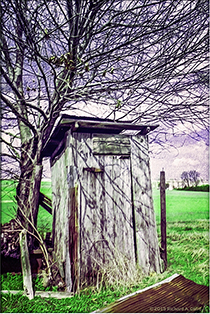
A Tree Grows In Bartlett_03122006My friend Richard Caire and I roomed together in college. The third member of our little confederacy was Sam Hopkins, and all three of us majored in art. Richard has focused his talents on photography and Photoshop manipulation to create some truly beautiful works of art. He sent me the attached image of an outhouse near where he lives, and it reminded me of a story.

It was our second year at Southeastern Louisiana Institute (Sounds like some kind of asylum doesn’t it? Such would have been appropriate for Richard, Sam, and me.)

Anyhow, we were taking art with no real notion how we might make a living at that. Actually, we were taking art so we could drink beer, thus my claim I minored in beer. We three happy-go-lucky, beer-swilling smartasses show up for the first day of a drawing class in the fall of 1963, and after all the introduction stuff, we get our first assignment, which was to venture forth and find a nice house and draw it. The instructor’s assumption was that we would wander off campus and sketch one of the many beautiful old homes around the college.

Oh no! The Three Amigos had to turn a simple assignment into a contest of wills. We drove all over the backwoods around Hammond, Louisiana to find an outhouse to draw. They are, after all, “houses,” are they not? It might not surprise the reader to learn that finding an outhouse around Hammond in 1963 was not a major challenge.

We found a nice one, kind of leaning like the one in the picture, and approached the owners, an elderly black man and his equally elderly wife, to ask permission to sketch their outhouse. She stood off to the side and looked suspiciously at the three white boys standing there, stupid grins on our faces, sketchbooks in hand, and asking to draw their outhouse. The old man looked at us and rubbed his chin, and I am sure he was thinking, These white boys be crazy!

He was right!

But he graciously gave his permission. (We might even have given him a few bucks.)

An hour or so later, outhouse properly sketched, we departed and turned in our assignment, expecting … I’m not sure just exactly what we were expecting, now that I think about it. The instructor could have taken it badly and given us all an “F” for being so arrogant, and we would have deserved it. Instead, he evaluated them right along with all the other students sketches of “real” houses. Maybe he thought we were really creative?

So we went out for a beer to celebrate.

Image credit: © 2015 Richard A Caire

Leave a comment

Filed under College, Family History, Growing Up

Suffering and Sin: not always go hand-in-hand

In the words of Blue in An Eternity of Four Years, “Trials make you bitter or better. You pick which.”

Greg's avatarPotholes in the Road of Life

This is part two of the Three Day Quote Challenge I’m participating in. Part one can be found HERE and the first post explaining it all HERE.

The other day I was doing some devotional reading on the ninth chapter of the Gospel of John. The devotional was speaking about Jesus’ teaching on the man who was blinded from birth, verses 1-3:

“As he passed by, he saw a man blind from birth. And his disciples asked him, “Rabbi, who sinned, this man or his parents, that he was born blind?” Jesus answered, “It was not that this man sinned, or his parents, but that the works of God might be displayed in him.” (‭John‬ ‭9‬:‭1-3‬ ESV)

The devotion also included several quotes from various theologians and preachers, some you may be familiar with:

“Extraordinary afflictions are not always the punishment of extraordinary sins–but sometimes the trial of extraordinary…

View original post 453 more words

Leave a comment

Filed under Uncategorized

Excerpt from An Eternity of Four Years

Book 2 1Since we are so close to publishing the print version of An Eternity of Four Years, I thought another teaser to get your interest up might be helpful. This scene takes place during the early days of the Battle of Chancellorsville as Stonewall Jackson’s staff considers the options for the Confederates facing a much superior force.

*****

Since re-crossing the Rappahannock and making another frontal attack at Fredericksburg was not an option for Hooker, in Late April 1863 he deployed 70,000 of his men to the west and moved them quickly across the river upstream in an attempt to flank Fredericksburg. Lee parried the move but left Early with the 1st Louisiana to hold Fredericksburg. Some skirmishes between Lee and Hooker resulted, but Fighting Joe suddenly drew back to defensive positions around Chancellorsville on the south side of the Rappahannock and sat there.

I was present when Jackson was studying a map with his staff, and one man quietly mused to himself, “What’s Hooker doing?”

Though deep in thought, Jackson must have heard him and looked up. He jabbed his finger at the map. “He wants to draw us out. He wants to choose the ground and have us come to him, so he can fight from a strong defensive position; thinks he can beat Lee that way.” Jackson looked around at his staff to observe their reaction to what he had just said and stopped when he got to me. “Captain, I have seen that expression on your face before back at the Institute. Something on your mind?”

I was somewhat startled but tried to quickly recover. “Yes, sir. I would have thought Hooker would understand that wars are not won fighting from the defensive. One must go on the offensive to completely defeat the enemy.”

Old Jack smiled. “As I recall, you were one of the few who remained awake during my lectures. You’re right. It is possible that Hooker could win the battle but only if he inflicts unsustainable casualties on us. But he’ll not win the war this way, and why will he not, Captain?”

I shook my head in the negative and replied softly. “Lee won’t fall into that trap.”

“And you would be correct. Lee is no fool. If you were Lee what would you do?”

I looked closer at the map and the dispositions of the two forces. “Well, sir, if a frontal attack is out of the question, then the alternative is a flanking maneuver.” I looked to Hooker’s left flank, the preferred choice to flank him, since it would sever his avenues of supply and retreat. “Hooker’s left flank is anchored on the Rappahannock, so we can’t get around that way; we would have to punch through it, which is almost the same as a frontal attack against the center.” My focus shifted to the western end of Hooker’s line. “His right flank appears to be in the air. If so, and he hasn’t reinforced it in anticipation of a flanking move, we might be able to move a large force undetected through the Wilderness and get around him that way.”

Old Jack nodded. “You did pay attention in class. See any problems with that maneuver?” I felt like I was back at VMI and being tested by Jackson. All eyes were on me to see how well I would do in this exam. “Yes, I do. Longstreet’s Corp is still detached, and Early is holding at Fredericksburg, so the Army of Northern Virginia has already been divided into thirds.” I pointed to Chancellorsville on the map. “To take this largest third here before Hooker’s much superior force—and divide it again—is something any text on military strategy would advise against.” Several nodded in agreement. I looked to Jackson and smiled. “But that’s precisely what you have in mind to do.”

*****

Though the Battle of Chancellorsville ended in a victory for the Confederates, it was at an enormous cost, one that would haunt the Army of Northern Virginia for the rest of the war, especially during the coming fight at Gettysburg: General Thomas J. “Stonewall” Jackson, perhaps Lee’s most able and talented commander, was killed.

Leave a comment

Filed under An Eternity of Four Years, Catahoula Books, Civil War, Excerpts

“An Eternity of Four Years” is Published!

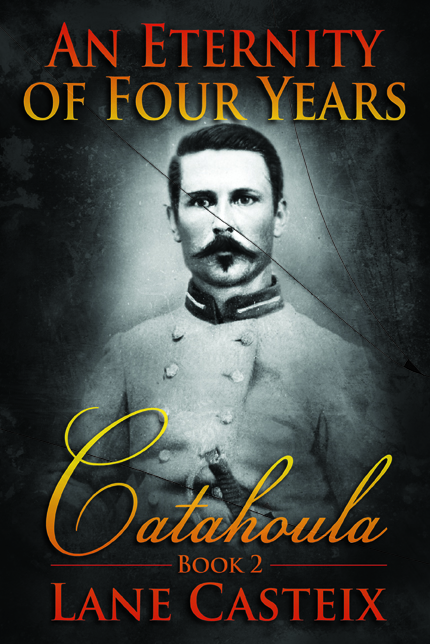
Book 2 1The exciting conclusion to the Legend of Rachel and Ethan, part 2 of the Catahoula Series, is up for sale at Amazon. However, this is the digital Kindle version. The paperback will be available soon, probably late next week.

The Kindle version is available for only $.99 for a limited time only. This is to allow my friends to get it at a reduced price.

You can scoop both up for only $1.98 total. Such a deal! 😉

If you don’t have a Kindle device, you can download the app for your computer, your iPad, or your phone for free. Use the device you want it on to get the app.


Leave a comment

Filed under An Eternity of Four Years, Catahoula Books, Civil War, Last Day of Forever

About THAT flag — and other thoughts.

Battle_flag_of_the_Confederate_States_of_America.svgIn The Last Day of Forever, Ethan is a slaveholder, albeit by proxy; his father was the actual owner. He inherited them at Morgan’s death and promptly freed them. His underlying and unacknowledged (at the time) motive was his dislike for the “peculiar institution,” but his excuse was to save Catahoula Plantation through the coming war.

In An Eternity of Four Years, he began the war owning another slave he won in a duel, Blue, and he promptly freed him as well. But he discovered he could not distance himself from the institution of slavery with the simple stroke of a pen. He was sucked into the war on the side of the South (it was that or hang), but Blue stayed with Ethan for reasons of his own, remaining a constant reminder of the institution throughout the war.

While Ethan began the war somewhat reluctantly, he did believe he was defending hearth and home from the Yankee “host” about to invade his country and state. This was a common view of many southern soldiers, most of whom were not even slave owners. As the war dragged on, it became obvious to Ethan the war was about far more than defending his home, and he was on the wrong side of history. But the oath he took and “honor” compelled him to fight on even though his heart was not in it.

What was the war all about? If you answer the North fought to free the slaves, you would be only partially right. If you answer the South fought to keep the institution of slavery, you would be only partially right.

Initially, the North fought to save the Union, and though Lincoln wanted to free the slaves, he knew northerners would abandon the cause if he made the war about slavery. And they did once he announced his Emancipation Proclamation. Many northerners refused to join the fight after that.

The war was really about money. Isn’t it always? For the South to leave the Union, it would mean a terrific loss of tax revenues for the United States. For the South, the slaves represented a huge financial investment. It was their belief that only the black man was capable of laboring under the hot conditions found in the South. Remove that source of labor, and the southern economy would collapse.

But sooner or later, slavery had to end, or the Constitution of the United States and everything standing behind it was a farce. Someone once said of slavery, the South had a tiger by the tail; it could neither hold on forever nor let it go, lest the tiger consume it. The Civil War forced that issue, and the tiger is still feasting on the South.

Now, some 150 years after the war, we are embarking on the rewriting of history, using the excuse of political correctness as our guiding light. That, my friends, is a very slippery slope. Already, we have seen calls to ban all merchandise depicting the Confederate battle flag (AKA the Southern Cross, not the Stars and Bars), while at the same time, Nazi symbol merchandise is still available and happily sold by some of those hypocrites banning the Confederate flag merchandise. There have been calls to cease distribution of movies like Gone With The Wind—archive it forever, take down statues of Confederate officers and politicians, rename streets named for Confederates, and even rename military posts. As if these actions will change anything! They will not. The divisiveness will only get worse. Will we see book burnings next? A crystal night where southern businesses will be trashed? Anyone whose ancestors were slave owners will face persecution?

We are NOT a racist country, but we are rapidly becoming one. I was born and raised in the South, and I am here to tell you, in my lifetime, I have seen the racial attitudes of southerners dramatically change for the better. But in the last six or seven years, all that progress has been reversed. Ironically, it is being driven by those who claim, falsely, they are not racists.

God help us!

Where does it end? Short answer: It does not. The New American Taliban, focused on symbols rather than substance, will not stop until everything they view as offensive is destroyed—exactly like what we see the Taliban and Isis doing in the Middle East today—no difference!

I leave you with these comments by General U.S. Grant from his memoirs of Lee’s surrender at Appomattox. Consider that they were spoken by the victor after four years of a brutal war.

“I felt like anything rather than rejoicing at the downfall of a foe who had fought so long and valiantly, and had suffered so much for a cause, though that cause was, I believe, one of the worst for which a people ever fought, and one for which there was the least excuse. I do not question, however, the sincerity of the great mass of those who were opposed to us.”

America’s slide down this slippery slope will not end well, and what is at the bottom is a monster none of us want to even think about.

Wake up, America!

2 Comments

Filed under An Eternity of Four Years, Catahoula Books, Civil War, Current Events, Last Day of Forever

Three Strikes and You Are Out!

Time for another war story…

While stationed at George AFB in Victorville, CA as a 25251 Weather Observer, I was often sent on two-week TDYs (Temporary Duty) to Cuddeback Air to Ground Gunnery Range about 60 miles north of George. Cudde was quite literally in the middle of nowhere. It was a dry lake in a shallow valley hemmed in by low mountains.

As a weather observer, it was my job to supply winds-aloft observations for the pilots to use in judging their bomb trajectories and strafing runs. To calculate winds aloft we launched a 1,000 gram balloon and tracked it with a theodolite, taking elevation and azimuth readings every 60 seconds. All this was explained here if interested.

To get to Cudde you had three choices: drive your own POV (privately owned vehicle), which would leave Janis without a car for a week at a time, or arrange for Motor Pool to drive you up Sunday night, the most common method, or take the air taxi shuttle Monday morning. The shuttle flight usually left too late for the observers to use it. We had to take our first winds aloft and surface obs (observations) at least four hours before the first mission arrived over the range. The RO (range officer) used the air shuttle and arrived only an hour or so before the first mission.

DAYTON, Ohio -- De Havilland U-6A Beaver at the National Museum of the United States Air Force. (U.S. Air Force photo)

DAYTON, Ohio — De Havilland U-6A Beaver at the National Museum of the United States Air Force. (U.S. Air Force photo)

When I first arrived at George, they were using a single-engine, de Havilland U-6 Beaver, which is built in Canada and commonly used by bush pilots in both Canada and Alaska. The U-6 was a six-seater (five passengers plus the pilot). For some reason I can’t recall, I was taking the U-6 up on this particular trip to Cudde.

We take off and in only a few minutes (60 miles, remember) we are letting down onto Cudde’s paved runway. All seemed to be going smoothly, “seemed” being the operative word here.

I had watched many U-6 landings while up at Cudde, so I knew what to expect. The parking apron, which is right in front of Cudde’s tower, is about halfway down the runway. The U-6 is a STOL aircraft (Short Take Off and Landing), so it normally uses barely half the runway and pulls right into the parking apron.

But this landing…

We touch down and the parking apron is coming up fast. I am thinking, How is he going to slow this thing down soon enough to be able to pull into the apron?

Short answer: he wasn’t going to make it, but not for want of trying.

The pilot hit the breaks and starts his turn, and we zip right through the parking apron and spin off into the desert, like a 360 degree spin off into the desert!

The Beaver comes to a stop, and the pilot kind of looks sheepishly back at me and the other passenger in the back. “That’s what you call a ground loop.”

Swell! Just get me off this plane!

I should have learned my lesson. I didn’t.

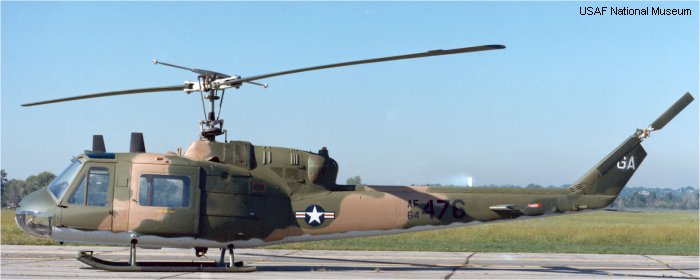
h1fAbout a year later, they replaced the U-6 with a UH-1 Huey helicopter, and even though the Huey would not be my first helicopter ride, I had to try that puppy. So, I sign up for another Monday morning milk run to Cudde in the Huey.

The RO and I are all loaded in the Huey waiting on the pilot to board and light up the turbine engine. I got suspicious this lark of a trip might not be such a good idea, because I am watching the pilot and the crew chief have an animated conversation involving lots of arm waving and finger pointing, mostly in the direction of the Huey I am sitting in.

Eventually, we took off and made the trip without incident, like crashing or something. Later that day while having lunch in the chow hall, I heard some of the Cudde regulars talking about how they had grounded the Huey because of engine issues when it got back to George.

Three strikes and you are out? I used motorpool for all my trips to Cudde after that.

Leave a comment

Filed under Growing Up, War Stories

The Last Day of Forever a prop in a movie?

Whenever my sister, Jeanne, does anything, it is with “gusto.” She is reading The Last Day of Forever right now, and it goes where she goes.

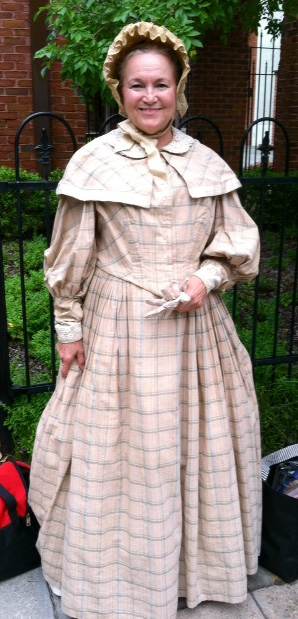
Jeanne BankShe is also an actress and has had quite a few small parts in local movie and TV productions. A few I recall are Left Behind, Bonnie and Clyde, and at least one NCIS NOLA from this past season, but they are many more. She even had a speaking role in Bonnie and Clyde. If you saw the movie, she was one of the “gossiping ladies” walking past Bonnie Parker’s mother’s house. (If you ask her, she may give you an autograph!)

She is working in another movie I can’t name yet, and she is in a bank robbery scene. Jeanne is a customer in the bank, and she has a prop. Guess what it was? That’s right, The Last Day of Forever, which she was reading while waiting for her camera call. But they wouldn’t allow her to show the title!

I will let Jeanne describe the scene. “Anyway in the scene, I am writing out checks and deposits at the center counter … The book (on my left) along with a checkbook, deposit slip and some invoices are spread out on the counter, but the book is face down and at one point I rest my arm on it while filling out the forms. Damn, isn’t that a lot of action going on in the background that most people don’t even realize they are seeing?”

Jeanne AnaleeYou may be able to see it (sans title) in the movie when it comes out. Once it is released, I can reveal the title.

She even gets into the part when just reading. Here she is dressed as Analee as she continues The Last Day of Forever. 😉

2 Comments

Filed under An Eternity of Four Years, Catahoula Books, Family History

Crusin’ down Ole Highway 90.

Returning from a week in Blue Mountain, Florida this Sunday, we were alerted to a severe traffic jam on I-10 at the Louisiana/Mississippi state line by my son, Ryan, and DIL who were over an hour ahead of us. We shifted over to US. Highway 90 at the Stennis exit to avoid some of this. Should have gotten off at the Bay St. Louis exit, because we hit the backed up traffic right after passing Bay St. Louis.

Oh well…

When I was a kid and before I-10 existed, we made many a trip to and from Waveland, MS using this route, so crusin’ down Ole Highway 90 was a trip down memory lane for me. I was reminded of those many Friday nights going east and Sunday nights returning to NOLA on that dark two-lane highway.

We always had a station wagon, which was the van or SUV of my day. It was always a nine passenger with a rear facing third seat. That was my favorite place to ride on those trips. The middle seat was folded down, and quilts were spread over the flat floor for my two little sisters to sleep on the way. They shared the space with our two dogs and sometimes a bird or that blasted rabbit mentioned elsewhere.

Seatbelts? We didn’t need no stinking seatbelts! Besides, the cars weren’t even equipped with them back then.

Did I mention luggage? No, because I can’t recall us ever carrying any. We must have had some little something somewhere, but it never took up much space. We had extras of almost everything stored in our Waveland house, so we don’t need no stinking luggage! Well, not much anyway.

No AC in the cars either, at least not in ours. Only the “very wealthy” bought cars with AC back then (1950s), and MB was too frugal for that. I can recall several times we noticed water dripping from other cars, and being ever concerned for the safety of others, we flagged them down to report the strange water dripping from under their cars. Inevitably, they would roll down their windows (because they had AC) and say, “What?”

To which we replied, “Water! You have water dripping from your car!” And we continued on, thinking we had saved the lives of some poor family that we were sure their car was close to exploding—or something.

If you haven’t figured it out yet, the dripping water was condensation from their AC!

We didn’t know any better!

One story MB told of a trip to Waveland has always stuck in my mind. He and his friend, Pete Constancy, built our house in Waveland, mostly from scraps of a house they tore down in NOLA that Pete owned. They carefully removed the window frames and sashes and stacked them on a homemade trailer. The trailer was, shall we say, a bit bouncy. They stacked the windows flat, not on edge like they should have. Stacked so, the glass could not stand the bouncing, and they arrived in Waveland with every pane broken, and Highway 90 strewn with broken glass from NOLA to Waveland.

My sisters, Jeanne and Martia, and my cousins, Melanie and Bobby, will remember the “Pama-Pama Bridge,” which I think was the one over the Chef Menteur Pass. (One of the four will comment and correct me if I am wrong.) Why was it called the “Pama Pama Bridge?” Because your car tires made “pama-pama” sounds as they passed over the expansion joints. I never knew of any other bridge that sounded quite like that.

I went over it today, and, sadly, it doesn’t go “pama-pama” anymore. Another childhood memory lost forever!

Motorcyclists have it right when they say, “It isn’t the destination, it’s the trip!” We are always in a rush to get somewhere. We need to spend more time on the Old Highway 90s of our lives and enjoy the ride.

3 Comments

Filed under Family History, Growing Up, Kenner, Waveland