Christmas

Growing up in Kenner in the fifties, Christmas was always a special time of the year for us as it must have been for most others growing up elsewhere. There was a “ritual” of sorts associated with the Christmas season. Each family had its own traditions and some got passed down to the next generation, but usually each generation has to establish their own. Back then in my family, we could count on the same series of events occurring every year without fail, and I began looking forward to them as early as Halloween, which for us kids “officially” kicked off the “holiday seasons.”

We kids looked forward to Christmas with the usual expectation of new toys and time off from school. We wrote our Christmas lists and letters to Santa long after we discovered the truth. We wanted to perpetuate the “gift gravy train” as long as we could get away with it.
2017-sixth

Depending on what day Christmas landed on, school let out the day before Christmas Eve and resumed the day after New Years Day. Christmas Eve was for me even bigger that Christmas itself. Christmas Eve was a big extended family night when everyone was having a party and exchanging gifts all over the neighborhood, and most of my extended family lived within easy walking distance, even if inebriated. On Christmas Eve we went first to my grandparent’s house on the corner of Sixth and Minor to exchange gifts. This exchange was among my grandparents, aunts, and cousins on my mother’s side. They always exchanged gifts on Christmas Eve. As I recall, those festivities kicked off at 7pm precisely.

This was followed by a visit to MB’s side of the family for a party at Boo and Margie’s house at the other end of the block. Sometime during the evening we paid a visit to Mary’s house. Mary was the black lady who cleaned my dad’s office and did light housework for the Manard clan. We took her gifts like a turkey or ham and Christmas “bonus” cash, a bottle of Seven Crown whisky and stayed long enough to share some Christmas cheer with her and her family.

After returning home, we retired late, and the kids went to sleep (not really), while our parents put out the toys from Santa. There was no way I was going to wait until Christmas morning to play with my stuff that Santa left. For weeks prior, I practiced creeping down the long hallway between our kitchen and the living room where the tree was set up. I discovered that certain boards of the wood floor in the hall of our elevated house creaked loudly when stepped on. After some experimenting, I discovered that if I hugged the walls during my creep down the hall, I made less noise, thus I was not likely to awaken my parents. That was probably overkill, as my parents slept like rocks after all that work, play, and the adult beverages they had consumed at the parties. There was little chance of me waking them, but the stealth was part of the fun and created a genuine adrenalin rush.

About an hour after they went to bed, I would make my first foray to see the goodies under the tree. Ninja-like I would silently roll out of my bed, pausing to see if the rustling of my sheets had aroused my parents. Getting no response, I stood and moved to the doorway, avoiding the center of the room and any creaking floorboards. Again, I paused to see if they had heard me. And again no “Lane, what are you doing?” issued forth from my parents bedroom. I then carefully slipped through the kitchen and into that treacherous hallway and hugged the wall to avoid those tattletale boards and took one careful step at a time toward the living room and my Christmas goodies. Upon arrival, I turned on only the tree lights and beheld a display of toys and gifts so carefully laid out such that the display would shame the window dresser at the Maison Blanche department store downtown. I examined each object with barely restrained glee, lest I wake my snoring parents, and was very careful to put each item back exactly as “Santa” had displayed it. Temporarily satisfied, I then snuck back to bed and tried to sleep. That didn’t work.

Within the hour, I made another ninja-assault on the Christmas tree. This time I not only examined my toys but also those of my sisters. Then back to bed again. This was a case of “wash, rinse and repeat” all night long. Needless to say, on Christmas Day I was very sleepy and went to bed early that night.

Christmas morning was a time to open the gifts of our immediate family and play with the new toys, but before we could really enjoy everything, it was hurry up and get dressed to have Christmas dinner at my grandparent’s house at noon, and they ALWAYS ate at noon! Since they were from central Louisiana (Point Coupee and LaSalle Parish), the fare was different from what was usually found on Christmas tables in New Orleans. We had the usual obligatory turkey, but instead of brown gravy made from the drippings served over the oyster dressing or dirty rice, we had white giblet gravy over white rice. The stuffing was cornbread instead of oyster dressing my wife made as part of our later Christmas meal traditions. The cranberry sauce was always that can shaped gelatinous glob, but I loved it and still do. Janis refuses to let me eat it today and makes her own cranberry sauce from fresh cranberries, and I must admit, it is actually better than the gelatinous glob. The wine was usually Mogen David Concord Grape and sweet enough to almost qualify as grape juice and induce instant tooth decay. But we ate like we hadn’t eaten in days.

That was a long time ago, and we do things a bit differently today. Even our traditions established during our young married life are gone with deceased parents and family members grown, married with kids of their own, and some living in another state. I miss those Christmas Times of long ago, but there comes a time when you have to let go and let the kids establish their own traditions.

Another thing I really wish I could bring back and enjoy today is my Aunt Ethel’s fruitcake. Every fall she and my mother would make fruitcakes a few weeks before Christmas, and she had a great fruitcake recipe! After baking they were liberally dribbled with bourbon whiskey and allowed to soak in the bourbon for a couple of weeks before eating. Man, they were good. I need to find that recipe.

In closing: To all of you reading this, I hope you have some Christmas Traditions you cherish, and most of all, I wish you a very Merry Christmas and remember “He is the reason for the season.”

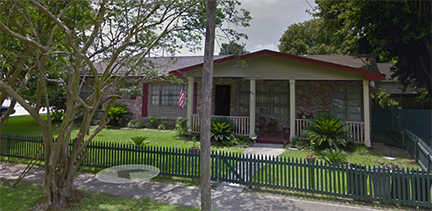
NOTE: The image is a screen grab from Google Street View of the house I grew up in as it looks today.

8 Comments

Filed under Family History, Growing Up, Kenner

WOXOF

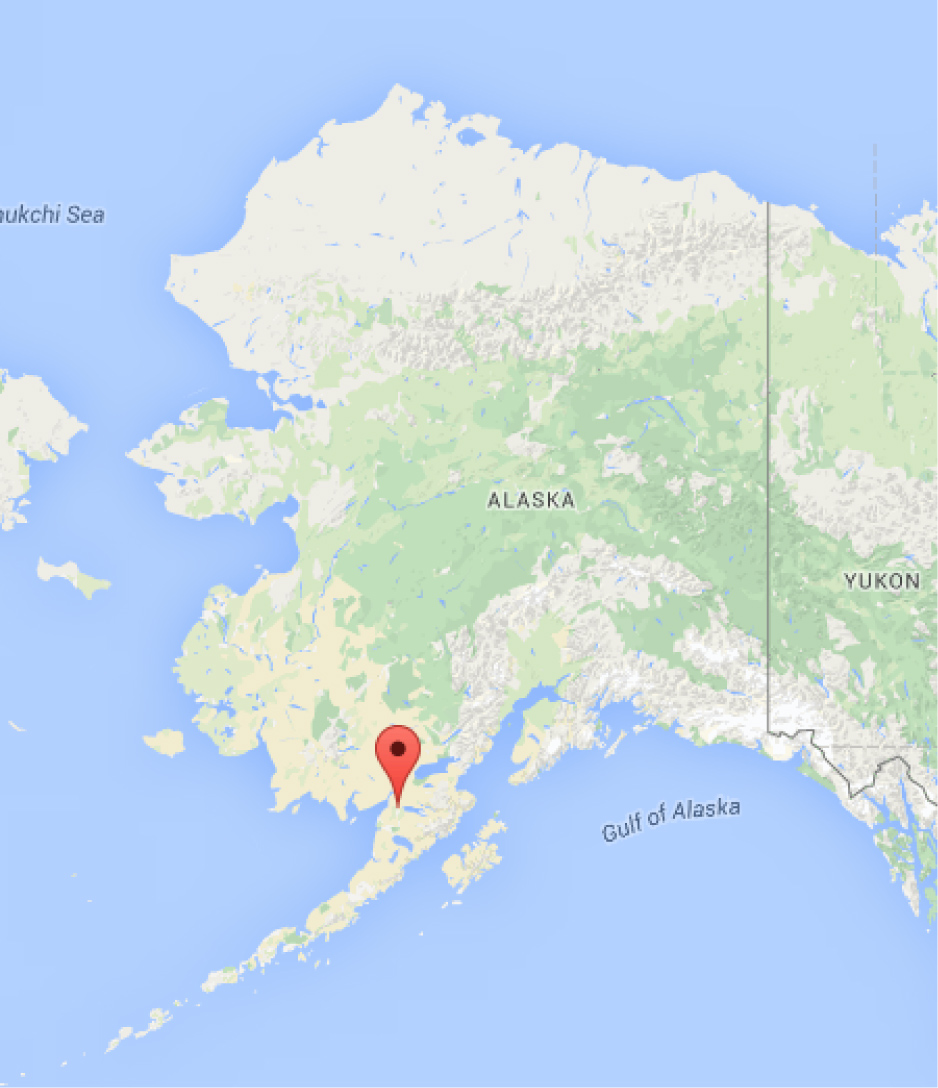
I sometimes visit a FaceBook page for USAF Weather. Someone there posted a question about the most unusual weather you ever encountered. I jumped in with an account of an incident that happened to me while serving as an Air Force weather observer at King Salmon AFS, Alaska (AKN). King Salmon was a small Air Force radar site on the base of the Alaskan peninsula southwest of Anchorage. It is closed now. AKN also had a paved runway and alert aircraft armed and ready to scramble to protect all you folks down in the “lower 48” as they would say up there

King Salmon MapI usually worked mid-shifts. That is from midnight to 0800. I liked mids because they were usually quiet. Unlike my previous assignment at George AFB, California, which was in the middle of the Mojave Desert and void of any weather most of the time, AKN was a busy little weather station. We got lots of snow, rain, wind, and fog depending on the time of the year.

On this mid-shift, it was a cold and a relatively weatherless winter night with clear skies and unlimited visibility. From my reclining desk chair with my feet propped up on the equipment console and with only minor swiveling, I could easily see about 250 degrees of the horizon, and nothing was happening. The neighborhood bear had already made his rounds of the village garbage cans and had passed the ROS (Representative Observation Site – the weather station) moving on to fresher cans on the south end of the runway. On this quiet night, I had been writing a letter home with occasional glances at the horizon I could see.

About fifteen minutes before the hour I stood to walk out onto the catwalk surrounding our second floor perch we called the ROS to take my required hourly observation, and low and behold what do I see on the moonlit horizon that had been hidden from my casual view by the weather console, but FOG! Lots of fog! A solid wall of fog moving toward the station.

Station visibility is calculated by the visual sighting of certain landmarks at a known distance from the station and was suppose to represent over half of the horizon circle. Well, one half of the horizon circle was rapidly disappearing as that fog bank rolled silently and relentlessly toward me.

I was scheduled to take an “hourly” observation, encode that, and transmit it on the hour. If certain conditions regarding weather, winds, visibility, or cloud cover were met that were clearly spelled out in standard operating procedures (SOPs), I was required to take an abbreviated “special obs” (special observation) and transmit that. And some of those “certain conditions” were being met as I stood dumbfounded looking at that fog bank. I promptly took a special and transmitted it and then immediately went back to completing my hourly and transmitted that.

The fog rolled relentlessly on and was enveloping the station. Visibility was rapidly dropping, requiring another special, and that was followed by another almost immediately. In about 15 minutes, AKN went from clear and unlimited visibility to a condition, in weather reporting parlance, called “WOXOF.” Translated: zero feet visibility and zero feet ceiling in fog. AKN, as an airport, was effectively shut down.

With my weather observations and reports reflecting current conditions, I stood there surrounded by gray nothingness and tried to calm my rapidly beating heart. That’s when the phone rang, and that would be the duty forecaster back at Elmendorf AFB in Anchorage, and he wanted to know what the hell was going on?

“Fog bank rolled in and socked-in the station.”

“You should have warned me it was happening. You blew my forecast!” he fairly screamed.

I didn’t say it but was thinking, I didn’t create this soup. Maybe it was you who blew the forecast?

That was life for weathermen in the wilds of Alaska in the winter, but there is another story I want to tell. It also happened on a mid-shift and during another period of WOXOF.

Several airmen from the King Salmon AFS decided to walk to Naknek, which is a little fishing village few miles up the road. The night was very foggy, and along comes a local in his car hauling down the gravel road and hits one of the walking airmen. And he was hurt badly, bad enough his injuries were potentially fatal and beyond the equipment and skills of the “docs” at AKN who were really Air Force trained medics. Evacuation back to the hospital at Elmendorf AFB was called for, and that meant by air, as there was no other way. A crew was pulled together, and the four turboprops of a C-130 were fired up at Elmendorf.

9954786644_a169ecc286_z

They arrived at AKN with WOXOF conditions at the station. Normally, that would have meant no landing would be attempted for safety reasons, but this was an emergency. A man was badly hurt and might not live without the care he could get only back at Elmendorf.

The air traffic controllers at AKN attempted to guide the pilot down for a landing using the GCA radar (Ground Controlled Approach). They watched the GCA screen, told the pilot what to do, and he listened and did as they said, because he could see exactly zero. He was making a blind approach in the dark at an airport with the ceiling and visibility both at zero and trusting the training and judgment of a three-striper staring at a blip on a radar screen. The pilot was instructed by the controller to tell him as soon as he saw the approach lights, and these are VERY bright strobe lights. He didn’t see them even though the GCA indicated he was right over them.

“Execute missed approach and try again,” he was told.

The pilot powered up the four engines of the big cargo plane and climbed back up to go around for another attempt. The controller clearly heard him as he flew passed halfway down the runway where the GCA radar was located.

The pilot brought the C-130 around for another GCA approach and was talked down by the controller watching that blip that represented that plane on the radar screen. Again he was told to tell the controller when he had the approach lights or the runway in view.

Following the verbal instructions from the controller telling him if he was on or missing the glide path, the pilot skillfully settled that C-130 down closer to the ground as he approached the end of the runway. The controller knew where the plane was relative to the end of the runway, but the pilot did not. “You should have a visual on the end of the runway. You are right over it!”

“Negative.”

“Execute missed approach!”

That was followed by silence for a moment or two. “Too late. I’m on the ground,” said the pilot as the controller heard the plane with its prop’s blade pitch reversed and four engines screaming to stop the C-130’s roll down the runway.

“You had a visual on the runway?”

“Negative. Never saw it until the wheels touched. You did a great job!”

Trusting in the GCA controller’s training and judgment, that crew risked their lives to get that wounded airman back to Elmendorf that night. The pilot told air traffic control at AKN, “One way or another, I was putting that plane down on the runway.”


Leave a comment

Filed under War Stories

Yancy Derringer

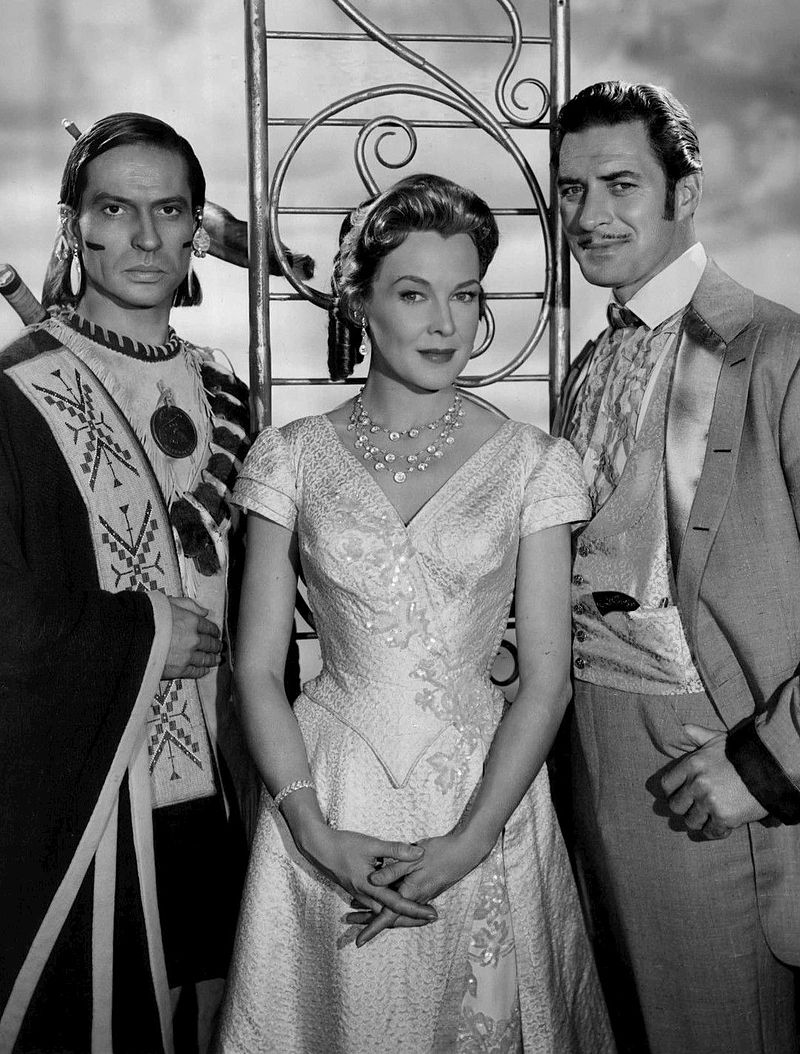
yancy_derringer_cast_2I cut the cord, or in my case, since I have (had) satellite, I broke the dish. I got fed up paying for 400 channels and watching six. Saved $91 a month. I have switched to receiving over-the-air (OTA) channels through a Tivo device. That meant installing a TV antenna on my roof. Now I get over thirty local stations, mostly in HD, and all for FREE.

With the Tivo came some builtin apps like Netflix and Amazon among others. I was already getting Netflix via my AppleTV device and had switched a large portion of my TV viewing to streaming through Netflix using the AppleTV. That made the satellite even less relevant. Besides, it has been periodically failing and taking whatever I had stored on the DVR with it.

It was an easy decision for me, but less so for Janis. You have to change the way you manage your TV watching. I won’t go into that now, maybe later, because some interesting arguments over the controls have been experienced since the switch. I may write about them later.

The title of this post is “Yancy Derringer.” If you were born later than the early fifties, you may never have heard of Yancy, because the old black and white TV show by that name aired in 1958 and 1959. I have discovered that old Yancy episodes are available for FREE on Amazon if you are an Amazon Prime member. So are a lot of other old TV shows, but more on that later.

Yancy is a Rhett Butler wannabe, and in some ways is better than Rhett. He doesn’t have all that emotional baggage and drama associated with Scarlet. The series takes place in New Orleans just after the War of Northern Aggression (Civil War if you are a Yankee), and Yancy is an unrepentant southerner and gambler who owns a riverboat (the Sultana) and a bar in Yankee occupied New Orleans. Yancy actually works for the northern city administer, not because he is a sympathizer with the Yankees, but because he loves New Orleans. He acts as the city administrator’s undercover enforcer to help manage crime in the city.

Yancy usually dresses in the uniform of the day, that being a white linen suit with a brocade vest and a broad rimmed white planter’s hat—oh, and a pencil thin mustache. He is also armed, though not obviously so. Being a gambler, he carries a four barrel derringer pistol up his left sleeve and another inside his hat. Of course Yancy can hit a squirrel at a hundred paces with that little pipsqueak pistol. (Sarcasm off.) But his main weapon is Pahoo.

Yancy has a faithful Indian companion, which was kind of the vogue for westerns in those days. His name is Pahoo-Ka-Te-Wah, which means “wolf-who-stands-in-water.” It seems that Pahoo once saved Yancy’s life, thus altering fate, and now he is responsible for Yancy’s life. Pahoo is a big Indian dude and wears a blanket over his shoulder, which hides the double barrel shotgun hanging from a strap over his shoulder. It comes out from under that blanket a lot, and with both barrels, he blasts some evil doer into the next century. He also carries a really big knife behind his back up by his neck. And he throws it a lot—and always hits what he throws it at. Pahoo, being a non-PC Indian of that day, is also very sneaky, not in a negative way, but you NEVER know when he will be standing right there behind someone ready to protect Yancy. He appears out of nowhere with shotgun blasting, knife flying, and bad guys dying. And he never speaks, communicating instead using sign language.

Pahoo was played by Jay X Brands and is actually of European origin, Germany to be exact. He plays a Pawnee, and members of that nation sent him a letter congratulating him on his accurate portrayal of an Indian and, especially, his learning the native hand language, which evidently was accurate in the series.

Yancy is super cool and nothing ever gets him upset. He rarely raises his voice even when threatened. He is always in control. He is also something of a smartass, coming up with some very sarcastic one liners. Like the time the bearded city administrator is describing his sister to Yancy so he will recognize her on the boat when she arrives in NOLA, “She looks a lot like me with red hair, blue eyes…” Yancy adds without missing a beat, “…and a beard?”

The shows were for thirty minute time slots, so they are only about twenty minutes long with the commercials stripped off. I have also found “Wanted Dead or Alive” with Steve McQueen as a bounty hunter before he became a famous movie star and “The Rebel” with Nick Adams. I haven’t watched any of those yet. I also found three old movies I have been looking for to watch for decades.

Bottom line: I won’t miss satellite, however, Janis might, therefore, I will be made to miss satellite.

The photo above is public domain from Wikipedia. They are from the left Pahoo (X-Brands), Madame Francine (Francis Bergen, wife of Edger) and Yancy (Jock Mahoney)

Leave a comment

Filed under Civil War, Growing Up

“Go find, her, Mac.”

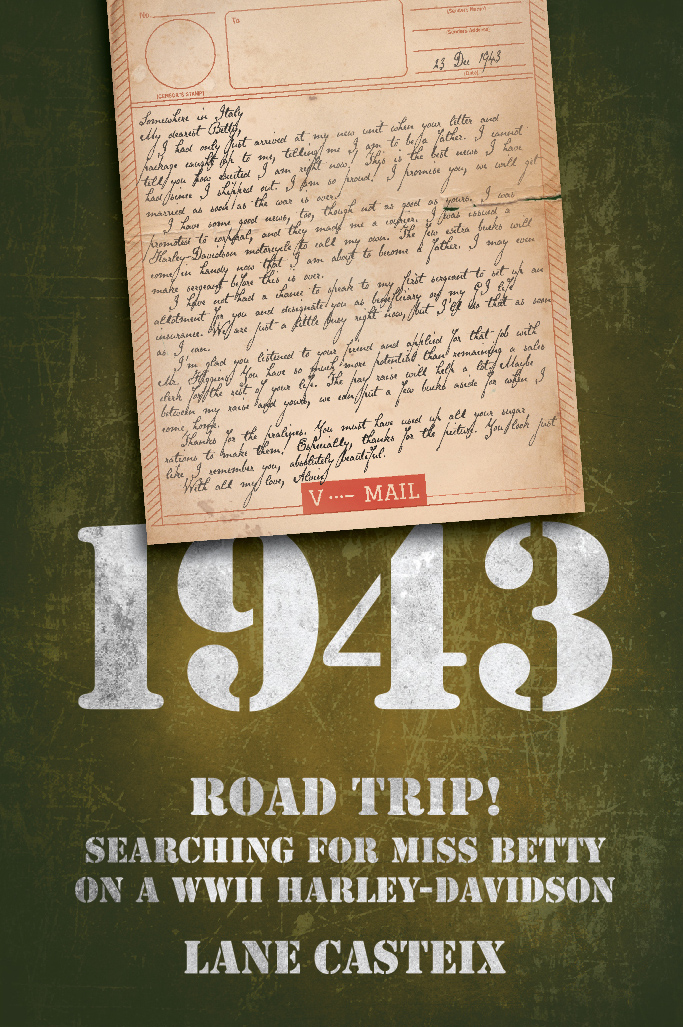
I am getting closer to publishing 1943. I was shooting for November, but it is looking more like December now. (I knew I shouldn’t have set a date…) Meanwhile, here is an excerpt to get you all excited about the book.

Our hero, Mac, has been searching for the two people mentioned earlier in the book (see a sample of that here). In the saddlebags of the old Harley-Davidson WLA motorcycle, he had found a photo of Betty and a V-Mail letter written by her fiance, Alvin, in Italy during WWII. His friend, Buster has badgered him into looking for more information on the two. At this point, he has discovered a lot about Betty, but the missing piece of information about her is where she is today, and is she even still alive over 70 years later? From clues in the photo and letter, he has deduced she once lived in New Orleans, but that is as much as he has been able to figure out.

To clear his head, he takes a ride on the old Harley on Rim of the World Drive in the San Bernardino Mountains in Southern California. (Been there and it is beautiful.) He stops and during the course of the stop, Mac has a conversation with his deceased wife, Jill—or at least that is what he thinks is happening. She seems to be speaking to him through her little dog, Pug. Here is the scene.

*****

Print

Mac had always found riding a motorcycle therapeutic, and maybe it would work this time? If nothing else, a ride would allow him to get his mind off his failure to solve a case. Thirty minutes later, he and Pug were up on Rim of the World Drive and leaning into the curves and feeling the wind in his face. There, on the bike, he was in another world, one unencumbered with the cares of this world, but one that felt an awful lot like pure freedom. It’s not the destination, it’s the journey.

But as he continued along, dragging the footboards in the tight turns and pushing the old Harley harder than he should in his attempt to forget—Betty came back to him. Giving into her, he pulled over on a lookout, the same place he had that long conversation with Jill only a few days before, and shut the bike down. With the kickstand down, he stepped off and away from the bike, pausing to look at it for a long moment. What had started out to be a fun project a few years before, that blasted bike and everything related to it had become a nagging obsession, one he could get no rest from. He loved it and hated it at the same time.

He slipped the backpack off his back and let Pug out to run free. The little dog promptly relieved himself on a nearby guardrail post. Mac turned away from the Harley and stepped over the guardrail and sat on the rail under the shade of a scrub pine. He looked out at the vast expanse of southern California spread out before him in the valley below, staring out into the distance, looking but seeing nothing. Pug went under the guardrail and took a seat beside him. The two sat there quietly, each in his own world.

“What am I going to do, Jill? I can’t find the answers I need. Betty remains hidden from me.”

“Then go find her,” she replied.

He came to his feet. Pug jumped up and stepped away, his eyes focused on Mac.

“Find her? How am I supposed to do that?” he said pacing and waving his hands in the air to give emphasis to his words.

A car passed, and the two kids in the back saw him doing that. They looked at each other, and the older girl made circular motions with her index finger beside her temple.

“You’re a detective, aren’t you?” Jill replied.

Mac threw up his hands in surrender. “What? I’m out of clues. I can’t find her.”

“Of course you can. You’re my husband, the same man who claimed to be the world’s greatest detective who can solve any mystery.”

“Jill, give me a break here. I have nothing to work with. I’m at a dead end,” he said as he continued his pacing and wild gesturing with his hands, once stopping to kick a rock over the edge of the lookout to express his frustration.

Pug backed away.

“You may not be able to find her here, but what about there?”

“There? New Orleans? Don’t you understand? I have nothing left to work with. Nothing.”

“Buster is right, you are a stubborn man—but that’s one thing I loved about you—you never gave up. Why are you quitting now?”

Mac sat heavily on a guardrail and put his head in his hands. “I’m lonely, Jill. I want you back.”

“You can have me but only in your heart. The time has come for you to go find someone else, someone who can give you the peace and happiness you need and deserve—and you can give her the peace and happiness she needs and deserves.”

He spun and looked at Pug. “Betty?” But Jill didn’t answer the question. Long moments of silence ticked by. “Jill,” he called out, but she didn’t answer. “Jill, are you there? Speak to me!”

“Go find her, Mac,” whispered the voice.

Leave a comment

Filed under 1943

Mr. Frank

One of the joys of growing up in Kenner was being a boy during the best time in history in what was possibly the best place in the world to grow up, Kenner. At least that’s what my cousin, Bobby, thinks. I tend to agree. In post war and prosperous America, we lived a carefree life that simply can’t be recreated today.

For us kids back then, summers were our favorite time of the year for obvious reasons, mainly because the dress code was so minimal, and we didn’t have to go to school. It was a time when we roamed the streets in our neighborhood with no fear, wearing only shorts, no shoes and no shirts—maybe sometimes a baseball cap. It was also the time Mr. Frank would pay us daily visits.

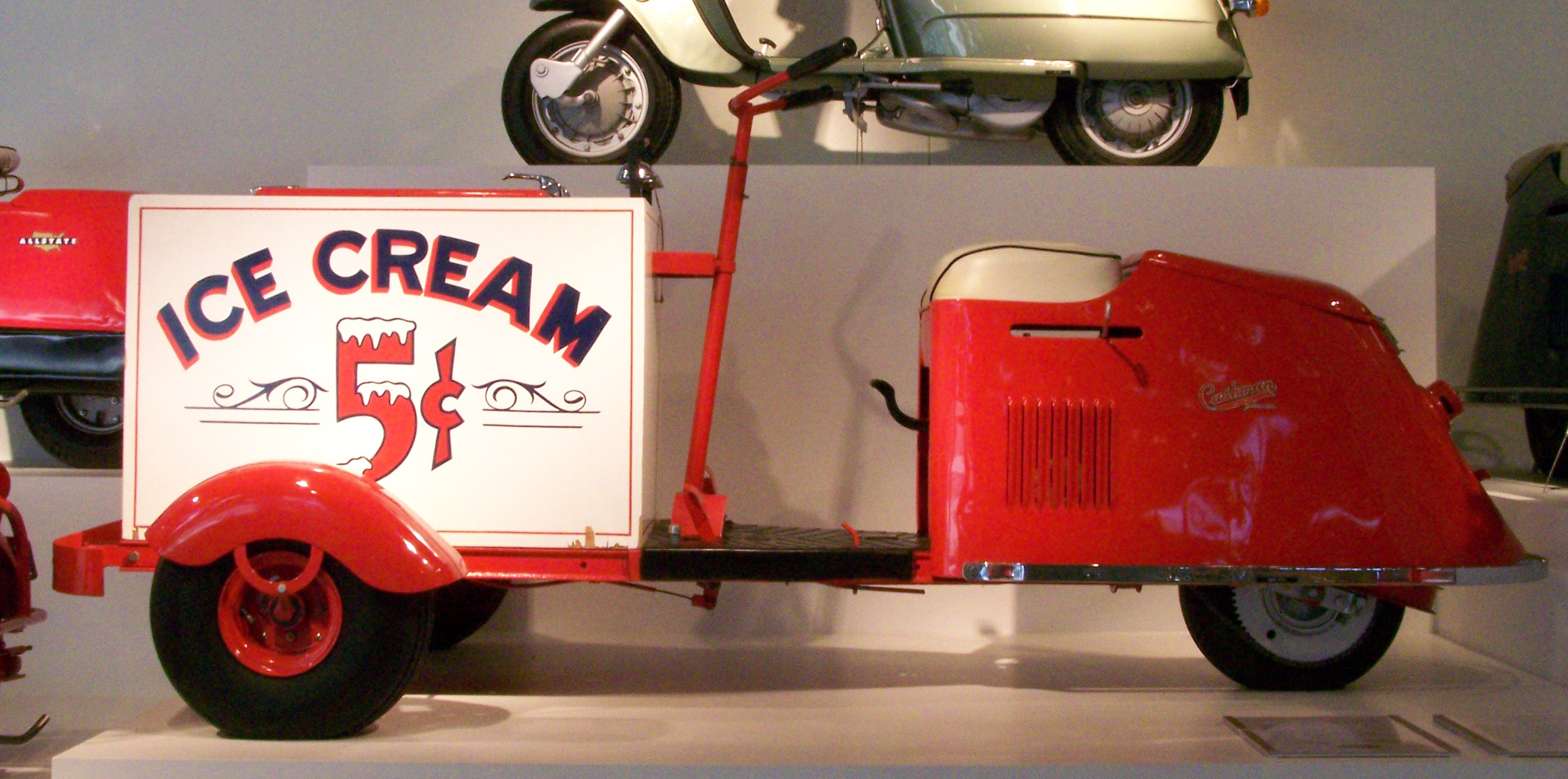
Mr. Frank was our local, roving, ice cream man. He was an over-weight, somewhat elderly man with a fatherly appearance, and wore a worn straw fedora to protect his balding head from the sun. Mr. Frank roamed the neighborhoods of Kenner on his little three-wheeled Cushman motor scooter ringing a hand bell and shouting out, “Ice cream! Get your ice cream!” (As if the bell hadn’t done the sales job already.) He sat in the back of his little scooter over the motor, and in front over the two front wheels was his dry ice cooled icebox filled with a veritable cornucopia of frozen delights for kids.

cushman

He sold the usual ice cream cups that came with a little wooden device for scooping the ice cream from the cup. That “scooping device” was a “spoon” in name only, being only a thin flat piece of wood cut in the shaped of a stubby spoon. Splinters in the lip were not unheard of.

His cooler also contained frozen bars of ice cream on a stick dipped in chocolate, ice cream sandwiches, which were two rectangular chocolate cookie slabs with a block of vanilla ice cream in between, and Dreamsicles—those bars of vanilla ice cream on a stick with a frozen orange sherbet coating, and ice cream cones with a chocolate topping and peanuts wrapped in paper you had to peel back. And, of course, he had the ubiquitous Popsicle in a variety of flavors to satisfy the tastes of any kid.

Mr. Frank rang his hand bell as he slowly motored through the neighborhoods of Kenner. Of course, with our super-tuned kid hearing, we heard that bell approaching when he was still five miles away. With a Pavlov’s dog-like response, we dropped everything we were doing and began an immediate and urgent assault on our parent’s pocket books.

“Can I have some money for ice cream, please, please?

Our parents were notorious foot-draggers when it came to such wild and extravagant expenditures of their hard-earned cash. (A Popsicle cost every bit of 5¢.) As Mr. Frank’s siren song and that clanging bell drew nearer, the pleading increased in tempo designed to break down even the most penny-pinching parent. “Please, hurry! I’m going to miss him!”

As Mr. Frank reached our street, our foot dragging parents finally gave in to our pleading and coughed up some cash. I’m convinced it was a conspiracy among them, because they all paid off at the same time. From every door on Sixth Street, frantic kids clutching nickels and dimes in their sweaty hands burst forth screaming “Mr. Frank! Mr. Frank, wait!

Not one to miss the big sales, Mr. Frank was, by then, exercising his favorite marketing ploy. He had slowed his scooter to a mere idling crawl, slow enough that it threatened to kill the sputtering motor on his scooter, and his bell ringing had gotten even more frantic.

And we assaulted him.

Then came decision time. “Do I want a popsicle or a Dreamsicle today? No. Um. Maybe an ice cream sandwich? I donno…?

And Mr. Frank smiled and waited patiently, knowing he was about to rake in the big bucks from all the kids gathered around his little scooter. When one of us finally made up our mind, Mr. Frank opened the hatch on the top of that cooler box. And the rest of us stared mystified at the dark yawning opening that was spilling out this mystical cloud of “smoke” from the dry ice. And it was just cloudy enough that we couldn’t see into that dark interior. But Mr. Frank could, either that or he had the location of the contents memorized, because he would reach in, his arm disappearing into that black, smoking hole, and always come up with the correct item. And BAM, with a puff of magic smoke, that door slammed shut again over that mysterious hole until someone else finally made up his mind.

The sales made, Mr. Frank pocketed his new-found wealth, mounted his Cushman, and motored down the street ringing his bell and shouting, “Ice cream! Ice cream! Get your ice cream!”

And we kids sought a place in the shade to enjoy our frozen treats and plan our next summer adventure.


Photo Credit: Wiki Commons

2 Comments

Filed under Family History, Growing Up, Kenner

Earthworms

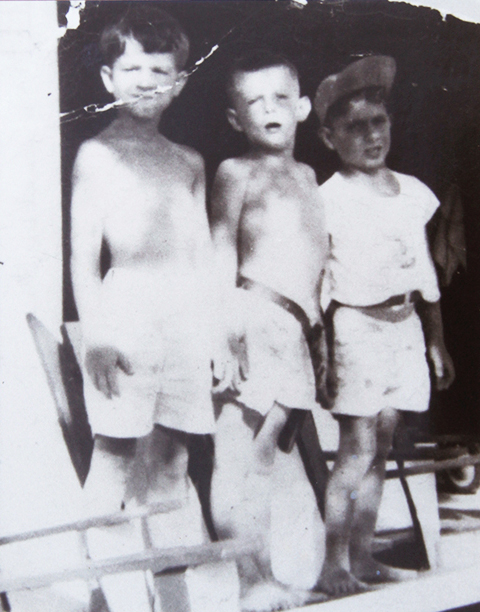
Me, Manard, Joey 1953I often see posts on Facebook about things we did in our childhood that are considered “very dangerous” today. We ran around barefoot, played with firecrackers (and some of those were potent enough to take off a finger or two), rode in the bed of pickups, played on gym sets that would be the targets for litigation today, got spanked (child abuse today), played with fire, drank from the hose, had pet red ear turtles, rode go-carts in the street, roller skated behind said go-carts, and was made to sit on the front porch in one’s grandmother’s dress while reading the Bible because one used profanity—and got caught. (Yes, that really happened to someone—not me. Another clear case of child abuse!)

After this long list of things we did as kids, the FB post usually ends with “and we survived.” And we did. My, how times have changed.

One of the members of our little rat pack of kids, who barely survived the fifties and sixties, was a couple of years younger and smaller than the rest of us. Though smaller, he was wiry and strong, and very hard to catch and hold on to and bring down when he was carrying the football. (Yes, add tackle football without any protection to that list above.) As a result, he picked up a nickname, “Grease-ball” shortened to just “Grease.

Grease went on to become a successful “rock star” (he even played at Hard Rock Café one night) and eventually developed some modicum of respectability as an attorney, father, and grandfather, thus the need to protect his identity.

Grease, being younger and wanting to fit in, was susceptible to dares from us older boys, especially the impossible-to-refuse-ultimate-throw-down “double-dog-dare.” As pointed out so well in the great, classic movie A Christmas Story the double-dog-dare was never taken lightly, and its use called for a series of gradually escalating dares that culminated in the double-dog-dare.

Poor Grease was often the victim of abuse by us older boys, especially after our failure to tackle him in a football game. One form of such abuse, and I have no idea who started it (Grease may remember), but we double-dog-dared him to eat an earthworm—a live worm—and swallow it—on more than one occasion.

I can see one such time in my mind as I write this. It took place in the vacant lot across Sixth Street (now Toledano Street) from my grandmother’s house on the corner with Minor Street. This same empty lot was our favorite playing field, just the right size for a football game or even baseball until we got big enough to hit the ball across the field into one of the Giammalva’s windows, or a fun game of shoot the arrow up in the air and see where it lands. (Add that one to the list, too.) At the end near Sixth Street were two trees, a sidewalk, and the ubiquitous open ditch (but that’s another story).

On this occasion, we stood under those two trees and dangled a wiggling earthworm in front of Grease’s face while we hit him with the double-dog-dare. He looked scared, though he tried to hide it and look defiant instead. But with me, Manard, Kibby, and Joey standing there and repeating, “we double-dog-dare-you,” Grease had no choice but to eat the worm. It was that or be compelled to live forever in the shame of refusing a double-dog-dare, never finding acceptance with the older boys and forever wondering aimlessly in the wilderness of social peer rejection. That was NOT going to happen as far as Grease was concerned.

I think his lower lip trembled involuntarily for just a second before he snatched the worm from Manard’s hand and dropped it into his open mouth in such a way that it was clear to the rest of us that he was indeed eating that worm.

I don’t think he chewed, but he did swallow.

I wanted to throw up.

2 Comments

Filed under Growing Up, Kenner

Kappa Sigma

I was not the best of students in college. Frankly, I played too much and compounded that by changed majors and changed colleges. My grandfather, an educator and principal at East Jefferson High School where I attended, had mapped out a curriculum designed to prep me for architecture. But I hated math, even though I did well in it when I applied myself, so architecture (before computers doing all that calculating) did not have much appeal. I started out taking fine art, because I had no idea what I wanted to do.

And I minored in beer. Made good grades in that, but not so much in the more serious courses. I finally woke up and realized a career in fine art was not likely to be very profitable. Hearing about a great program in advertising design at the University of Southwest Louisiana that sounded like it might provide a living, I transferred and changed my major. It was a wise move professionally, because I did eventually manage to make a decent living in advertising after college.

ks-6Meanwhile, some new friends at USL (now the University of Louisiana at Lafayette – ULL) recruited me to join a frat, Kappa Sigma. My roommates and I went though rush in the fall of ’65, and we all ended up pledging the Epsilon Chi Chapter of Kappa Sigma, one of the largest and oldest fraternities on America.

Ever see the movie Animal House? No, we weren’t that bad (were we?), but the Kappa Sigs were indeed called the “animals” long before the movie came out. We even got put on probation during my pledge semester—not “double secret probation” like in the movie, but probation none-the-less—hazing among other things… Hey, it helped prepare me for basic training in the military! The TI at Lackland AFB screaming in my face was a cakewalk after Hell Week as a pledge. (The pic is of me doing my Otter imitation years before Otter became famous in Animal House.)

Much to my surprise, I was recently contacted by an old (literally) frat brother, Chip Manion, to tell me about a gathering of some brothers living in New Orleans. We only managed to collect up five of us; three others were unable to attend, but we did gather for lunch and spend some time “reeking.” (No, I’m not going to explain that. It means different things to different brothers at different times, both good and bad.)

Not long after that I was notified that a brother, Bo Cooksey, was in the advanced stages of cancer, and an event was being put together for his benefit. In the spring, Janis and I journeyed back to Lafayette for a gathering of sixties era Kappa Sigmas from Epsilon Chi Chapter at the ULL Alumni house. My first thought upon walking into the gathering was who are all these OLD men? They were actually a rather distinguished looking bunch. Some dressed in suits, others more casually, many carrying a few extra pounds and a less hair than when I last saw them.

I didn’t realize it at the time, but September of 1965 was the beginning of a life-long friendship with many really fine gentlemen. Back then I never would have believed some of them would achieve what they did, but many went on to serve honorably in the military during the Viet Nam War, some became doctors, lawyers, financial bankers, politicians, builders of industry, and leaders of their communities. Yes, the “animals!” I saw people I haven’t seen since I graduated. Seeing these old friends and renewing friendships from college was something I will cherish forever. I had forgotten how much I enjoyed their company—and how much fun we had together.

Some I have kept up with, but alas, some I have lost touch with, because they have passed to that “Great Chapter House in the Sky,” or something like that. Some of my fondest memories of college are associated with my brothers in Kappa Sig.

Even though we may have been negligent, “trapped” in our lives of marriages, raising kids, making a living—growing old, it’s not too late to renew fellowship with old friends. We have pledged to gather again before too many more of us move on to that Great Chapter House in the Sky. I encourage you to do the same while you still can.

AEKDB

ks-shirtI found my old jersey from college. I am amazed at how much it shrunk just sitting a drawer all these years.  😉
1 Comment

Filed under Uncategorized

UPDATE: The Avenging Angel Is Live!

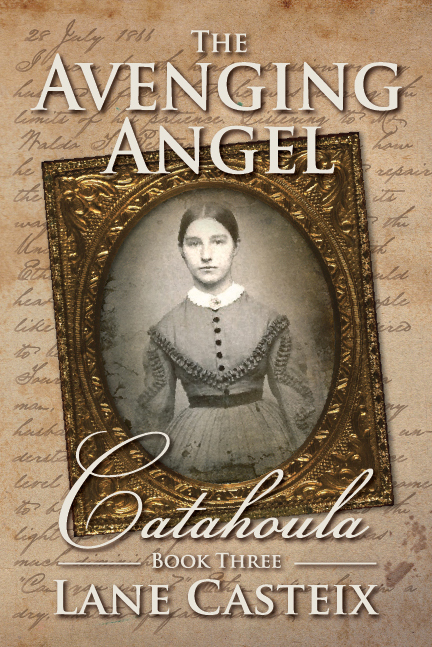
B3 AA Cover Master1The Avenging Angel, Book Three of the Catahoula Chronicles Series is live. Meanwhile, here is a short excerpt from the book.

Set up: Ethan has been seeking revenge for three murders and has been harassing those responsible who also happen to be members of a recently formed secret organization, the Ku Klux Klan. What he is doing is dangerous, and he ends up getting shot. Wounded, he can’t go home because Rachel is unaware of his nightly activities, so he goes to the only other person he can trust.

*****

I heard a scream behind me and turned to look. One of my pursuers had hit a low hanging branch and was unhorsed. His companion stopped to help him but decided to take one last shot at me first.

The ball hit me in my left thigh just below the hip, but I could not stop to examine the extent of my wound and kept pressing hard until I came out on a road and turned south. Fearing some were pursuing, I pressed on until I was sure I was not being followed. I reined in Pepper and looked behind me and saw no one, nor did I hear any sounds of hooves. Assuming I had lost my pursuers, I turned Pepper to get more moonlight on my leg and found an entry wound but no exit. The ball was still inside—and had to come out. I couldn’t go back to Catahoula for help. I would be discovered. There was only one other place to go, so I tied a bandana around my wound to stem the flow of blood, pulled off my mask and hood and stuffed them in my haversack, and headed for Big Cypress.

The house was in complete darkness when I arrived at Big Cypress sometime around three in the morning. I knew Laura used the front bedroom on the right side and eased out of the saddle to gather a few pebbles from the drive. Not wishing to awaken the servants or her father, I tossed a pebble against her window. Nothing happened. I realized I still had old Zeke’s hat on and tossed it under the bushes beside the house. I was just about to toss another pebble at the window when I saw a face peering down at me—Laura.

“Ethan? What are you doing here?”

“I need help, Laura. I’ve been shot.”

“My goodness! I’ll be right down.”

“But don’t wake anyone, please.”

A few moments later, she appeared in her dressing gown at the front door and let me in. “You needn’t worry. Father is asleep in his bedroom. How bad is it?”

“Just bad enough I can’t go home like this.”

“What do you want me to do?”

“Get the ball out and dress it.”

She helped me into the butler’s pantry in the back and lit a lamp. “Drop your trousers, then hop up on the table and let me have a look.”

I slipped my belt and loosed my fly to let my trousers down to my knees and painfully climbed onto the table.

“I’ll save you the embarrassment of making you remove your unmentionables.” With that she grabbed them by the bullet hole and ripped the leg open. “Hmmm, childhood, Virginia three years ago and now this? Seems like you are dropping your trousers for me a lot more than maybe you should, and yet we never…”

“That’s enough, Laura.”

“Just a little levity for the situation,” she replied as she wiped away the blood. “Nice clean hole. No fabric from the trousers or your drawers seems to be in the hole, so maybe you can avoid infection.”

She retrieved a bottle of brandy from the shelf and liberally doused a cloth with it. “This’ll burn a little, and you may want to take a few shots before I start probing for the ball.”

“You’ve done this before?”

“Kind of late to be asking that question, seeing as I have you on my operating table, so to speak. But to answer your question, yes I have—at least I watched the surgeons remove more than a few balls in that hospital in Richmond I found you in back in ‘63.”

I took a long pull of the brandy. “That seems like an eternity ago.”

“Yes it does,” she replied as she felt around the outside of the wound with her fingers. “You may be in luck and get to avoid my oh-so-delicate probing with my finger. The ball is right under the skin about two inches from the hole.”

I looked where she was pointing and did see a slight protrusion under the skin. “How’re you going to get it out?”

She pulled open a drawer in the server and retrieved a sharp knife and a stone. As she went to lapping the knife on the stone, she said, “Cut it out. I suggest you have another pull on that bottle.”

*****

Leave a comment

Filed under Catahoula Books, The Avenging Angel

The Awakening

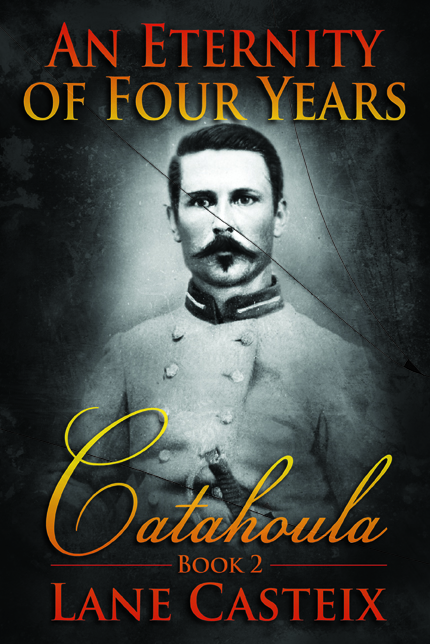
Book 2 1Excerpt from An Eternity of Four Years

In that September of 1862, the giddy victories of the year before had given way to the soul-numbing realities of a brutal and bloody war. Beginning with the Valley Campaign in the early spring and continuing all summer through to Sharpsburg, what had seemed glorious the year before became for all a dreaded experience that promised only more pain, suffering, and death. Those who believed this war would be over quickly came face-to-face with the sobering realization that it would likely go on for a long while and cost many more lives.

Thomas Paine once said of another war, “These are the times that try men’s souls.” When a man’s soul is tested by the worst of what life can throw at him, especially when he looks death in the face, he becomes contemplative of his mortality. Unnoticed by all but a very few, a change was taking place; an “awakening” was slowly spreading over the army. It would begin in the Army of Northern Virginia and eventually spread to all of the armies of the Confederacy. It would profoundly impact the lives of the many soldiers touched by it, and it would eventually be felt elsewhere in the nation long after the war ended.

*****

In An Eternity of Four Years an entire chapter is dedicated to an event that took place in the Army of Northern Virginia during the war. Chapter 16 is titled “The Awakening” and focuses on two points. The first is the spiritual awakening that took place during the war and the beginning of Ethan’s spiritual recovery from his lapses in judgment and bouts of self-pity over losing Rachel.

As the above excerpt from Chapter 16 of An Eternity of Four Years suggests, the “sobering realization” of what the war was about (seeing the elephant), and when men “look death in the face,” they do indeed become “contemplative” of their mortality. Such a man then becomes much more open to the calling of God.

Both sides of the conflict experienced this awakening but in different ways. The North had many Catholics in its ranks and the intensity of the awakening was not as strong as in the southern armies, which had far more evangelical Protestant members. It is estimated that over 100,000 men came to Christ during this period in the South, while some 100,000 to 200,000 did so in the much larger northern army. That represents about 10% of all who served. Most of those new Christians who survived the war went home taking their new faith with them to become active members of local churches and evangelists for Christ. Thus what they experienced during the war was felt long after it by those they touched with the Gospel message.

I have already discussed how Major General Thomas J. (Stonewall) Jackson was a great man of faith. So were many other southern leaders, including General Robert E. Lee. While Lincoln’s government did encourage spiritual matters in the military, even providing for chaplains in each regiment, the southern government was not as supportive until later in the war. People like Lee, Jackson, and Leonidus Polk, the “fighting bishop,” strongly encouraged the regiments to see to the spiritual needs of the soldiers.

Local churches back home were encouraged to send “spiritual men” to act as chaplains in the various regiments. Because of the awakening, there was a serious need for Bibles and New Testaments for the soldiers to read. The South didn’t have the resources to meet these printing needs, and the blockaded ports seriously limited their ability to import religious material from Europe. Local churches and Bible societies attempted to fill the gap and print religious tracts, especially those giving the Gospel. Even some northern Bible societies sent tracts south.

Chaplains and men referred to as “colporters”* would pass out what Bibles and tracts they could get, but they never had enough to meet the need. When the colporter showed up in camp, they would be swamped by the men clamoring for tracts. A simple tract on the Gospel would be cherished by the man who had it as if it were the most expensive Bible with gilded pages, reading it over and over until he memorized it.

B3 AA Cover Master1In The Avenging Angel, I introduced a new character who helps Ethan in his efforts against the Klan. He is known only as “Brother Samuel.” He was in the army with Ethan and seriously wounded at First Manassas. After that Brother Samuel became a colporter with the various regiments from Louisiana. He not only supplies Ethan with information he needs in his role as The Avenging Angel, but he also acts as Ethan’s spiritual conscience, sometimes gently chastising him for what he is doing—taking revenge on the murderers of his friends.

God often uses terrible human events to further the Gospel message and call people to Christ. The American Civil War was one such time when He spoke to men through their suffering. If only we would listen more.

*Also rendered colporteur from the French for a peddler of books, usually religious material such as Bibles and religious tracts.

Leave a comment

Filed under An Eternity of Four Years, Bible, Catahoula Books, Civil War, The Avenging Angel

1943 – Road Trip!

Print
While working on The Avenging Angel, I am also working on another book titled 1943. This one takes place in modern times and is thus a departure from the Catahoula Chronicles series. The story is about a retired San Bernardino Sheriff’s detective, Mac McConnell, who is struggling with the death of his beloved wife of 35 years.

A short while before she was killed in an accident, she had encouraged him to purchase a “barn-find,” Harley-Davidson WLA Liberator, military motorcycle from WWII and restore it. With her death, he lost interest in the project, but his old codger of a friend did not and finished the restoration. The excerpt below is when Mac has been called by Buster (his friend) to come pick up the bike.

After a brief ride on the restored antique, Mac is bitten by the riding bug again, and for a few minutes, is drawn out of his depressed state. Buster was friends with Mac and his wife for all of their married life and is using the bike to get the ponytailed, bearded, and withdrawn Mac to rejoin the human race again. While restoring the bike, Buster found something he hoped would do just that to the retired detective. The scene below is Buster laying out his “bait” for Mac.

*****

Buster hobbled back into the kitchen holding a re-purposed manila envelope some junk mail had come in at one time and he had labeled “Harley Stuff” with a Sharpie marker. He dumped the contents out on the table. “Wait’ll ya see this.” He fished around in the mess of papers, bills, invoices and new parts warranties relating to the WLA and came up with two items. He passed them to Mac. “Check this out.”

One was an old photograph of a beautiful young woman on a city street somewhere. She was holding onto a street pole of some kind by one arm and leaning away from it. Her other arm was extended, and she looked deliriously happy. From the way she was dressed and the cars in the picture, it looked like it might have been taken in the forties. She looked to be in her late teens or maybe early twenties and was truly lovely. The photo was black and white, but it was obvious she had black hair and ruby red lips, a slender figure and “nice gams” as they referred to shapely women’s legs back then. “Who is this?”

“It’s signed on the back.”

Mac flipped the photo over and read the inscription. “All my love, Betty. October 1943.”

“Now read the letter.”

The letter was V-Mail from World War II written by a soldier to his sweetheart. It was dated 23 December 1943 and began “Somewhere in Italy. My dearest Betty…” He stopped reading there and asked, “And where did this come from. Same place as the photo, I assume?”

WLA

Buster nodded after a swig of beer. “Yep, both of them came out of that Harley out there.”

A questioning expression spread over Mac’s face. “The old saddlebags?”

He nodded again. “If you remember, the leather was so dry, we were afraid to even try to open it. Well, curiosity got the best of me, and I did open it. Ruined the bag in the process, but that didn’t matter since we bought reproductions to replace them. But I found these down in the bottom.”

“They’ve been there since—what, 1943?”

Buster shrugged. “Looks like it.”

Mac resumed reading the letter. Neither the sender’s address nor the recipient’s address had been filled in at the top of the V-Mail. The letter was closed, “With love, Alvin.” He looked up at Buster. “So, this letter is to Betty somebody from Alvin somebody who was serving in Italy in 1943?”

“That’s about it.”

“What do you know about these V-Mail letters?”

“Not much, except the name stands for ‘Victory Mail,’ and they were created to save valuable space and weight during wartime. They copied the letters to microfilm, sent that on, and printed them out at the receiving end. That’s why everything is on one side and why there’s space at the top for the sender’s and the recipient’s addresses. Alvin never got to fill that in for some reason, which I don’t even want to think about.”

Mac did think about what it all might mean. He saw that they had a genuine piece of history in the Harley itself, but they also had historical documents associated with it. That was interesting.

“Well, Detective McConnell, is your curiosity up yet?”

“Yeah, I’d like to know more about them. What do you know?”

“Nothing more than is revealed in that letter and picture. If you had read the letter, you would know that Betty was pregnant with Alvin’s child.”

Mac looked back at the body of the letter. Alvin did indeed mention how excited he was to know he was going to be a father. He also mentioned being promoted to corporal. “Corporal Alvin. Not much information here: no last names, no addresses, not even hometowns. It would be hard, if not impossible, to discover any more about these two.”

Buster shook his head in disgust. “How many years were you a detective with the San Berdoo Sheriff’s Office? Was that just a figurehead position, and did you actually solve some crimes?”

“Of course I did.”

“Clues, man. You have all kinds of clues here. The letter has details buried in it, and the photo can likely tell you something. Look at it. Think about it, Mac. Usually you’re solving mysteries to put someone in jail. This is a chance to solve one with a happy ending. Doesn’t that get you just a little excited about figuring out who these two are?”

“So, you want me to find these two, assuming they’re still alive, which isn’t very likely, and do what? Give them the letter and the picture? You don’t really think they are still above ground, do you? Or that they care about all this that happened over seventy years ago?”

“Aren’t you just a little curious to find out? And even if they are deceased, don’t you think they might have some kin somewhere who just might want these items?”

“What? An old V-Mail letter and a fading picture from an old Kodak box camera?” Mac tossed them back in the pile of papers on the table. “All this happened long ago, and those involved are probably dead by now. Besides, we don’t have enough information to find Alvin whoever, or Betty what’s-her-name, or their kids. It would be waste of time.”

“Like you have other more pressing business to attend to now?”

*****

And Mac is drawn into solving a seventy-year-old mystery to discover what happened to Corporal Alvin and Miss Betty. Did Alvin come home and marry Betty, and they raised their child together? Is either still alive? What about their children?

What Mac discovers about Alvin and Betty leads him on a cross-country road trip on the old Harley. Along the way, he meets some very strange and interesting people and ends up in some unusual, sometimes dangerous, and often humorous situations. In the end, Mac finds something he did not expect to find, his own future, the one he thought he did not have.

I am shooting to get 1943 published by November 2016.

2 Comments

Filed under 1943